Latest issue
European Warehouse Inventory Peaked Early. Now Q4 Rates Are the Question.
9/11/2026
The assigned topic this week — transatlantic trucking rates collapsing as European warehouse inventory peaks — doesn't hold up against what the sources actually show. There's no confirmed rate collapse on transatlantic trucking lanes, and the inventory story is more nuanced than…
Recent posts
Global container shipping's on-time performance recorded its sharpest single-month decline since January 2021, according to American Shipper via FreightWaves. That's not a rounding…
The intermodal dwell time problem usually hides in plain sight. Carriers talk about velocity metrics. Shippers complain about detention charges. And somewhere in the middle, a term…
The intermodal boom has a dirty secret: the cargo is moving fine until it isn't, and the place it stops moving is the last mile between the port gate and the inland distribution ce…
The assigned topic this week — trucking spot rates spiking as shippers flee port queues and rail backlogs — doesn't match what the data actually shows right now. Dry van spot rates…
The headline from CSX's Q2 earnings was straightforward: carload and intermodal volumes both beat analyst estimates. That's the press release version. The operational version is mo…
The Port of Los Angeles just had its best June in 118 years. 1,002,734 TEUs processed in a single month — only the third time in the port's history it has crossed the million-TEU t…
The Gulf disruption story has dominated shipping headlines for weeks. Rates, rerouting, blank sailings — all of it real, all of it covered. But there's a quieter cost accumulating…
The editorial brief this week called for coverage of a spot rate collapse on Asia-Pacific lanes. The sources say the opposite is true — and the gap between that framing and operati…
Intermodal volumes were up 11% for the week ending May 23 compared to the same week a year earlier, according to Association of American Railroads data reported by Trains. That's n…
The Port of Los Angeles just posted its best May in recent memory. 840,165 TEUs processed, up 17% year-over-year, with Executive Director Gene Seroka declaring "no vessel backlogs…
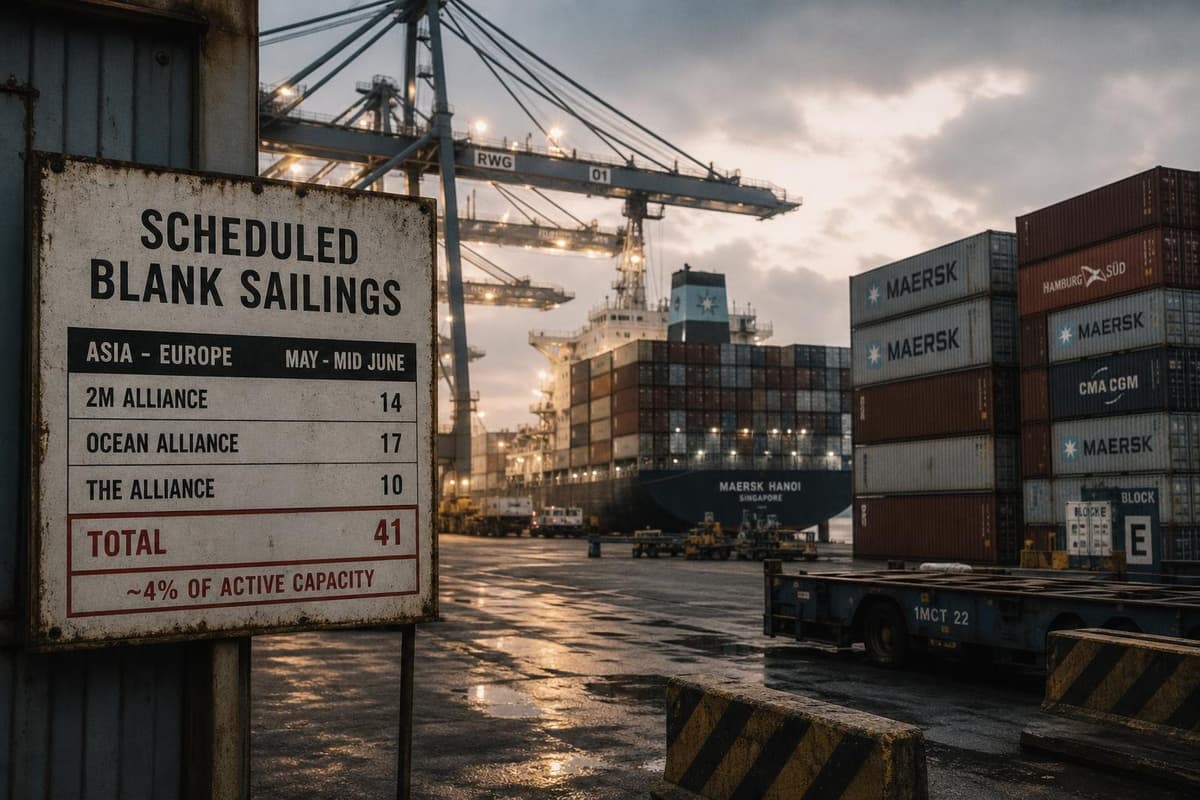
The assigned topic this week was blank sailings surging on Asia-Europe routes amid demand collapse. The operational data tells a different story — and it's worth getting right, bec…
Nashville is tight. South Florida is not. That distinction is doing a lot of work right now. The broad narrative — Southeast warehouse vacancy hitting multi-year lows amid e-commer…
The assigned topic this week was rail capacity constraints delaying automotive parts to assembly plants. I went looking for the operational data — dwell times, specific lane constr…
The container shipping industry is very good at modeling capacity. It is considerably less good at modeling what happens when the people who move that capacity decide to stop. With…
Spot rates just posted their first weekly gain in a month. Don't mistake the mechanism for a recovery. Drewry's World Container Index rose 3% to $2,286 per 40ft container in the we…
There's a category of supply chain constraint that doesn't show up in port dwell times or container spot rates. It doesn't generate headlines until a product disappears from a shel…
Everyone's been watching the mining side of the rare earth story — who has deposits, who's permitting new projects, which country just announced a strategic reserve. That's the wro…
Port throughput numbers are the press release. Dwell time is the confession. The Port of Los Angeles reported 752,520 TEUs processed in March — a 3% dip from last year, explained a…
The modal shift conversation has been running on a loop for years: truck rates rise, shippers flirt with intermodal, rates soften, everyone goes back to truckload. The cycle is so…