
The editorial brief this week called for coverage of a spot rate collapse on Asia-Pacific lanes. The sources say the opposite is true — and the gap between that framing and operational reality is exactly the kind of thing worth tracking.
As of July 2, Drewry's World Container Index climbed 9% to $4,530 per 40-foot equivalent unit, and ShippingWatch reports that container spot rates in Drewry's leading index are now at their highest level since the pandemic peak of 2022. Freightos data shows Asia-to-U.S. spot rates up 8% week-on-week. This is not a collapse. This is a bull run that has been building for months and is still accelerating.
So instead of writing the assigned story, let's write the real one: what's driving this surge, where the pressure is actually concentrated, and — critically — whether the Journal of Commerce's read that this spike could be the last hurrah for trans-Pacific carriers is worth taking seriously.
Four Months of Frontloading Has Finally Hit the Rate Ceiling
The transpacific market has been running hot since early spring, but the mechanics behind the current spike are worth separating from the noise. According to J.M. Rodgers' June 2026 freight market update, West Coast rates alone increased more than $1,000 per FEU in a single week in early June — a move that Vespucci Maritime CEO Lars Jensen described as only the fourth time in history that rates have risen more than $1,000 in a single week on that lane.
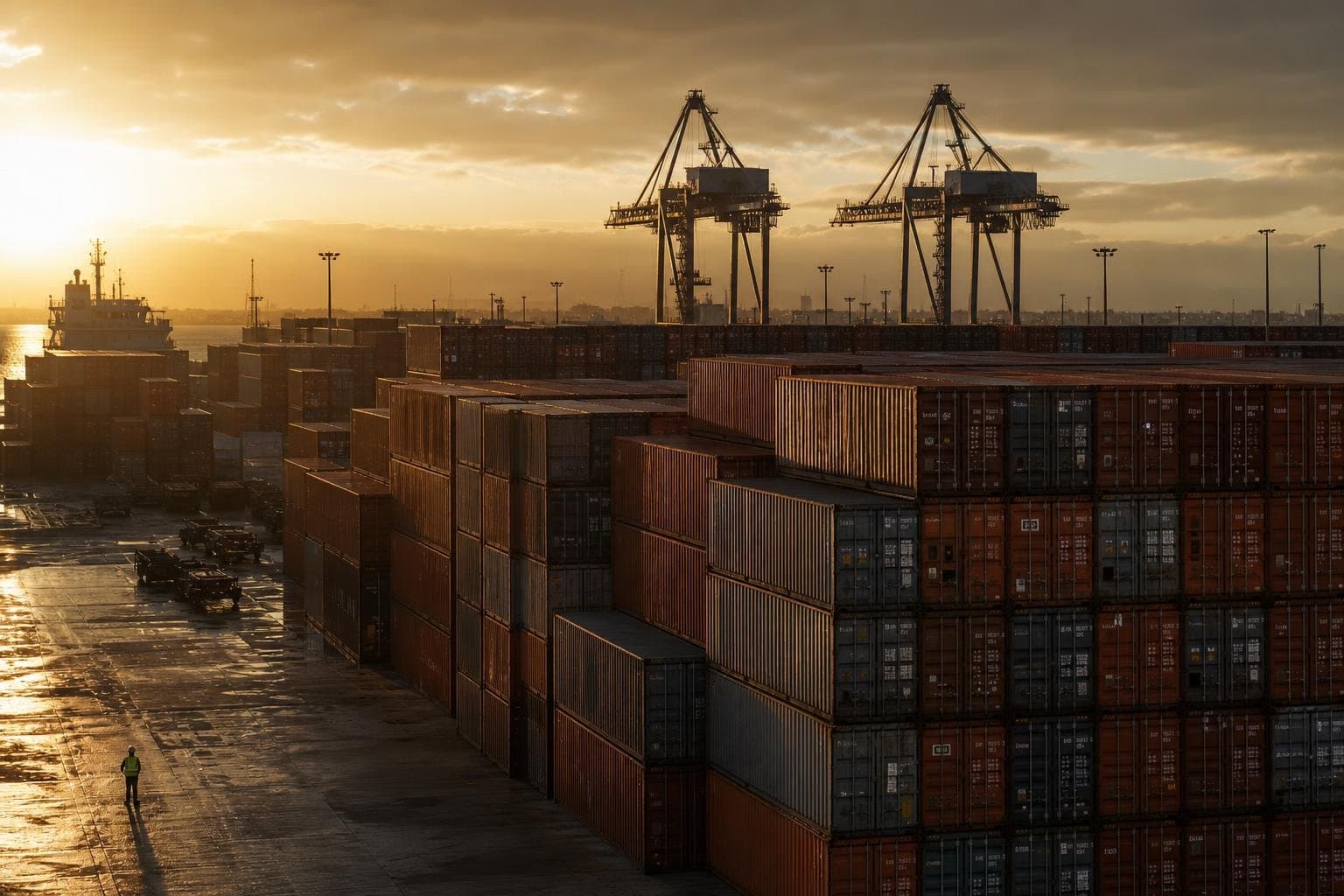
Three forces are converging. First, shippers have been frontloading cargo ahead of potential tariff changes, pulling forward demand that would normally land in August and September. Second, Middle East disruption — specifically the blocked Strait of Hormuz — is rerouting vessels and creating congestion at Southeast Asian transshipment hubs including Singapore and Port Klang, which spreads capacity pressure to lanes that don't even transit the Persian Gulf. Third, carriers have been managing capacity aggressively: blank sailings, restricted allocations, and cargo rolling remain common across multiple services, even as some extra loader sailings have been introduced on West Coast routes.
The result is that what looks like a demand surge is partly a supply squeeze engineered by the carriers themselves. Maersk has introduced a Peak Season Surcharge on top of base rate increases. MSC has implemented strict weight restrictions on its Lone Star service serving Gulf Coast ports. These are not the moves of carriers scrambling to fill ships — they're the moves of carriers managing yield on vessels that are already full.
Where the Pressure Is Concentrated — and Where It Isn't
The rate surge is not uniform across Asia-Pacific lanes, and that distinction matters for procurement decisions. The strongest pressure is on outbound transpacific and Asia-Europe routes. Freightos data shows rates to North Europe and the Mediterranean are now far above their mid-May levels, confirming this is broad-based rather than isolated to one trade lane.
East Coast and Gulf Coast services from China and Vietnam are the tightest segment operationally. Many sailings were fully booked through late June, with capacity constraints on inbound flows to U.S. East and Gulf ports more severe than on West Coast services. For procurement teams sourcing from Southeast Asia — Vietnam in particular — this is the constraint that bites first.
Intra-Asia and backhaul lanes are a different story. Carriers who repositioned vessels onto lower-paying backhaul routes in Q1 to set up for this rate environment are now collecting on that bet, but those lanes haven't seen the same rate velocity as the primary east-west trades.
The Last Hurrah Question
The Journal of Commerce reports that with fresh capacity landing on the West Coast, sources expect spot rates to soften after a four-month bull run — the argument being that frontloading demand has a natural expiration date and new vessel supply will eventually overwhelm carrier discipline.
That's a reasonable structural argument, but the timing is the hard part. Drewry says it expects rates to rise further in the coming weeks. The Strait of Hormuz disruption hasn't resolved. And carriers have shown consistent willingness to blank sailings to defend rate floors when demand softens — a tool they've used effectively since 2020.
The more useful question for operations and procurement teams: is your Q3 inventory position built on the assumption that rates stay elevated, or that they correct? If you're still booking spot on transpacific inbound, you're paying peak prices for cargo that may arrive into a softer demand environment. The smarter play right now is locking contract coverage on the lanes where you have volume certainty, and leaving spot exposure only where you have genuine flexibility on timing.
Watch Drewry's cancelled sailings tracker over the next three weeks — that's the leading indicator that will tell you whether carriers are defending this rate level or letting it slip.


