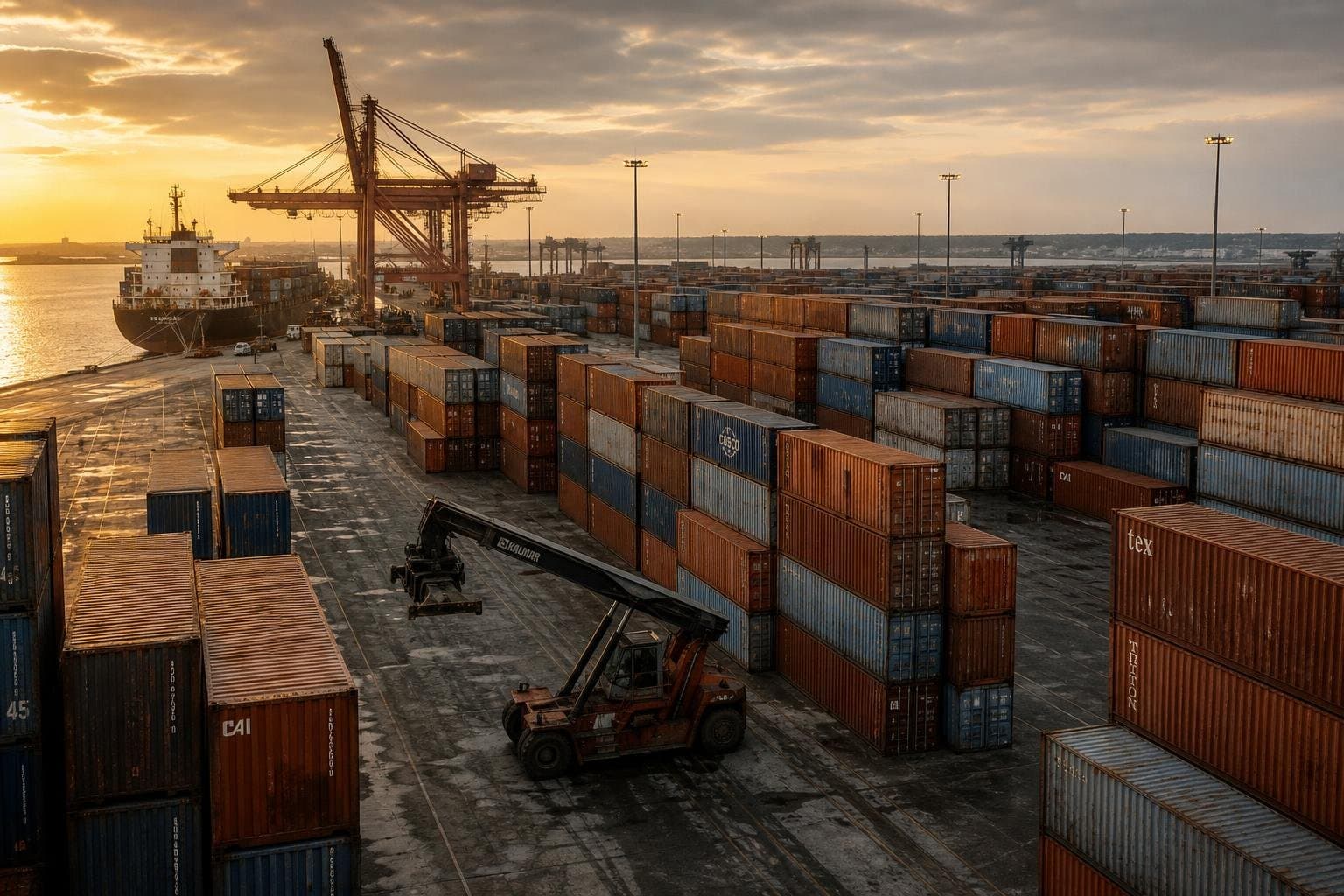

The Gulf disruption story has dominated shipping headlines for weeks. Rates, rerouting, blank sailings — all of it real, all of it covered. But there's a quieter cost accumulating underneath the rate charts that procurement teams are starting to feel in their landed costs: empty containers are pooling in the wrong ports, and repositioning them is getting expensive.
This is the structural tax that comes with any major trade lane disruption. It doesn't show up in the headline spot rate. It shows up in your per-unit cost three months later.
When Trade Flows Break, Boxes Don't Follow
Container repositioning is the unglamorous plumbing of ocean freight. When trade lanes are balanced — roughly equal volumes moving in both directions — carriers can cycle equipment efficiently. When they're not, empties pile up at surplus origins and go scarce at deficit ones. Carriers then have to reposition them, deadhead, at their own cost. Or they pass it along.
The current disruption pattern is creating exactly this kind of imbalance. Lloyd's List reports that global container volumes rose 4.4% year on year in May to 17.35 million TEU, with transpacific demand up 21% year on year as Chinese exports surged and shippers resumed cargo movements following a relative easing of US-China trade tensions. Meanwhile, Middle East Gulf-related disruption pushed freight rates higher and effectively removed 1.6 million TEU of Middle East trade from normal circulation patterns.
That combination — a surge on one lane, a collapse on another — is the repositioning problem in miniature. Boxes that would normally cycle through Gulf ports are stranded or rerouted. Boxes needed on the transpacific are being pulled from wherever carriers can find them. The equipment pool is being stretched across a geography it wasn't designed for.
The Rate Signal Is Already Visible
American Shipper via FreightWaves reported on July 8 that container rates were near $9,000 as Iran war conditions flared, and separately noted that Asia-US ocean container rates had soared past $7,900 following Hormuz disruption. Those are spot rate figures, not repositioning surcharges — but they're directionally telling. When carriers are absorbing rerouting costs and equipment imbalances, spot rates are one of the mechanisms they use to recover them.
The Drewry World Container Index for July 2 shows spot rates continuing their upward climb across major East-West trades, though the underlying route-specific data isn't fully visible in the public excerpt. What Drewry's methodology does capture — and what matters here — is that the WCI tracks eight major trade lanes, and divergence between those lanes is where repositioning pressure shows up first.
The Logistics Managers' Index via FreightWaves Forum adds another layer: transportation capacity is at near-record lows, and shippers are struggling to find it. That's not just a demand story. Tight capacity in a disrupted equipment environment means the repositioning cost is being absorbed by whoever needs the box most urgently — which is usually the shipper, not the carrier.
The Imbalance That Doesn't Announce Itself
Here's what makes empty repositioning costs particularly insidious for procurement planning: they don't come with a press release. Carriers don't hold earnings calls to announce that they're charging more to move empties from Rotterdam to Shanghai. The cost surfaces as equipment availability fees, peak season surcharges, or simply as a longer wait for a box at origin — which then cascades into missed vessel windows, rolled cargo, and expediting costs downstream.
The Lloyd's List reporting on emerging market trades outpacing traditional east-west routes — Asia-Sub-Saharan Africa volumes up 28.4% year on year in May — is another signal worth tracking. Growth on non-traditional lanes means equipment is being pulled into corridors where the return cycle is longer and less predictable. Every box that goes to a sub-Saharan African port and takes six weeks to cycle back is a box that's not available for the transpacific surge.
The American Shipper headline about retailers pushing 2 million-plus import containers toward a new all-time record this month — frontloading ahead of expected August tariff increases — is the demand-side accelerant. More inbound volume into US ports means more empties accumulating on the US side, which means higher repositioning costs for carriers trying to get equipment back to Asia for the next wave.
What to Watch in the Next 30 Days
The operational tell will be equipment availability at Chinese export ports in late July and early August. If the retailer frontloading surge pulls boxes to the US faster than carriers can reposition empties back, you'll see booking lead times extend and equipment fees appear on quotes that didn't have them in June. That's the repositioning cost becoming visible.
Watch also for any Hormuz resolution signal. A Lloyd's List report on LNG freight noted that analysts expect rates to soften as emergency demand fades and buyers diversify — the same logic applies to container equipment. If Gulf lanes reopen and trade flows normalize, some of the stranded equipment finds its way back into the cycle. But normalization takes months, not weeks. The repositioning debt doesn't clear overnight.
The rate spike gets the headlines. The empty box problem is what makes the rate spike stick.


