


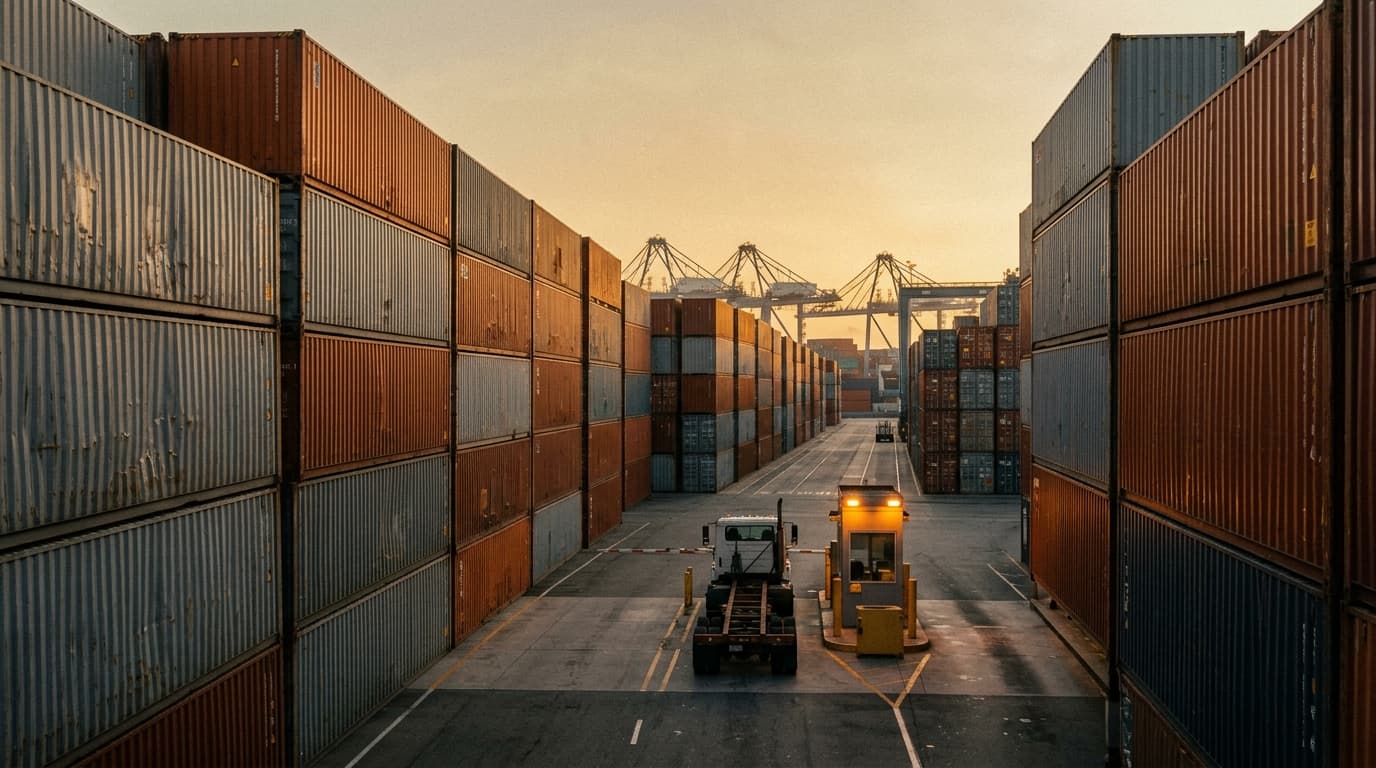

Port throughput numbers are the press release. Dwell time is the confession.
The Port of Los Angeles reported 752,520 TEUs processed in March — a 3% dip from last year, explained away as a front-loading hangover from 2025's tariff anticipation sprint. First quarter total: 2,388,843 TEUs, right in line with the five-year average. Solid. Consistent. The kind of number that gets a reassuring quote from the executive director and a footnote in an earnings call.
What that number doesn't tell you: how long those boxes sat on the terminal before they moved.
Volume Is a Lagging Indicator. Dwell Is a Leading One.
Here's the operational reality that throughput figures routinely obscure. A port can process a record number of containers and still be functionally congested — if those containers are sitting for four days instead of two before getting picked up by truck or rail. The TEU count measures arrival and departure. Dwell time measures everything in between, and that middle stretch is where supply chains actually break.
The pattern to watch right now isn't whether LA is moving cargo. It is. The pattern is why empty container units dropped 11% year-over-year in March while loaded exports hit their highest level since May 2024. That's a repositioning signal. Exporters are using capacity that was previously soaking up empties — which means the equipment balance is shifting, and the terminals that were quietly warehousing empties are now being asked to turn loaded boxes faster.
When that transition happens unevenly — some terminals clearing, others absorbing the repositioned flow — you get localized dwell spikes that don't show up in port-wide averages. That's the kind of congestion that blindsides procurement teams who are reading the headline number and assuming smooth operations.
What Tariff Uncertainty Does to Dwell
Executive Director Gene Seroka flagged it directly in the March briefing: unsettled tariff policy is weighing on both consumers and companies. That's not just a demand-side observation. It has a direct operational consequence that plays out on the terminal.
When importers are uncertain about tariff timing, they make one of two moves: pull cargo forward aggressively (which creates arrival surges and chassis shortages) or hold off and wait for clarity (which creates demand gaps followed by sudden volume spikes). Both behaviors inflate dwell. The first because the terminal gets overwhelmed and pickup appointments back up. The second because when the surge finally comes, the chassis and drayage capacity to clear it aren't staged and ready.
The March data suggests we're in the aftermath of the first scenario — the front-loading that inflated 2025 Q1 numbers is now the baseline against which 2026 looks slightly soft. But with tariff policy still unsettled, the second scenario is building. Importers sitting on the sidelines waiting for clarity will eventually move, and they'll move in a cluster.
Watch May and June dwell times at San Pedro Bay closely. The U.S. Army Corps of Engineers recently allocated $131.8 million to the San Pedro Bay port complex, including $70 million for the Port of LA — infrastructure investment that signals long-term confidence but does nothing for near-term terminal fluidity when a demand surge hits.
The Signal Worth Tracking
Two data points from the March release deserve more attention than they're getting. Loaded exports up 7% year-over-year, highest since May 2024. Empty containers down 11%. Those two numbers together suggest the export side of the terminal is actually working — outbound capacity is being utilized, and the empties that would normally pile up are moving.
That's genuinely good operational news. But it also means the terminal's buffer is thinner. When the next import surge arrives — and given the tariff-driven demand compression currently underway, it will arrive — there's less slack in the system to absorb it. The empties that used to act as a kind of ballast, filling terminal space and keeping crane cycles predictable, aren't there in the same volume.
The procurement implication is straightforward: if you're planning inbound shipments for Q3, don't assume the current smoothness holds. The leading indicators — repositioning patterns, declining empty buffers, tariff-driven demand clustering — point toward a dwell spike sometime in the May-to-July window. Book your drayage and chassis reservations before the terminal's press release tells you there's a problem.
By then, the confession has already been made.
Signals
- LA loaded exports hit highest level since May 2024 — watch whether this reflects genuine demand or one-time repositioning over the next 60 days
- Empty container units at LA down 11% YoY in March — terminal buffer is thinner than recent averages
- $131.8M Army Corps allocation to San Pedro Bay: long-term capacity signal, not a near-term congestion fix