


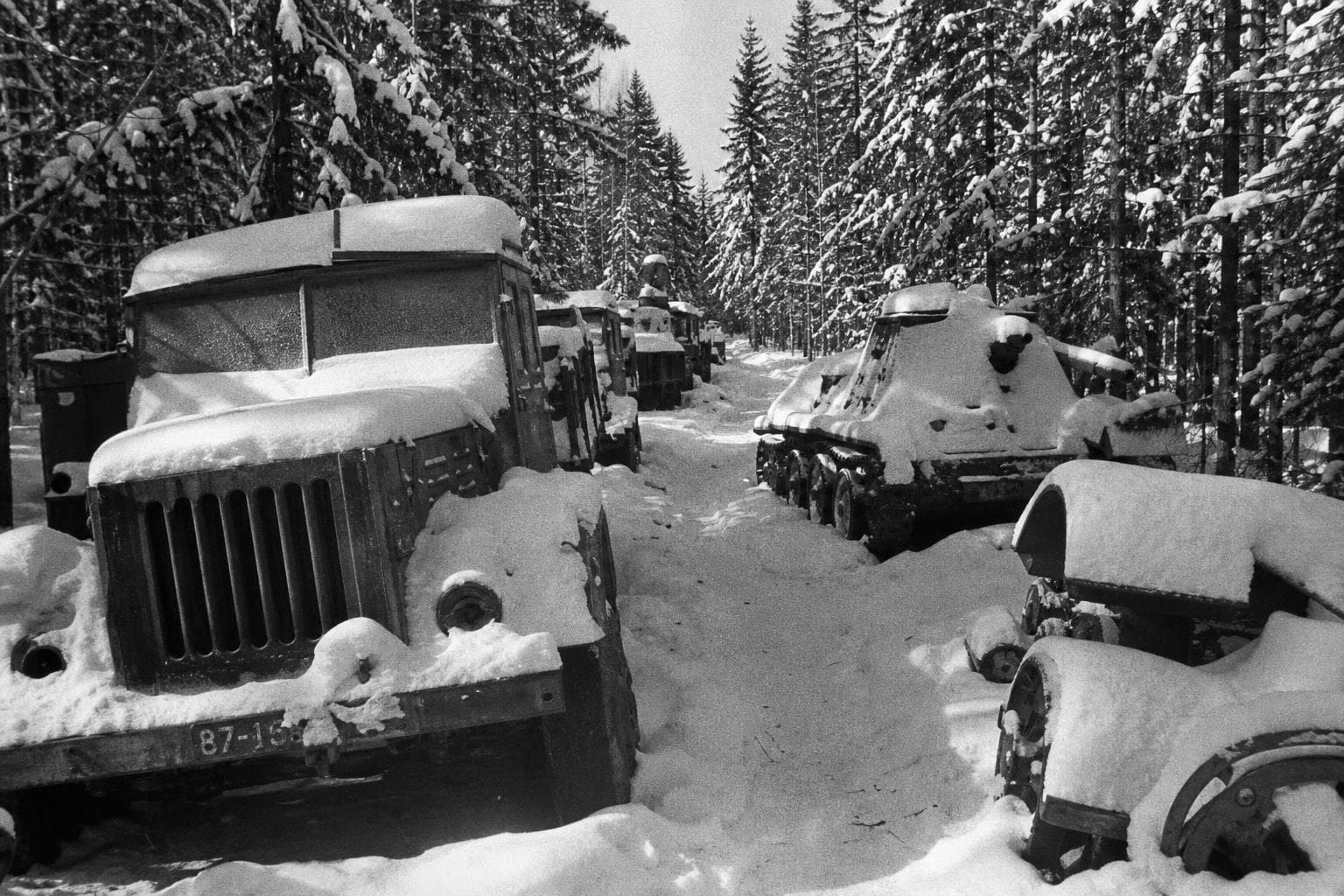

Every account of the 1939–40 Soviet-Finnish war eventually arrives at the same image: white-clad ski troops gliding out of the tree line, Red Army columns frozen stiff along narrow forest roads, a tiny nation humiliating a superpower through grit and terrain. It's a satisfying story. It is also, on close inspection, a story that has outpaced what the documentary record can actually support with precision — and that gap is the more interesting subject.
What the Record Actually Confirms
The broad contours aren't in dispute. The Soviet Union attacked Finland in late November 1939, expecting a quick campaign, and instead found itself bogged down against a defense built around terrain the attacker hadn't adequately planned for — dense forest, few roads, and deep snow that channeled armor and infantry onto predictable axes of advance. Finnish forces used that channeling to encircle isolated Soviet columns, a tactic that entered the historical vocabulary as the motti — cutting a road-bound force into fragments and destroying the pieces separately. The war ended in March 1940 with the Moscow Peace Treaty, Finland ceding territory but retaining its independence, and the Red Army's early performance becoming a visible embarrassment that fed directly into German assumptions about Soviet military weakness going into 1941.
All of that is settled. What is not settled, and what popular retellings routinely flatten, is the precision of everything underneath it — the exact casualty counts, the granular command decisions inside specific Soviet divisions, the degree to which Finnish success was tactical ingenuity versus the structural fact that the Soviet high command had purged a large share of its experienced officer corps just two years earlier and was relearning command under fire. Casualty figures for the campaign vary substantially depending on whether a given count comes from wartime Soviet reporting, postwar Finnish estimates, or later Russian archival work — and the spread between those figures is wide enough that treating any single number as definitive misrepresents how contested the accounting still is. This publication has made the point before, in the context of Barbarossa's own logistics collapse the following year, that institutional damage from the purges and the strain of operating armor and supply columns through terrain the planners hadn't respected shows up again and again as the real culprit behind "mysterious" Soviet failures — see /p/barbarossas-logistics-failure-was-structural-the-winter-just-mad for the fuller argument about how often "the winter did it" substitutes for an honest look at doctrine and planning.
The Danger of the Clean Story
The reason this matters isn't pedantry. A conflict this thinly and unevenly documented in English-language sources is exactly the kind of case where confident-sounding numbers get repeated until they calcify into fact. Every specific Finnish unit strength, every precise Soviet divisional loss count, every claimed kill tally attributed to a particular sniper or ski company deserves the same question a financial analyst would ask of a balance sheet: who compiled this number, under what pressure, and checked against what? Wartime propaganda had every incentive to inflate Finnish success and Soviet failure, and the Finnish government had every incentive to let that story stand. None of that makes the Finnish defense unimpressive — a small army did inflict serious damage on a much larger force operating badly suited equipment through hostile terrain. It means the magnitude of that damage, stated as a specific figure, should be handled as a range and a disputed one, not a talisman.
Where the Open Questions Sit
The honest state of the field is this: the operational picture — terrain, chokepoints, the motti tactic, the eventual Soviet breakthrough on the Karelian Isthmus once Moscow brought overwhelming force and better coordination to bear — is well established. The precise human cost, and the fine-grained command narrative on the Soviet side, remains a project for archival historians working primarily in Russian and Finnish sources rather than for English-language popular accounts. Readers who want the next layer down should be skeptical of any account offering tidy, single-number casualty totals without naming where the number comes from. That skepticism, more than any specific fact about the war itself, is the actual lesson the Winter War has to teach.