


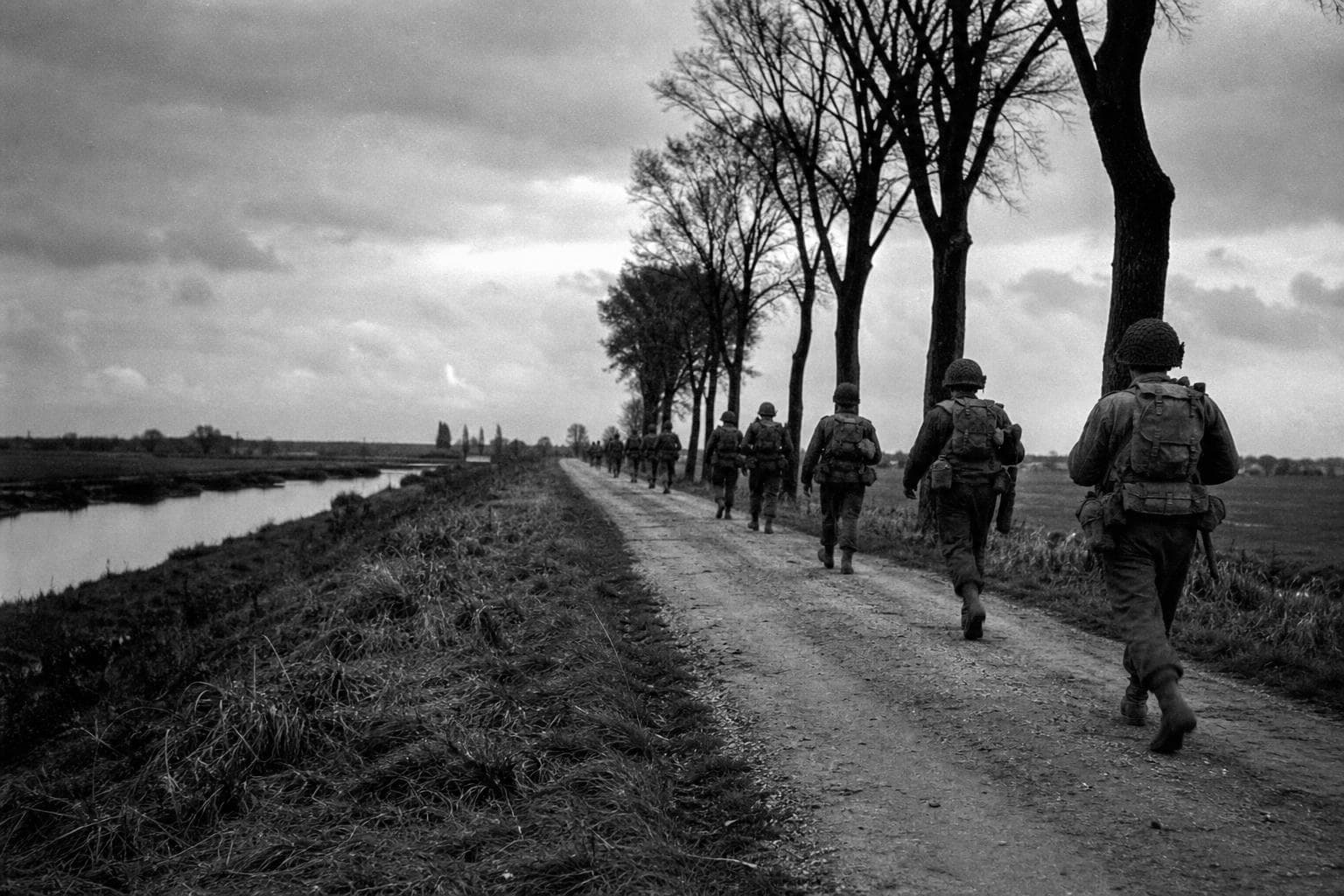

In the first days of September 1944, Dutch resistance networks were sending urgent reports northward through Allied channels: German SS panzer divisions were resting and re-equipping in the Arnhem area. The intelligence wasn't vague. It wasn't secondhand rumor. It was specific, it was consistent, and it was ignored.
What happened next at Arnhem is usually told as a story about bad luck — a bridge too far, a corridor too narrow, weather that grounded resupply flights. Those factors were real. But they were downstream of a prior failure, one that happened in planning rooms before a single paratrooper boarded a transport aircraft. The intelligence existed. The decision was made to discard it.
The Picture That Didn't Fit the Plan
By mid-September 1944, Allied commanders had reason to believe Germany was close to collapse. The rapid liberation of France had generated genuine optimism, and that optimism had a distorting effect on how intelligence was processed. Livingbattlefield.org notes that Dutch resistance had "repeatedly informed the Allies there were German SS panzer divisions resting and re-equipping in the Arnhem and Nijmegen zones" — and that RAF reconnaissance had photographed camouflaged tanks in the area. The briefing given to airborne troops described something else entirely: a force of "old men, boys and walking wounded" with no stomach for a fight.
That gap — between what the intelligence picture showed and what planners told the troops — is the operational core of the Market Garden failure. It wasn't that the information was unavailable. It was that the information was incompatible with the plan, and the plan won.
Geopolitika's analysis frames this as a broader problem of overconfidence: the entire operation was conceived in an atmosphere where "many believed that Nazi Germany was close to collapse," and that atmosphere shaped what commanders were willing to hear. Market Garden was Bernard Montgomery's gamble on a concentrated thrust through the Netherlands — a high-risk maneuver that could shorten the war dramatically. The institutional momentum behind that concept made contradicting intelligence inconvenient.
This is a pattern worth naming precisely: it isn't that commanders were stupid or reckless. It's that the plan had already been sold, the resources committed, the timeline fixed. Intelligence that threatened the plan's premises wasn't evaluated on its merits — it was evaluated on whether it justified delay. And delay, in September 1944, felt like losing the war.
The Structural Problem Beneath the Intelligence Failure
The mygardenpatch.com analysis — a garden blog that has somehow produced a more useful operational breakdown than several dedicated history sites — identifies the intelligence failure as the first among multiple compounding problems: terrain constraints, single-axis advance, logistical delays, communication breakdowns. Each of these was knowable in advance. Each was subordinated to the plan's internal logic.
The airborne component, "Market," required paratroopers to hold bridges long enough for XXX Corps to advance up a single highway and link up. That timeline assumed light resistance. The moment the SS panzer divisions entered the equation — which they did, immediately, at Arnhem — the entire synchronization collapsed. There was no slack in the plan for the intelligence to have been right.
I'd argue this is the real lesson Market Garden offers, and it's more uncomfortable than "check your intelligence." The operation's structure made it impossible to act on accurate intelligence even when it arrived. A plan that can only succeed if the enemy is weak isn't a plan — it's a wish. When the Dutch resistance reports came in, the honest response would have been to redesign the operation or cancel it. Neither was seriously considered.
The Lindemans Complication
There's a secondary intelligence dimension worth noting. Christos Military and Intelligence Corner covers the case of Christiaan Lindemans — "King Kong" — a Dutch resistance figure who became a German agent and compromised resistance networks he had access to. The extent to which Lindemans specifically betrayed Market Garden's details to German intelligence remains contested; the source notes that key German figures were never fully interrogated on this point, and the evidentiary record is incomplete.
What the Lindemans case illustrates is that the intelligence environment around Market Garden was compromised in multiple directions simultaneously — Allied commanders dismissing accurate warnings from below while German intelligence was potentially receiving accurate information from above. The Dutch resistance was right about the panzers. Someone was making sure the Germans knew the Allies were coming. The information asymmetry ran entirely the wrong way.
The historiographical debate over Lindemans' actual impact on the operation remains open. What isn't contested is the broader picture: Allied planners in September 1944 treated intelligence as a variable to be managed around the plan, not as the ground truth the plan should have been built on. Arnhem was the invoice for that choice.