


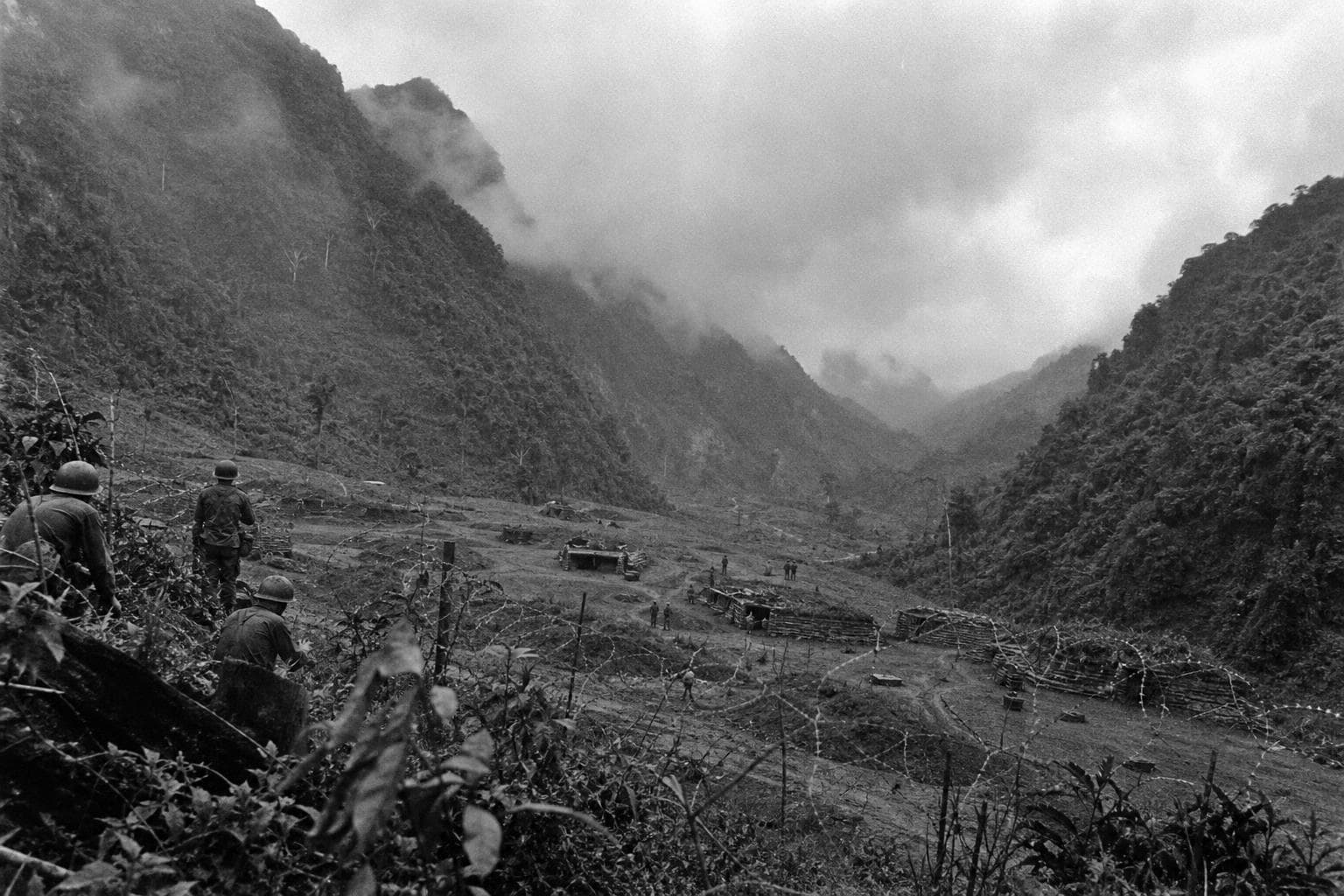

The French didn't stumble into Dien Bien Phu. They chose it — deliberately, after deliberation, with a strategic rationale that made sense on paper and collapsed on contact with Viet Minh artillery. Understanding how that choice got made is more instructive than cataloguing what went wrong after.
The Na San Fallacy
The proximate cause of the Dien Bien Phu decision was a battle that worked. In late 1952, French forces held a fortified position at Na San against three Viet Minh divisions. The "hedgehog" defensive concept — battalion-sized strongpoints surrounding an airfield, supplied entirely by air — held. The Viet Minh couldn't crack it.
General Henri Navarre drew the obvious lesson: do it again, bigger. As the U.S. Army War College's War Room review of Bernard Fall's Hell in a Very Small Place notes, this was "recency bias in strategy" — the French replicated a tactical success without examining whether the conditions that produced it still obtained. Na San worked partly because the Viet Minh hadn't yet solved the problem of moving heavy artillery through jungle terrain. By November 1953, when Operation Castor dropped French paratroopers into the Dien Bien Phu valley, that problem was being solved — by tens of thousands of Viet Minh laborers hauling guns up slopes the French had assessed as impassable.
The Strategic Logic That Wasn't
Navarre's operational concept had two components. First, Dien Bien Phu would serve as a base for mobile groups to disrupt Viet Minh supply lines near the Laotian border. Second, it would force the Viet Minh into a set-piece battle the French expected to win with firepower and air superiority.
The War Room analysis identifies the deeper problem: "France had entirely lost sight of any clearly definable war aims," in Fall's framing. The Viet Minh had one goal — independence — and a concrete near-term objective: enter the Geneva Conference negotiations with a decisive battlefield victory. Dien Bien Phu wasn't a trap they fell into. It was an obstacle they chose to remove.
The garrison was located over 450 kilometers from Hanoi, in a valley ringed by hills, ten kilometers from the Laotian border. The French assessed the surrounding terrain as too difficult for the Viet Minh to move artillery through in useful quantities. That assessment was wrong, and it was the load-bearing wall of the entire plan.
What the Planners Couldn't See
The intelligence failure wasn't simply that the French underestimated Viet Minh logistics. It's that the entire fortress concept required the enemy to behave in a particular way — to attack frontally, to accept French terms of engagement, to be impressed by the fortification rather than work around its assumptions.
I'd argue the deeper institutional failure was this: French commanders were asking the valley to solve a strategic problem it couldn't solve. Even if the garrison had held, it would have controlled a remote valley with no road access and no meaningful population. The Viet Minh could have masked it and continued operations elsewhere. The French needed the Viet Minh to want to attack Dien Bien Phu — and Giáp obliged, but on his own terms and timeline, with artillery the French said couldn't be there.
The siege began 13 March 1954. The garrison capitulated 7 May 1954, after fifty-six days. The Geneva Conference opened the following month.
The Lesson That Keeps Not Being Learned
The War Room review frames Fall's book as a study in strategic hubris — the assumption that multi-domain advantages (airpower, firepower, professional infantry) guarantee victory regardless of whether you've correctly identified the strategic problem. The French had advantages. They applied them to the wrong question.
The historiographical note worth watching: Fall's Hell in a Very Small Place remains the foundational text, but it was written before full access to Viet Minh operational records. The Vietnamese-language scholarship on Giáp's logistics planning and the artillery positioning decisions has expanded considerably since Fall's death in 1967. The French side of the intelligence failure is well-documented; the Viet Minh side of the planning success is still being excavated.