



The debate used to be livelier. For decades, military historians split between those who saw battles as decisive events and those who argued the outcome was already written in the ledgers before the shooting started. That argument is largely over. The logistics school won.
What's worth examining now is what that victory actually demands of how we read specific campaigns — and where the framework still gets misapplied.
1. The Core Claim: Battles Reveal Defeats That Were Already Made
Phillips Payson O'Brien's War and Power, reviewed recently at Veteran AF, frames it cleanly: armies don't lose because they suddenly fail on the battlefield. They lose because they can no longer replace men, tanks, aircraft, ammunition, fuel, and food. The battlefield reveals a defeat that logistics and industrial production already made inevitable.
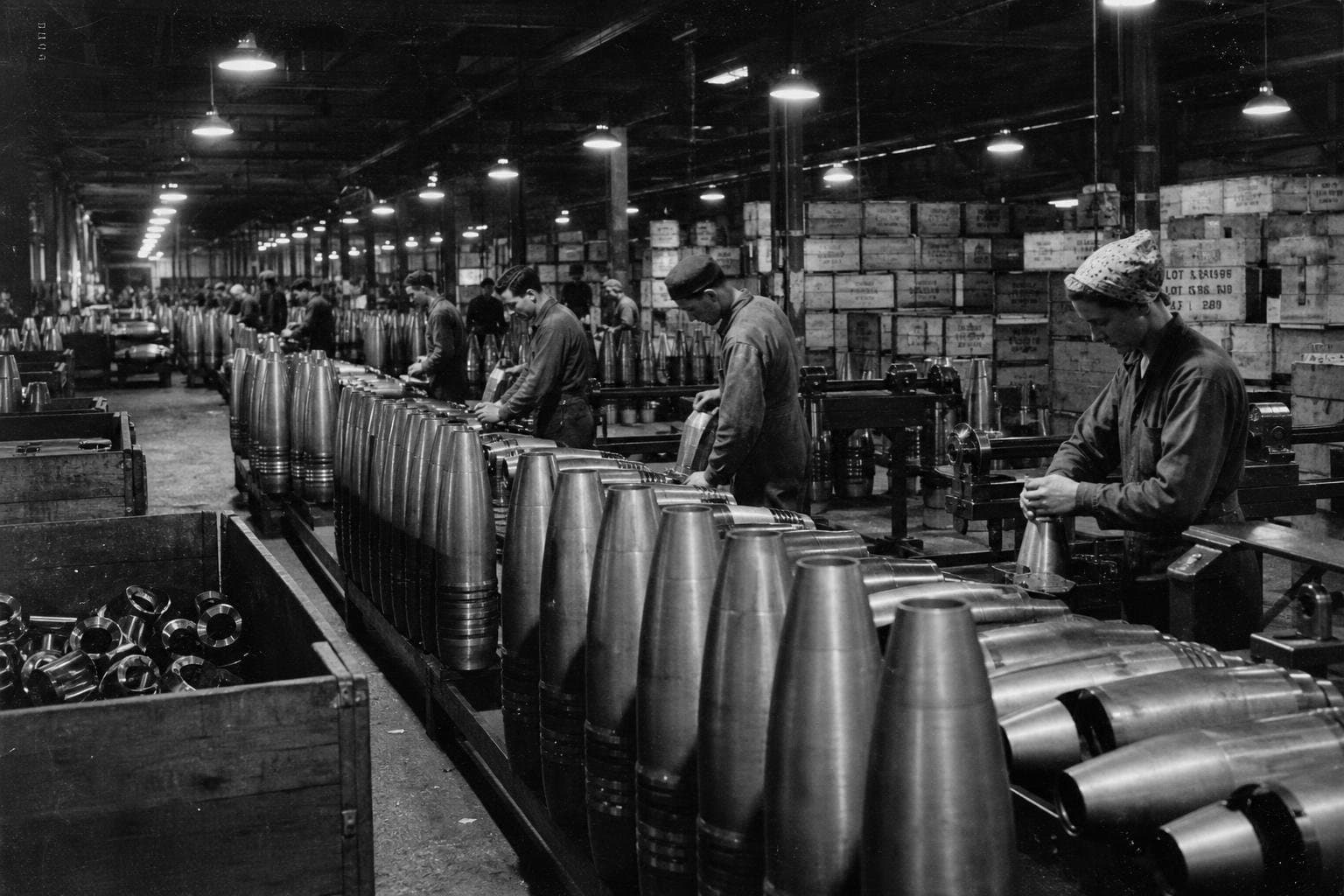
O'Brien's strongest case is the First World War. By 1918, Allied superiority in artillery, aircraft, tanks, trucks, ships, and munitions was overwhelming. German armies continued fighting effectively at the tactical level — the Hindenburg Line held longer than it had any right to — but the nation had already lost the industrial war. The front collapsed because the rear had already failed.
This is not a new argument. But O'Brien's contribution, per the Veteran AF review, is that he applies it consistently across both world wars without diminishing the importance of individual leadership or battlefield courage. That balance matters — the framework becomes useless if it collapses into pure determinism.
2. The Framework Applied to Current Research: Singapore as a Test Case
War on the Rocks published Iskander Rehman's analysis of the fall of Singapore in June 2026, framing it as applied history for contemporary defense challenges. Churchill called it "the worst disaster and largest capitulation in British history" — a judgment that still holds up structurally, whatever one thinks of his framing.
Singapore is a useful stress test for the logistics-determines-outcomes thesis, because it partially breaks it. The British force was not industrially outmatched. It was operationally outmaneuvered and institutionally incapable of processing what was happening to it. The Japanese advance down the Malayan peninsula in 70 days succeeded against a numerically comparable force — the failure was doctrinal, command-cultural, and intelligence-related, not primarily logistical.
The lesson: the logistics framework is powerful but not universal. When a force collapses faster than its supply situation would predict, look at command culture and intelligence processing. Singapore is that case. Barbarossa is the opposite — the Wehrmacht's operational brilliance ran directly into a logistics ceiling it had no answer for.
3. What the Russia-Ukraine Evidence Adds
The Royal Swedish Academy of War Sciences published an analysis in July 2026 arguing that Russia is losing the war with Ukraine on precisely the terms O'Brien would predict: not because of battlefield reverses alone, but because the industrial and logistical balance has shifted against it. Russian advances at Pokrovsk averaged roughly 75 yards per day in recent months — a pace that, as the analysis notes, reflects exhaustion more than operational design.
This is the 20th-century logistics argument running in real time. The EU's €90 billion loan to Ukraine, finalized in April 2026 per the same KKRVA analysis, is exactly the kind of industrial-base intervention that O'Brien's framework says matters more than any single engagement.
4. Three Distinctions the Framework Requires
The logistics-determines-outcomes thesis is most useful when applied with precision. Three distinctions worth keeping:
- Industrial defeat vs. operational failure. Germany in 1918 and Japan in 1945 were industrially defeated. France in 1940 and Britain at Singapore were operationally and institutionally defeated while still possessing material resources. The mechanisms differ.
- Knowable at the time vs. visible in hindsight. Decision-makers in 1941 Berlin did not have a clear picture of Soviet industrial capacity east of the Urals. Attributing strategic stupidity to German planners requires examining what they actually knew — which was incomplete and, in some cases, deliberately distorted by their own intelligence apparatus.