


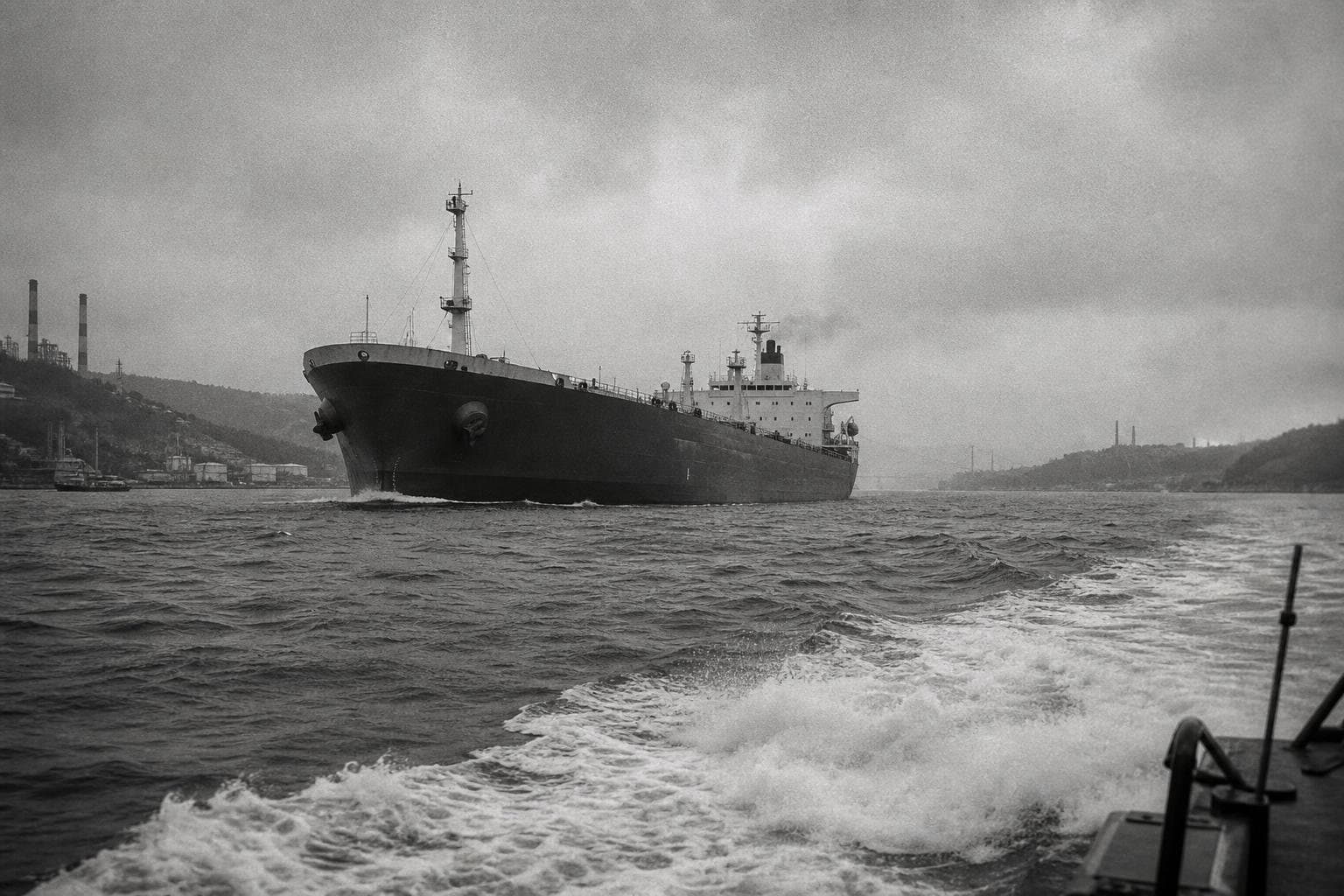

On May 4, 2026, a South Korean vessel was fired upon in the Strait of Hormuz. Washington asked Seoul to join the coalition securing the waterway. Seoul said it would "review" the request. That single exchange contains the entire problem.
As War on the Rocks reports, the Hormuz crisis is structurally an Asian crisis: more than 80 percent of crude oil and LNG crossing the strait in 2024 was bound for Asia. South Korea sources roughly 70 percent of its crude from the Persian Gulf; Japan, 95 percent. The Philippines declared a national energy emergency in March. Singapore's foreign minister called it, plainly, "an Asian crisis." The economic exposure is not marginal — it is existential.
And yet Asian navies are almost entirely absent from the coalition response.
The standard explanation is political caution — no one wants to antagonize Iran or China, no one wants to be seen as an American proxy. That's real. But the deeper problem, which the Hormuz situation is now stress-testing in real time, is that U.S. Indo-Pacific alliance architecture was never built for collective action at a distance. It was built for territorial defense. Japan defends Japan. South Korea defends South Korea. The coalition logic that NATO developed over decades — burden-sharing, interoperability, shared expeditionary doctrine — simply does not exist in the same form across the Pacific.
The parallel pressure point compounds this. A separate War on the Rocks analysis argues that the U.S. military's conduct in the Iran war has already demonstrated that host-nation consent is increasingly a formality once American assets are in place. Gulf states publicly refused to allow offensive use of their territory; operationally, it didn't matter. Seoul is watching that lesson being absorbed. The incentive structure it creates is perverse: if the United States will act regardless, why absorb the political cost of formally joining?
The result is a coalition gap that no amount of bilateral summit communiqués will close. Countries that are suffering the most from the crisis are calculating that the costs of visible participation outweigh the benefits — even when their own energy security is directly at stake. That's not free-riding in the traditional sense. It's a rational response to an alliance framework that never asked them to build the expeditionary capacity, the political consensus, or the legal authorities needed for exactly this kind of operation.
The question worth watching isn't whether Seoul eventually sends ships to Hormuz. It's whether this crisis forces a structural renegotiation of what Indo-Pacific partnerships are actually for — and who pays when the answer turns out to be "more than anyone agreed to."