
Churchill called it "the worst disaster and largest capitulation in British history." The fall of Singapore on February 15, 1942 — a 70-day campaign that ended with roughly 100,000 men surrendering to a numerically inferior force — still resists clean explanation. That's precisely what makes it useful. The failure wasn't one thing. It was a system failing at multiple levels simultaneously, and each failure mode has a direct contemporary echo.
1. The Fortress That Wasn't: Reputation as a Substitute for Capability
"Fortress Singapore" was a label, not a description. The fixed defenses were oriented seaward; the landward approach through the Malayan jungle was treated as an obstacle rather than an avenue. The War on the Rocks analysis by Iskander Rehman frames this as a recurring pathology: a garrison that had internalized its own deterrent mythology and stopped stress-testing the assumptions underneath it.
The contemporary parallel is direct. A recent Modern War Institute analysis makes the same structural argument about U.S. Army sustainment: two decades of optimizing for permissive environments — uncontested supply lines, contractor support, static FOBs — has produced a force that has internalized its own operational mythology. The "fortress" in this case is the assumption of logistics dominance. Neither Singapore's defenders nor today's planners are stupid. They optimized for the war they'd been fighting, not the one approaching.
2. Command Coherence Collapses Before the Enemy Arrives
Marc Bloch's The Strange Defeat — his firsthand account of France's 1940 collapse — is being re-examined through cognitive science frameworks, and the findings are uncomfortable. A Polytechnique Insights analysis drawing on recent command-and-control exercises found that 35–45% of initial decisions in non-standard situations replicate doctrinal patterns that are ill-suited to the actual problem. Bloch's diagnosis — a military system that loses the capacity to produce a shared operational reality — maps directly onto what Singapore's command structure did in January–February 1942.
General Percival's headquarters received contradictory intelligence, issued orders that arrived after the situation had changed, and never achieved a coherent picture of where the Japanese main effort was actually falling. This isn't a character indictment of Percival — it's a description of a command system operating past its processing capacity. The Polytechnique analysis notes that a 10–20% advantage in decision-making cycle speed is sufficient, in many scenarios, to produce decisive tactical advantage. The Japanese had that advantage and exploited it relentlessly.
3. Tactical Proficiency Without Operational Coherence
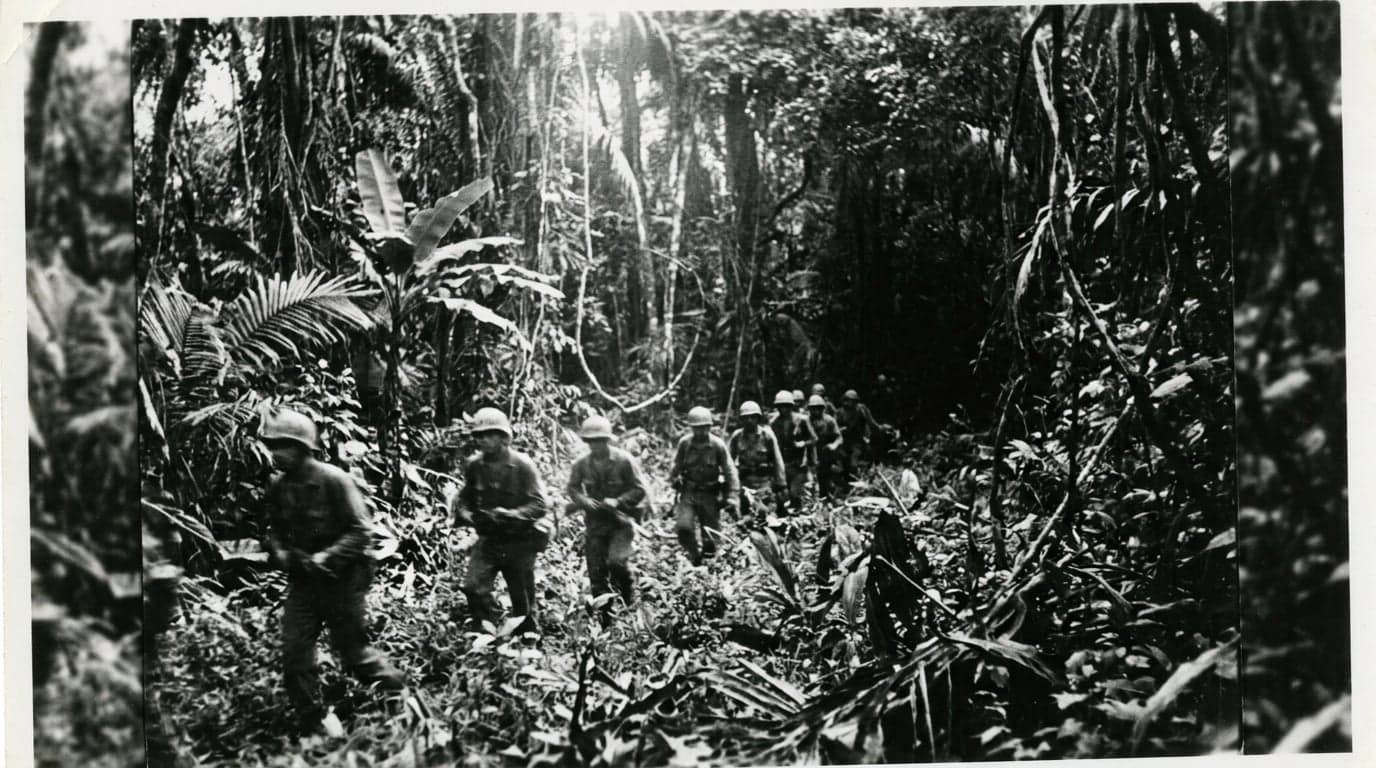
Individual British and Commonwealth units fought effectively at points throughout the Malayan campaign. The problem was that tactical success never aggregated into operational effect. Positions were held, then abandoned when flanks collapsed. Counterattacks were launched without coordination. The Small Wars Journal piece on operational-level maneuver frames this as a persistent failure mode: tactical effectiveness that doesn't translate into operational or strategic advantage because the connective tissue — the ability to link actions across time and space — is absent.
The argument there is that the contemporary battlefield is "our 1914 moment," with defensive systems negating traditional offensive advantages. Singapore in 1942 was the inverse: a defender that couldn't connect its tactical actions into a coherent defense, facing an attacker that could. The lesson isn't symmetric, but the mechanism is the same. Operational coherence is the multiplier. Without it, tactical competence is just expensive delay.
What Singapore Actually Tests
The three failures compound each other, which is why the campaign collapsed so fast:
- Assumption calcification → wrong defenses in the wrong places
- Command saturation → inability to update the operational picture in time
- Tactical-operational disconnect → local successes that couldn't be exploited or consolidated
None of these required incompetent soldiers or cowardly commanders. They required an institutional system that had stopped asking hard questions about its own premises — and an enemy that had not.
The Rehman analysis at War on the Rocks frames Singapore as a case study in the gap between deterrent reputation and actual warfighting capacity. That gap is the thing worth watching — in 1942 and now.


