


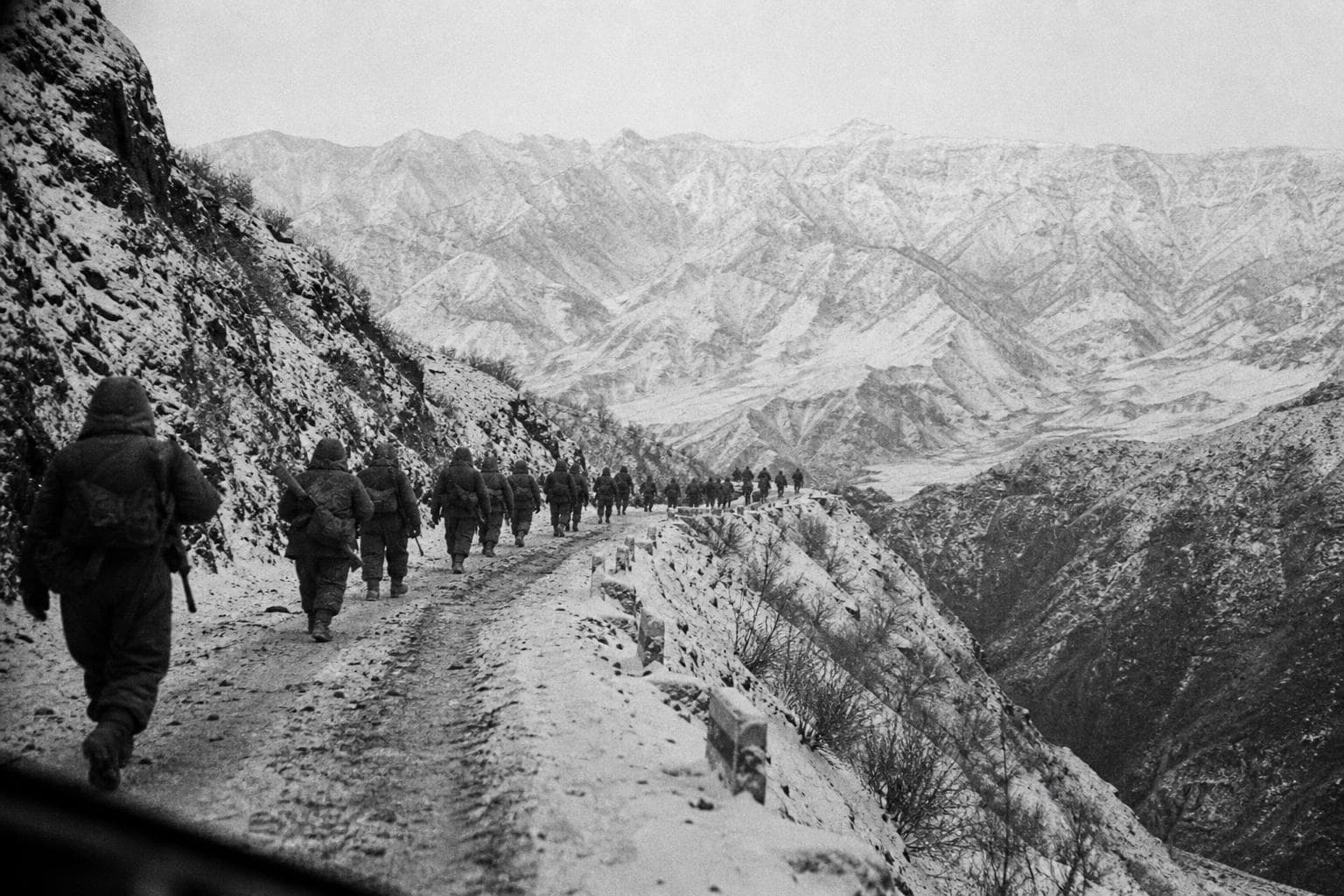

The answer isn't MacArthur's arrogance, though that's real enough. It's that the command architecture he built made accurate intelligence assessment structurally difficult.
The Situation MacArthur Was Actually In
To be fair to the record: MacArthur's confidence in late October and early November 1950 wasn't irrational on its face. The Inchon landing had worked. The North Korean People's Army had collapsed. UN forces had crossed the 38th parallel with UN authorization, and the strategic logic of finishing the job — eliminating the NKPA as a fighting force before it could reconstitute — was coherent. The 15-Minute History podcast's account of the Korean War notes that the Chinese attack on the night of November 27 "caught the X Corps completely by surprise" — but surprise is a product of an intelligence failure, not just bad luck.
The intelligence failure had a structure. MacArthur's headquarters in Tokyo was receiving reports of Chinese forces crossing the Yalu, but the assessments that reached him had been filtered through a command culture that had learned, over years, what conclusions the general preferred. This is the mechanism that matters: not a single ignored warning, but a system that processed ambiguous information toward optimistic conclusions because pessimistic ones carried career costs.
What the Command Structure Produced
The Library of the Marine Corps battle study on Chosin notes MacArthur's field strategy in the context of the invasion and the subsequent campaign — but the operational detail that stands out in retrospect is the separation of Eighth Army and X Corps into effectively independent commands, both reporting to Tokyo rather than to a unified ground commander in Korea. This wasn't an accident. MacArthur preferred it. A unified ground commander would have had authority MacArthur was unwilling to delegate.
The consequence was that X Corps on the eastern side of the peninsula and Eighth Army on the western side were advancing in parallel without coordinated flank security. The gap between them — mountainous, largely unpatrolled — was exactly where Chinese forces massed. Neither command had full visibility of the other's situation. MacArthur's headquarters in Tokyo had the picture in theory; in practice, the optimistic operational tempo he was driving precluded the kind of deliberate assessment that might have caught what was building.
Thomas McKelvey Cleaver's account of the 1st Marine Division at Chosin, based on first-hand veteran accounts, frames the battle as a story of what the Marines did once surrounded — the discipline, the fighting withdrawal, the refusal to collapse. That framing is accurate as far as it goes. But it starts the story at the moment of encirclement, which is already too late to ask the structural question.
The Precedent That Made It Worse
Stephen Gordon's analysis of Korea as a test of post-war collective security architecture makes a point that cuts sideways into this: Truman's decision to intervene was made within twenty-four hours of the North Korean invasion, driven by the need to demonstrate that collective security commitments meant something. The speed of that decision — and the political logic behind it — created pressure throughout the campaign to show progress, to keep the coalition together, to not let the war drag into a stalemate that would undermine the very precedent being established.
MacArthur understood that pressure and, in his memoir's telling, believed he was serving it. Whether that belief was genuine or self-serving is the kind of question memoirs can't answer. What it produced operationally was a commander who treated caution as a political liability and speed as a strategic virtue — in terrain and against an enemy that rewarded neither.
The Lesson That Keeps Getting Missed
The Chosin story gets told as a testament to Marine Corps resilience, and the resilience was real. The 15-Minute History account captures it accurately: rear guards holding under artillery fire, engineers repairing bridges under fire, a fighting withdrawal that preserved X Corps as a unit. Chesty Puller's "we're surrounded — that simplifies things" is a genuine expression of a genuine institutional culture.
But resilience in execution doesn't redeem failure in design. The Marines fought brilliantly out of a trap that a functional command structure wouldn't have set. The question worth sitting with isn't how they got out. It's who built the system that put them in.
Historiographical note: The debate over MacArthur's intelligence failures at Chosin remains active. The question of whether warnings about Chinese intervention were suppressed within his headquarters, or whether the intelligence picture was genuinely ambiguous, is contested. Scholars who have examined Tokyo headquarters records tend toward the former; MacArthur's defenders emphasize the latter. The command separation between Eighth Army and X Corps is less contested — it is documented in the operational record — but its causal weight in the disaster is still argued.