


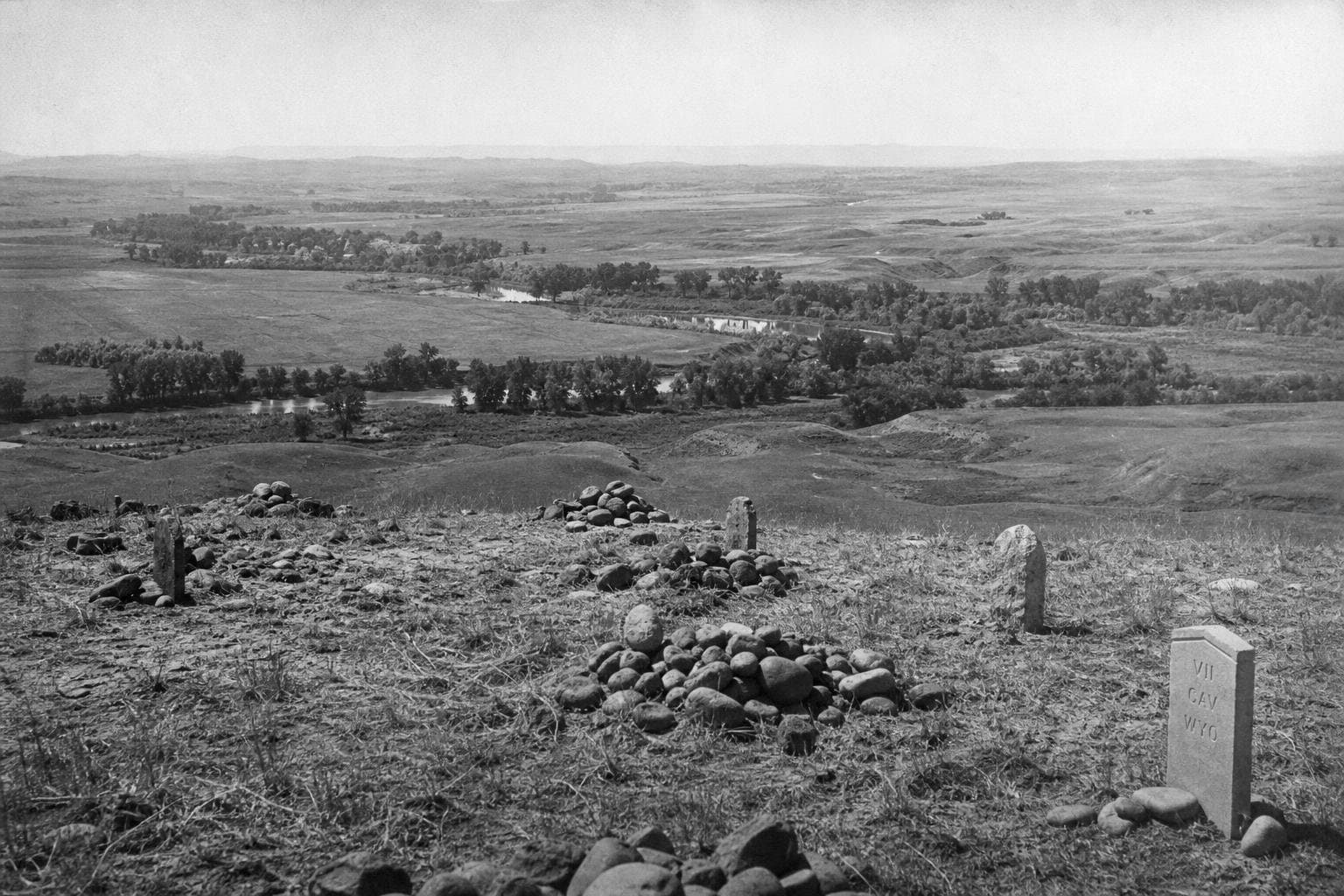

The 150th anniversary of the Little Bighorn fell last month, and the commemorations did what they always do — centered on Custer, on the ridge, on the last stand. That framing is almost perfectly designed to obscure what the battle actually was.
As War on the Rocks notes in a recent reassessment, Little Bighorn was a small engagement by any conventional measure: a few hundred men, a compact piece of terrain, decided in hours. What made it consequential was never the tactical action. It was the strategic context the tactical action exposed.
The Sioux had emerged as the dominant indigenous presence on the northern plains precisely because they had adapted — mastering horse-mounted, nomadic warfare organized around the bison herds. The Army, reduced by more than 95 percent after the Civil War and returned to its primary peacetime function of prosecuting Indian wars, was operating in terrain and against an opponent it consistently underestimated. The Bozeman Trail conflict, gold in the northern Rockies, the pressure of white settlement — these were the forces that made a confrontation structurally likely. Custer's decisions on June 25, 1876 were the trigger, not the cause.
This is where the Great Man framing does its most persistent damage. The debate over Custer — reckless glory-seeker or competent officer undone by bad luck and poor subordinate coordination — has consumed more ink than the question of what the Army thought it was doing on the northern plains, and why it kept getting it wrong. The intelligence picture before the engagement was poor. The scale of the encampment was not known. The assumption that the village would scatter rather than fight was baked into planning at multiple levels of command. These are institutional failures, not individual ones, and they recurred across the Indian Wars because the Army's command culture had no good mechanism for processing evidence that contradicted its operational assumptions.
The battle's meaning, as the War on the Rocks piece observes, "remains contested 150 years later." That contestation is itself the point. Little Bighorn became "Custer's Last Stand" because the Army — and the nation — needed a story about individual tragedy rather than systemic failure. The legend was more comfortable than the ledger.
The staff ride value of the site is real: small scale, preserved terrain, human-level decisions visible in the ground. But the lesson worth carrying off that ridge isn't about one officer's choices. It's about what happens when an institution's operational assumptions outrun its intelligence, and no one in the command structure has the standing — or the incentive — to say so.
That pattern didn't die on the Little Bighorn. It just changed uniforms.