


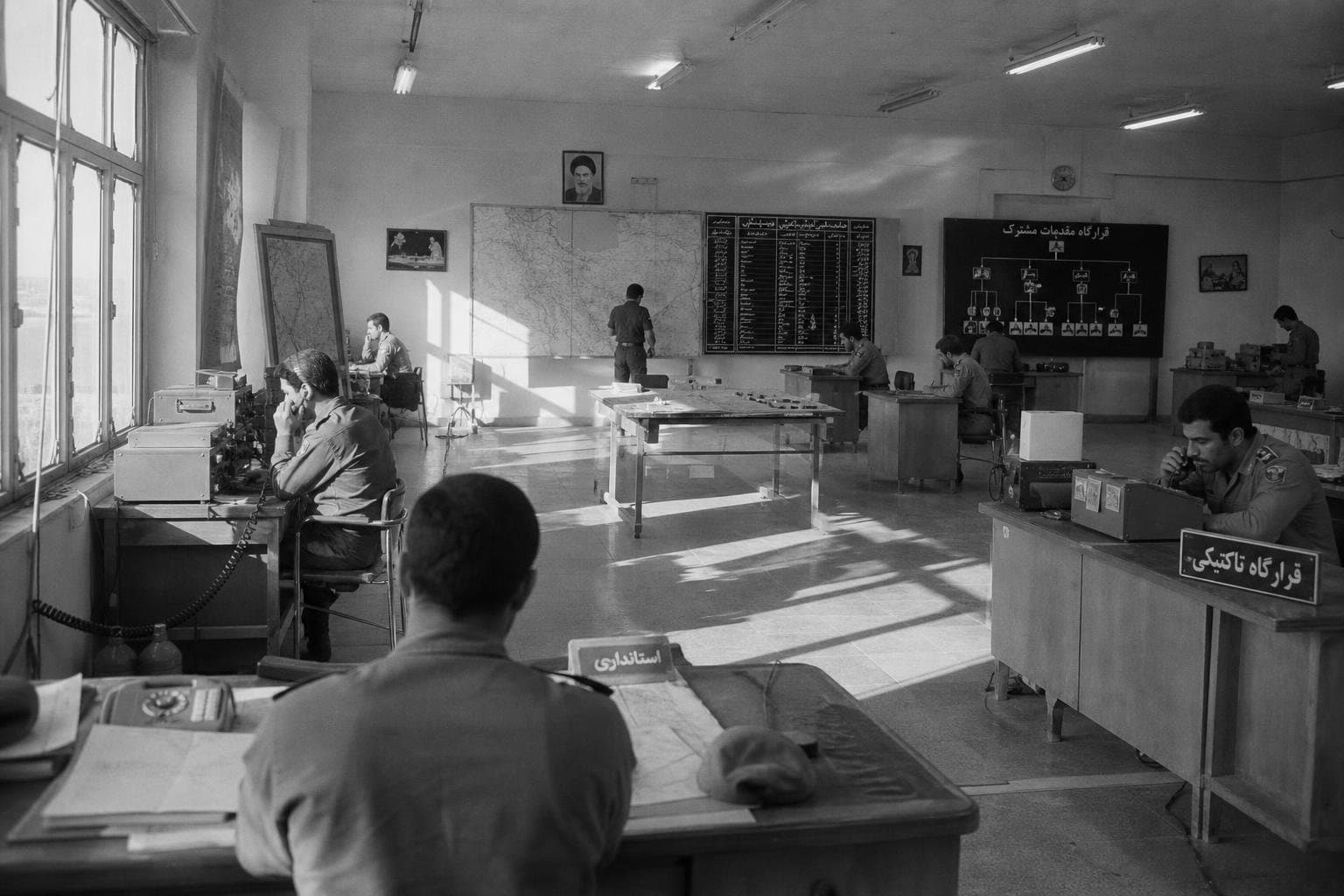

The conventional postmortem on the recent U.S.-Iran conflict focuses on American airpower, Israeli precision strikes, and Iranian missile salvos. That's the wrong frame. The more instructive question is why a militarily inferior state ended up, by most measures, dictating the terms of a ceasefire — and the answer runs directly through a doctrine formalized two decades ago.
Writing in War on the Rocks, Pnina Shuker and Andrew Milburn identify the core of Iran's approach: the mosaic defense, a decentralized command structure developed by the IRGC's Center for Strategy in 2005 under Mohammad Ali Jafari and the ideologue Hassan Abbasi. The concept was designed specifically to survive decapitation strikes — the kind of opening move that American and Israeli planners had built their war around. Iran didn't try to match its adversaries symmetrically. It built a system that could absorb the blows those adversaries were best at delivering and keep functioning anyway.
This is not a novel strategic insight. It is, in fact, a lesson that runs through the entire 20th-century record of asymmetric conflict. The Viet Minh's dispersed logistics networks frustrated French interdiction before Dien Bien Phu. The NVA's decentralized command structure absorbed American airpower for years without losing coherent operational direction. What Iran did — and what Shuker and Milburn document — is apply that accumulated institutional knowledge systematically, over twenty years, against a specific threat model.
The Adversary's Failure Was Structural, Not Tactical
What makes the Iran case analytically interesting isn't Iranian cleverness. It's the mirror image: why did Washington and Jerusalem fight the war they were good at rather than the war Iran had prepared for? Shuker and Milburn's account suggests the answer is that the U.S. and Israel never fully understood Iran's theory of victory — they assumed military superiority would translate into political outcomes, and it didn't.
That gap between military success and political result is the oldest problem in the book. Clausewitz's observation that war is politics by other means cuts both ways: if you win the battles but lose the political contest, you've lost the war. Iran, by this account, understood that. Its adversaries, despite two decades of counterinsurgency experience that should have taught exactly this lesson, apparently did not.
The 20th-century record is unambiguous on this point. Tactical dominance without a theory of political victory is a formula for strategic frustration — from French Indochina to American Vietnam to Soviet Afghanistan. The mosaic defense is a military doctrine, but its real function was to buy time for a political strategy to work. That's the lesson worth sitting with.