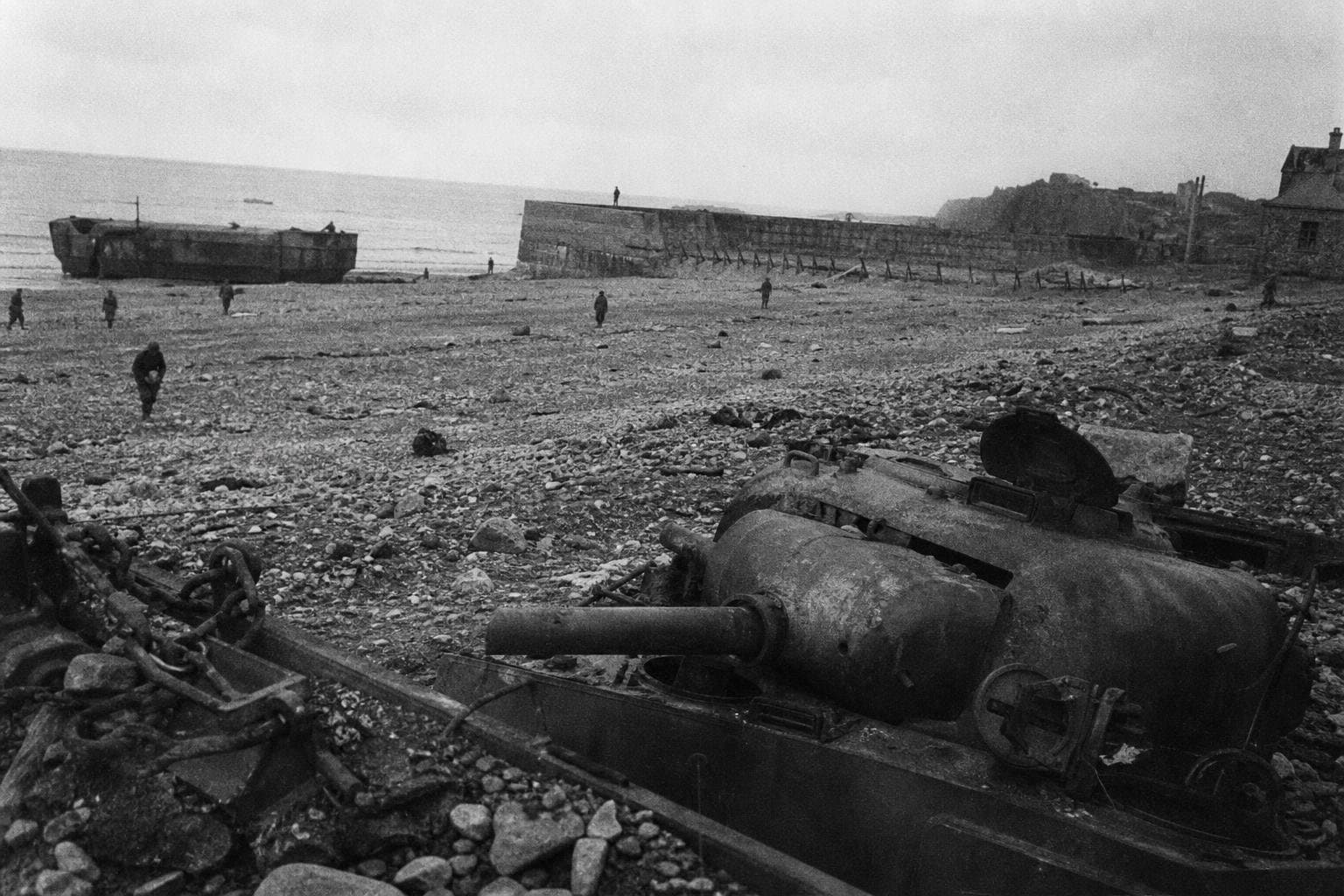

The official Canadian government statement released thirty days after the raid was admirably candid about what August 19, 1942 had actually been. "The Dieppe operation must be regarded in this light," it read. "It was, in fact, a reconnaissance in force conceived with the important object of obtaining information and experience vital to the general offensive program." That statement, reproduced in the Hamilton Spectator on September 18, 1942, is one of the more honest pieces of wartime communication the Allies produced. It also raises the question that has shadowed Dieppe ever since: if the objective was information, did the cost of acquiring it reflect the value of what was learned — or did planners simply accept catastrophic casualties as the price of institutional education they could have obtained more cheaply?
What the Planners Thought They Were Testing
The strategic logic behind Operation Jubilee was not irrational on its face. Churchill was under pressure from Stalin to demonstrate British commitment to a second front, and a large-scale raid offered a middle path between doing nothing and a full invasion that British staff believed was at least a year away. Dieppe was also chosen because its defenses were considered a representative sample of what any assault force might encounter along the Northern French coast — a controlled experiment, in theory, for solving the problem of breaching the Atlantic Wall.
The force assembled was substantial: some 6,000 infantry, 237 naval vessels, and seventy-four squadrons of aircraft. The majority of the ground troops were Canadian — the Second Canadian Division under Major-General J.H. Roberts — men who had been training in Britain for years and were, by the official account, selected to the "highest standard." The raid was framed as a learning exercise. The soldiers were not told they were the tuition.
The Gap Between Concept and Execution
Here is where the analysis has to be careful about hindsight. The planners at Combined Operations were not fools, and the problems they were trying to solve — how to suppress coastal defenses, how to land armor on a defended beach, how to coordinate naval gunfire with infantry assault — were genuinely difficult problems that could not be solved from a map table alone. The argument that Dieppe was necessary to teach lessons later applied at Normandy has real force; the Normandy landings themselves became the largest amphibious assault ever carried out in military history, in part because of what the Allies learned from earlier failures.
But the argument has limits. The Combined Operations official account notes that Dieppe was selected from "a number of French ports, all equally well defended, as could be seen from the study of air photographs." That phrase deserves a second reading. The planners could see from aerial reconnaissance that the defenses were formidable. They chose to test those defenses with a frontal assault on a port — the one type of objective that coastal defenders are specifically organized to hold — and without the heavy naval bombardment that might have suppressed the guns covering the beach approaches. The decision to forgo capital ship support, made partly to limit the naval risk, transferred that risk entirely onto the men in the landing craft.
What was knowable at the time: the terrain was unfavorable, the defenses were visible from the air, and the element of surprise — already compromised once when an earlier version of the operation was cancelled — was fragile. Whether German forces had advance warning of the August 19 date was a question raised in the press within a month of the raid and has remained contested by historians since. The evidence is not conclusive either way, and presenting it as settled in either direction would misrepresent the historical record.
What the Lessons Actually Cost
The eyewitness accounts collected by Canadian researchers capture something the operational summaries do not. A.G. Kirby, an RCNVR sailor who participated in the raid, describes the weeks of training, the volunteering for hazardous duty, the anticipation — the texture of men who believed they were going somewhere that mattered. Memoir accounts carry their own agendas and should not be read as objective records, but they do establish something important: the men who went to Dieppe were not abstractions in a planning document. They were the cost line in someone else's learning budget.
The lessons learned — the necessity of preliminary bombardment, the problems of landing armor on shingle beaches, the coordination failures between naval and ground forces — were genuinely applied at subsequent Allied landings. Operation Torch in November 1942 came first, and Normandy followed. That institutional transfer is not in serious dispute. What remains contested is whether those lessons required a raid of this scale and ambition, or whether a more limited operation against a less heavily defended objective could have generated comparable institutional knowledge at a fraction of the human cost.
That question does not have a clean answer. It does have an obligation: any account that treats Dieppe purely as a useful rehearsal, without examining why the rehearsal was designed the way it was, is doing the history a disservice. The lessons were real. The design choices that made them so expensive deserve the same scrutiny as the lessons themselves.


