
On March 11, 1954, the six Grumman F8F Bearcats stationed at Dien Bien Phu sat on the runway as Viet Minh artillery opened up. All six were wrecked on the ground before they got airborne, and the airstrip that was supposed to keep the garrison alive closed within days (MSN). That image — fighter aircraft destroyed before they could fly a single sortie — is as good a one-frame summary of French planning at Dien Bien Phu as exists. The base was built on an assumption. The assumption didn't survive contact.
The Plan Depended on a Negative Nobody Verified
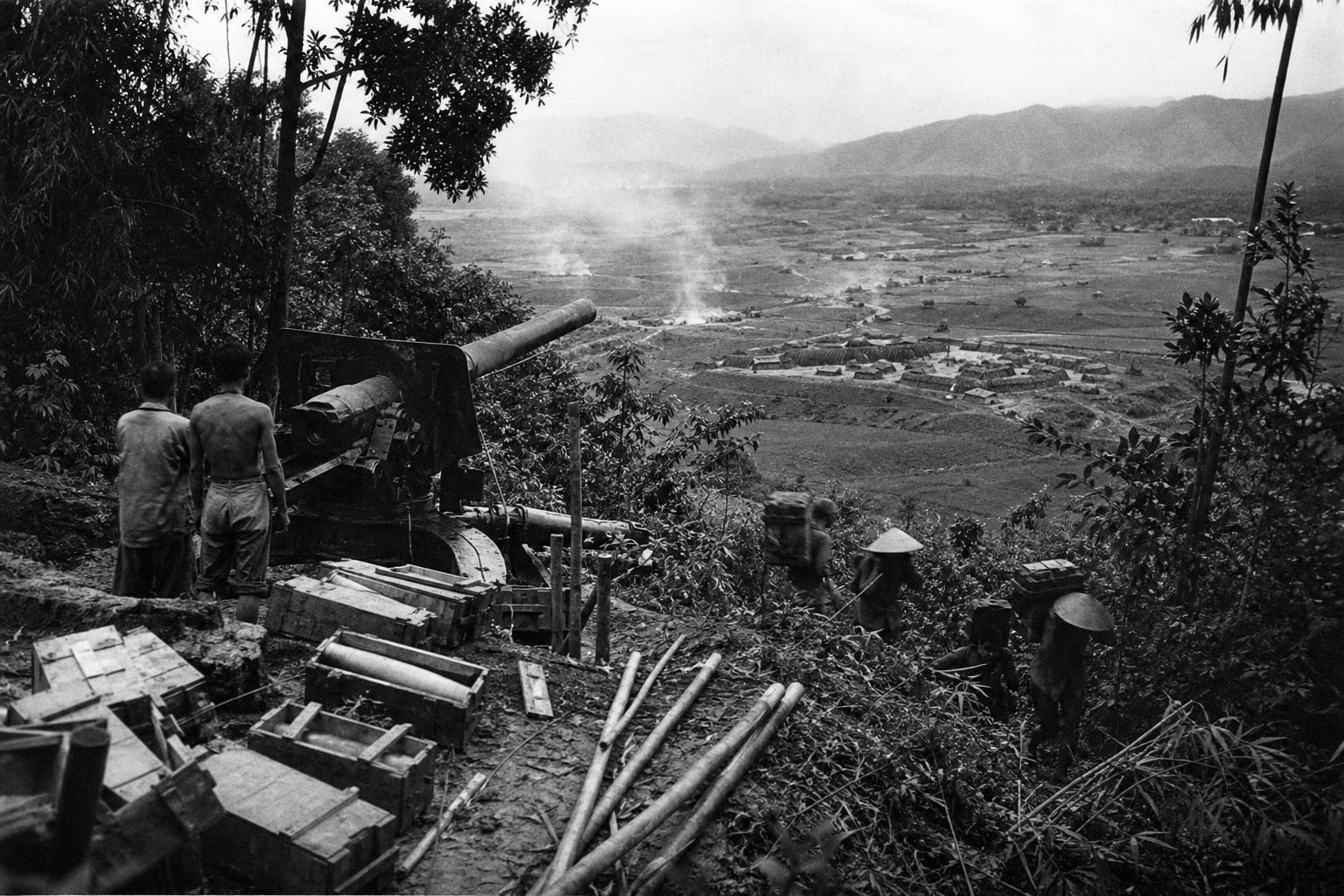
General Henri Navarre's garrison at Dien Bien Phu, established through the airborne assault of Operation Castor on November 20, 1953, rested on a specific calculation: the valley's surrounding hills made it physically impossible for the Viet Minh to bring heavy artillery within range, so French air power and firepower could destroy any force General Vo Nguyen Giap committed to a conventional fight (Battleground Guide). This wasn't an intelligence failure in the classic sense of missed signals. It was a failure to test a negative — nobody mapped what "impossible" terrain Viet Minh labor could actually move artillery through, because French planners judged the question answered by the terrain itself.
Giap answered it by disassembling his guns and hauling them up jungle slopes by rope, bamboo pole, and manpower, working largely at night to avoid French reconnaissance (Battleground Guide). The logistics behind that effort were not improvised. A War Info Hub summary places the war's turning point two years earlier, when Communist China's 1949 victory gave the Viet Minh a supply border and the materiel to convert from guerrilla insurgency to conventional army (War Info Hub). Dien Bien Phu was the bill coming due on that transformation, not a sudden tactical surprise.
The Siege Was a Logistics Contest the French Had Already Lost
What followed the opening bombardment on March 13, 1954, was 56 days of siege in which both sides were, in effect, running supply operations under fire — but on wildly different footing. The French garrison, estimated at 15,000 to 16,000 French Union troops, depended entirely on air resupply once Giap's guns closed the airstrip (War Info Hub). The Viet Minh side of that ledger is harder to pin down with precision — figures on porter numbers and howitzer counts vary by source and should be read as approximations of a genuinely massive mobilization rather than audited totals — but the consistent thread across accounts is a sustained human supply chain moving ammunition and guns through terrain French planners had written off as unusable (Echoes of Battle).
This is the part of the story that gets flattened into "the French were surprised by Viet Minh artillery." They weren't surprised that Giap had guns. They were wrong about where those guns could go, and that error was structural — baked into the site selection and the fortification plan months before the first shell landed. Once Viet Minh gunners had observed firing positions on the high ground looking directly down into French strongpoints, the battle's outcome was no longer a question of French firepower superiority. It was a question of how long a garrison supplied only by parachute, into a shrinking and contested drop zone, could hold.
What the Record Actually Settles, and What It Doesn't
The confirmed record is tight: the siege ran from March 13 to May 7, 1954, and ended with the garrison overrun and the French government seeking an armistice that produced the Geneva Accords of July 20, 1954, dividing Vietnam at the 17th parallel (Britannica; War Info Hub). What's contested, and should stay contested in any honest account, is the human cost. War Info Hub's compiled figures for the entire war put total deaths at a range of 400,000 to 842,707, with civilian deaths estimated between 125,000 and 400,000 — a spread wide enough that treating any single number as settled would misrepresent the sourcing (War Info Hub). Battle-specific casualty counts for Dien Bien Phu itself carry the same problem: as one account notes, the figures differ depending on whether a source counts wounded, missing, or prisoners who never returned (Echoes of Battle). Readers should treat any tidy single-number casualty claim about this battle with suspicion.
What should not get contested is the shape of the failure. This wasn't a garrison undone by enemy genius nobody could have anticipated — Giap's logistical achievement was real, but it was built on a French planning assumption that was never stress-tested against the terrain it claimed to control. The hills around Dien Bien Phu didn't surprise anyone by existing. They surprised the people who'd already decided what could be moved through them.


