


Amazon popularized a deceptively simple idea: the team that writes the code also carries the pager for it. No separate ops org to absorb the blame, no wall between "developers" and "the people who keep things up." It sounded like accountability. In practice, it's one of the most misquoted principles in the industry — teams adopt the slogan and skip the infrastructure that made it survivable at the place it came from.
The Slogan Traveled Faster Than the Support Structure
What gets lost when "you build it, you run it" gets copied into a startup's engineering wiki is everything that was supposed to come with it: dedicated tooling teams, mature deployment platforms, serious investment in observability, and enough headcount that on-call rotations don't collapse into three people trading nightmares every third week. Strip those out and you're left with the part that's easy to mandate — developers own production — without the part that's expensive to build — the systems that make owning production tolerable.
The result is a familiar shape. A ten-person product team ships features all day and gets paged all night, because nobody separately funded the platform work that would have made the pages less frequent. The slogan becomes a justification for not hiring SREs rather than a description of how a well-resourced team organizes itself.
Ownership Without Leverage Is Just Exhaustion With Extra Steps
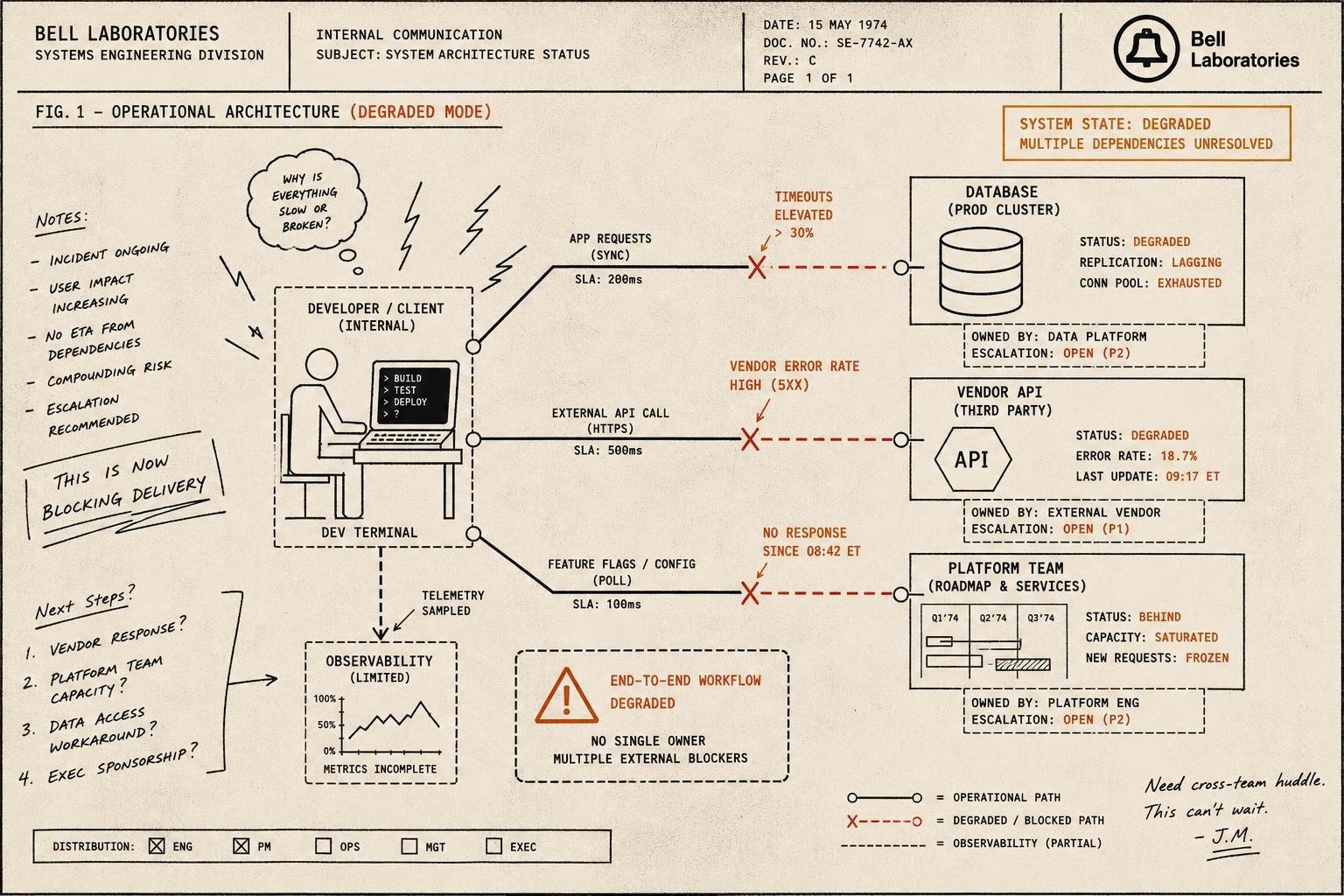
There's a version of this model that works, and it isn't defined by who holds the pager — it's defined by what that person has access to when it goes off. Can they see the full request path without filing a ticket to another team? Can they roll back their own deploy in under a minute? Do they have budget and calendar space to fix the thing that paged them, or does that fix join a backlog that competes with the next sprint's features forever?
If the answer to those questions is no, "you build it, you run it" isn't an ownership model. It's a liability transfer. The org chart says the team owns reliability; the reality is the team owns the symptom and has no authority over the cause, because the cause lives in a shared database, a vendor API, or a platform team's roadmap three quarters out. Ownership without leverage doesn't produce better engineering — it produces burnout with a mission statement attached.
I've seen this play out as a kind of organizational sleight of hand. Leadership adopts the Amazon-style language because it reads well in a all-hands deck, and it does shift something real: blame. When production breaks, the org already knows who's accountable, which is convenient for everyone except the person on the rotation. The hard part — making sure that person can actually act on what they're accountable for — gets quietly dropped, because it costs money and the slogan doesn't.
What Separates the Teams Where This Actually Works
The teams where "you build it, you run it" functions as advertised tend to share a few unglamorous traits. They have genuinely good deploy tooling, so rollback isn't a ritual that requires paging a second person. They staff on-call rotations wide enough that the same engineer isn't the primary fallback every other week. And critically, they treat operational load as a cost that shows up in planning, not an externality that happens to whoever drew the short straw this sprint. Reliability work competes for the same calendar as feature work, in the open, instead of getting squeezed in after hours.
None of that is exotic. It's mostly staffing discipline and tooling investment that doesn't get a press release. Which is probably why the slogan spread faster than the substance — "ownership" is a culture statement you can put on a slide, while "we hired enough people and built real deploy tooling" is a budget line that has to survive a planning cycle.
The Question Worth Asking Before You Adopt the Model
If your org is about to declare that teams own their own reliability, the useful exercise isn't debating the philosophy. It's auditing whether the team has the access, the tooling, and the staffing to make that ownership mean something, before the mandate goes out. Ask what happens to the engineer on call at 3am who finds the root cause three layers outside their own service. If the honest answer is "they file a ticket and wait," you haven't adopted the Amazon model. You've adopted the name of it.