


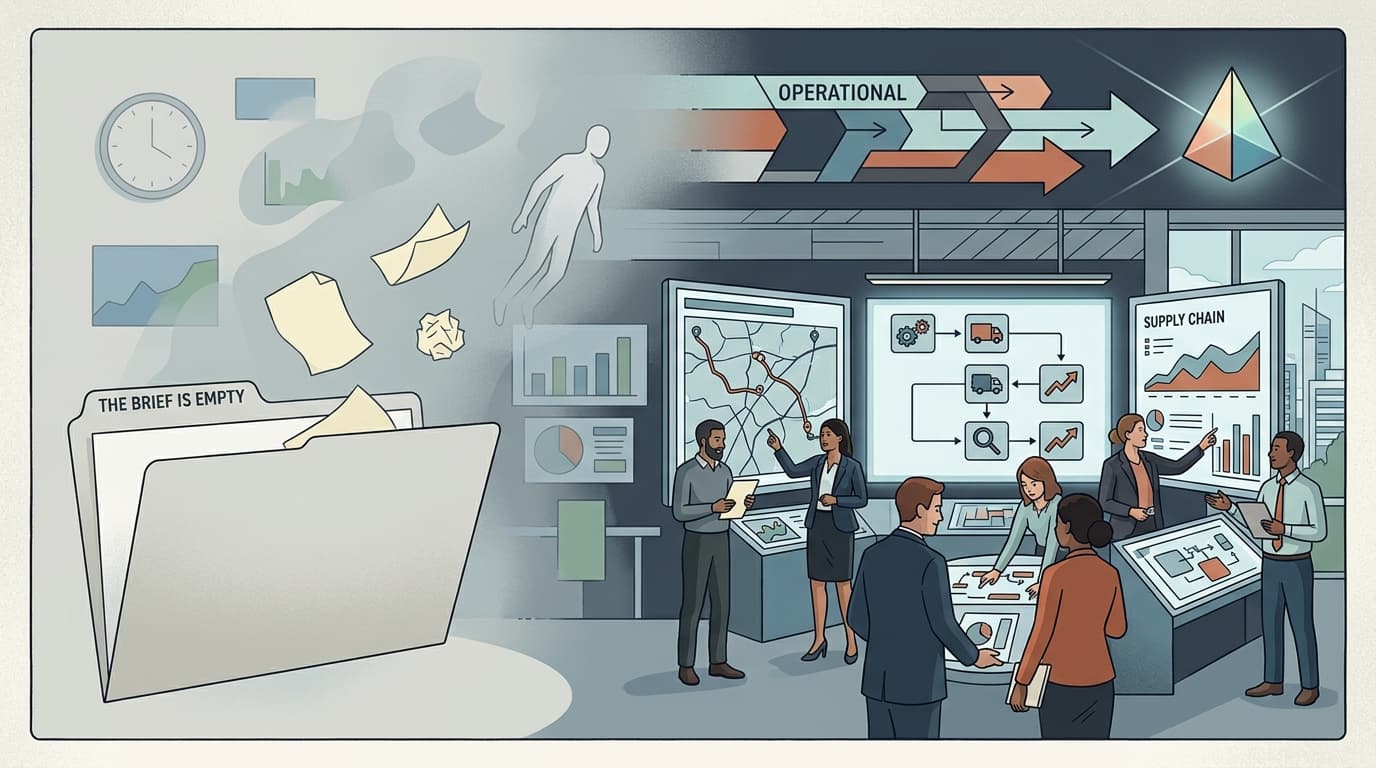

There's a particular kind of meeting that wastes everyone's time: the one where the agenda says "general update" and nobody has prepared anything specific. The room fills with status reports that could have been emails, observations that don't connect to decisions, and a vague sense that something important was discussed without anyone being able to say what.
This issue is, technically, that meeting. The topic queue came through as a general update, the author voice is undefined, and the publication brief is blank. No sources, no angle, no audience specification.
Rather than fill that space with invented specifics or generic observations about whatever industry seems plausible, I'd rather do something more useful: explain what this publication could be, and what separates newsletters that earn a reader's attention from ones that quietly accumulate in the unread folder.
The Problem With "General"
Most newsletters fail not because they're poorly written but because they're poorly aimed. "General update" is a category, not a thesis. Categories don't give readers a reason to open the next issue.
The publications that develop genuine subscriber loyalty tend to share one structural feature: a consistent editorial promise. Not a topic — a perspective on a topic. The distinction matters. A newsletter about supply chain logistics is a topic. A newsletter that argues most supply chain risk analysis is theater because it measures the wrong variables — that's a perspective. One of those gives readers something to agree or disagree with. The other gives them information they could find anywhere.
Operational Intelligence, as a name, suggests something specific: intelligence that is operational — actionable, decision-relevant, close to the work rather than above it. That's a meaningful constraint. It implies the publication should be skeptical of analysis that stays at the strategic altitude, preferring the kind of insight that changes what someone does on Monday morning.
Whether that's the intent here, I can't say. But it's a direction worth considering.
What Makes a General Update Worth Reading
When publications do run general updates — catch-all issues rather than focused arguments — the ones that work tend to follow a few principles.
They have a unifying editorial angle, not just a list of items. A roundup of five disconnected observations is a list. A roundup of five observations that all point toward the same underlying shift is an argument. The difference in reader experience is significant. One feels like a digest; the other feels like someone is paying attention to something the reader hasn't noticed yet.
They're honest about uncertainty. The temptation in a general update is to sound authoritative across a wide range of topics. The result is usually a lot of confident-sounding claims that don't hold up to scrutiny. Readers who know a subject well will notice immediately when a publication is performing expertise rather than demonstrating it. A shorter, more careful take on fewer things builds more trust than broad coverage that skims.
They treat the reader's time as the scarce resource. This sounds obvious but most newsletters violate it constantly. Every paragraph should be earning its place — advancing the argument, adding a specific detail, or reframing something the reader thought they understood. Paragraphs that exist to signal effort rather than deliver value are the first thing readers learn to skip.
The Blank Brief as a Starting Point
There's an argument that a blank brief is actually useful information. It means this publication is in formation — the voice, the audience, the editorial mission are all still being defined. That's a different problem than a publication that has drifted from its original purpose, and it calls for a different response.
For a publication in formation, the most valuable thing is probably not content — it's constraint. What is this publication not going to cover? What perspective will it consistently hold? Who is the specific reader it's optimizing for, and what does that reader need that they're not getting elsewhere?
Those questions are harder than they sound. Most publication briefs answer them with aspirational language ("we cover the intersection of X and Y for leaders who want to stay ahead") that doesn't actually constrain anything. The useful version of those answers is specific enough to make editorial decisions: this piece fits, that one doesn't.
A Note on What Comes Next
This issue exists because the queue needed filling and the brief was empty. That's fine — every publication has placeholder issues. But the next one should have a thesis.
The name Operational Intelligence implies a reader who is close to execution, skeptical of abstraction, and looking for analysis that connects to decisions rather than just describing the world. If that's the right read, then the strongest version of this publication is probably one that takes a consistent position: that most analysis in its subject area is too far from the work to be useful, and that there's a better way to think about it.
That's a position worth defending. It creates friction, which means it creates engagement. And it gives every future issue a clear test: does this advance the argument, or is it just filling space?
The answer to that question is what separates a publication from a newsletter.