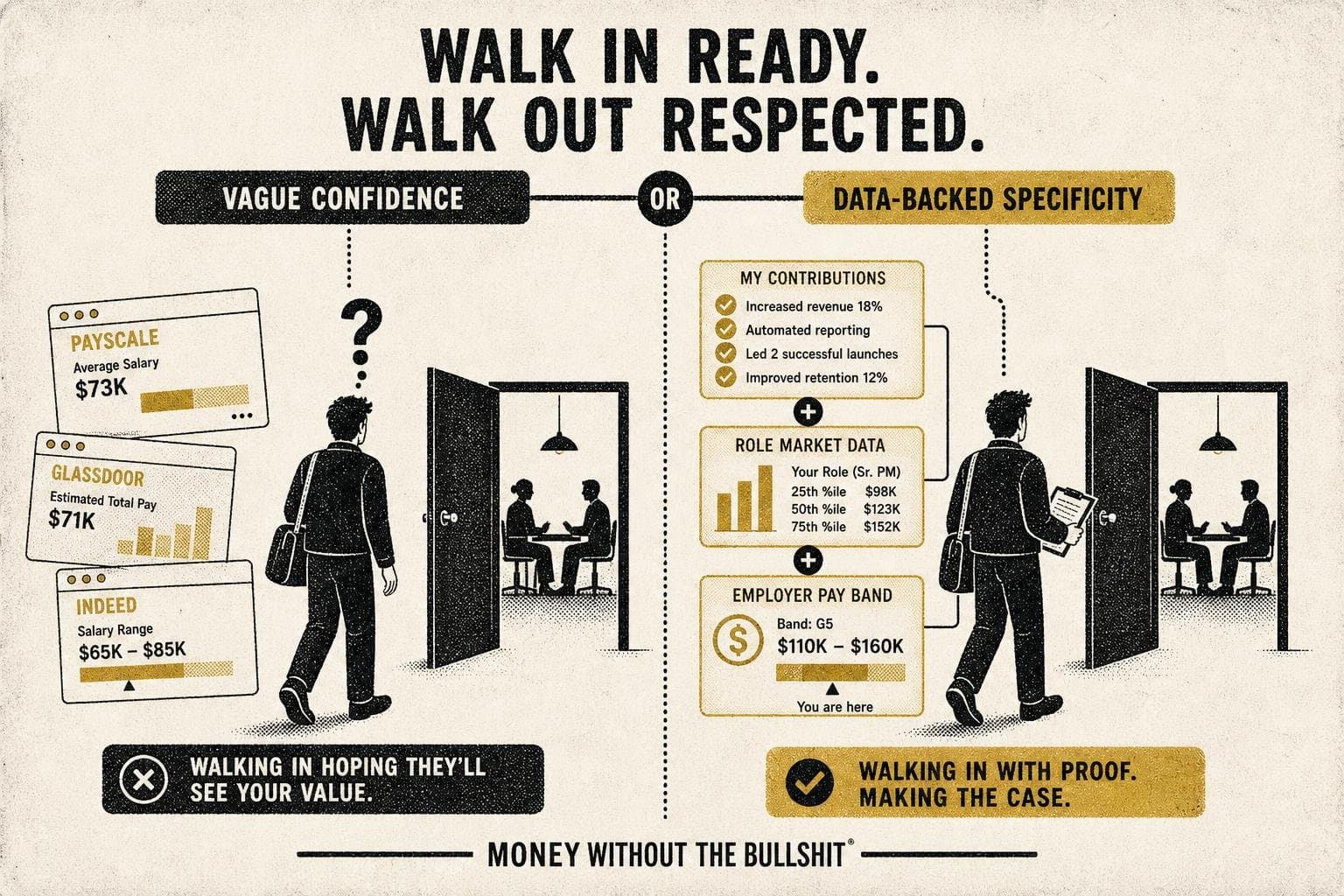

Most people treat salary negotiation like a performance — they rehearse what to say, steel their nerves, and walk in hoping to seem confident enough. Then they accept whatever number comes back because they don't actually know if it's fair.
That's the real problem. Confidence without data is just theater.
The labor market right now makes this worth thinking about carefully. According to the BLS, real average hourly earnings increased just 0.1 percent from June 2025 to June 2026. Wages are technically outpacing inflation — USAFacts tracking of BLS data puts nominal wage growth at 3.8 percent against a 3.5 percent inflation rate over that period — but the margin is thin enough that a single bad negotiation, or no negotiation at all, can wipe out any real purchasing power gain for the year. Meanwhile, the NYT reports that an unusually low number of workers are quitting their jobs right now, largely because they lack confidence in finding better opportunities. Employers know this. The leverage equation has shifted.
None of that means you can't negotiate. It means you have to be smarter about it.
The Data You Actually Need Before You Say a Number
The most common negotiation mistake is walking in with a number you pulled from a salary website and treating it as your anchor. Those aggregate figures can be useful as a starting point, but they're not your argument — they're background.
What actually moves the needle is specificity. Harvard Law's Program on Negotiation makes the point plainly: before you negotiate, gather information that makes what you're asking for defensible. That means knowing what pay category someone with your education and experience would fall into at this specific employer, then building a case for the high end of that range.
Here's what that looks like in practice:
- Role-specific market data, not industry averages. A "software engineer" salary range is nearly useless. A "mid-level backend engineer at a Series B fintech in Austin" is a data point. LinkedIn Salary, Levels.fyi for tech roles, and state-level wage data from the BLS Occupational Employment and Wage Statistics program are more useful than generic aggregators.
- Your documented contributions, in concrete terms. Revenue generated, costs reduced, projects shipped, headcount managed. Not adjectives — numbers and outcomes. If you don't have these written down before you walk in, you're negotiating blind.
- The employer's constraints. Large companies with defined pay bands operate differently than startups with flexible comp structures. Fidelity's guidance on salary negotiation notes that understanding the structure you're negotiating within changes what's actually achievable — and what to ask for when base salary has a ceiling (equity, signing bonus, extra PTO, remote flexibility).
One thing worth flagging: salary data varies significantly by state and metro area. A number you find for your role nationally may be meaningfully different from what's competitive in your specific market. Always check whether the data you're using is geographically relevant.
What "Realistic" Actually Means Right Now
Here's where people get tripped up by the wrong benchmarks. The question isn't "what's the average raise?" — it's "what's the cost of not negotiating?"
The Harvard negotiation research makes a point that's easy to underestimate: even a modest increase in pay compounds significantly over time through raises, bonuses, and future offers that are anchored to your current salary. The first number you accept sets the floor for everything that follows.
The current macro picture matters here too. Average hourly earnings growth is running around 3.5 percent annually, which is the baseline your employer is probably using to budget raises. If you're getting a standard annual review bump, you're likely treading water in real terms — not gaining ground. Negotiating at the point of a new offer or a role change is where you can actually move the baseline, because you're not constrained by the internal raise budget.
That said: realistic expectations matter. In a slower hiring environment where workers are staying put, the leverage of a competing offer is real but requires actually having one. Bluffing with a phantom offer is a bad strategy — it tends to end conversations rather than open them.
The Move Most People Skip
The Harvard framework identifies something that sounds obvious but isn't: most people make the first concessions in their own heads, before the negotiation even starts. They decide what they think the employer will accept, then ask for that — rather than asking for what the data supports and letting the employer push back.
The practical fix is simple. Come in with a number at the high end of the defensible range, not the midpoint. If the employer's range tops out below what you asked, you've learned something useful and you're still negotiating from a better position than if you'd started at the middle. If they meet it, you didn't leave money on the table.
The goal isn't to win an argument. It's to have enough information that you know what a fair outcome looks like — and can recognize when you're getting it.


