



Lesson 10: What Embedding Philosophy Teaches About Language Design for Hostile Environments
There's a design principle hiding inside Lua that most programmers walk right past. They see a small scripting language used in games and network tools, learn that it's fast and easy to embed, and move on. What they miss is the reason it's easy to embed — and why that reason changes how you should think about language design entirely.
Lua wasn't built to be a great language. It was built to be a great guest.
The Problem Wasn't Scripting. It Was Control.
Lua was created in 1993 at the Pontifical Catholic University of Rio de Janeiro. The original team — Roberto Ierusalimschy, Luiz Henrique de Figueiredo, and Waldemar Celes — needed a flexible scripting tool to extend engineering software at a time when import restrictions made commercial alternatives difficult to use in Brazil. The constraint wasn't aesthetic. It was geopolitical.
That origin matters because it shaped the core design question. The team wasn't asking "what's the best language?" They were asking: "what's the smallest, most controllable language we can tuck inside a C program without the host application losing authority over its own behavior?"
That's a fundamentally different question. And it produces a fundamentally different language.
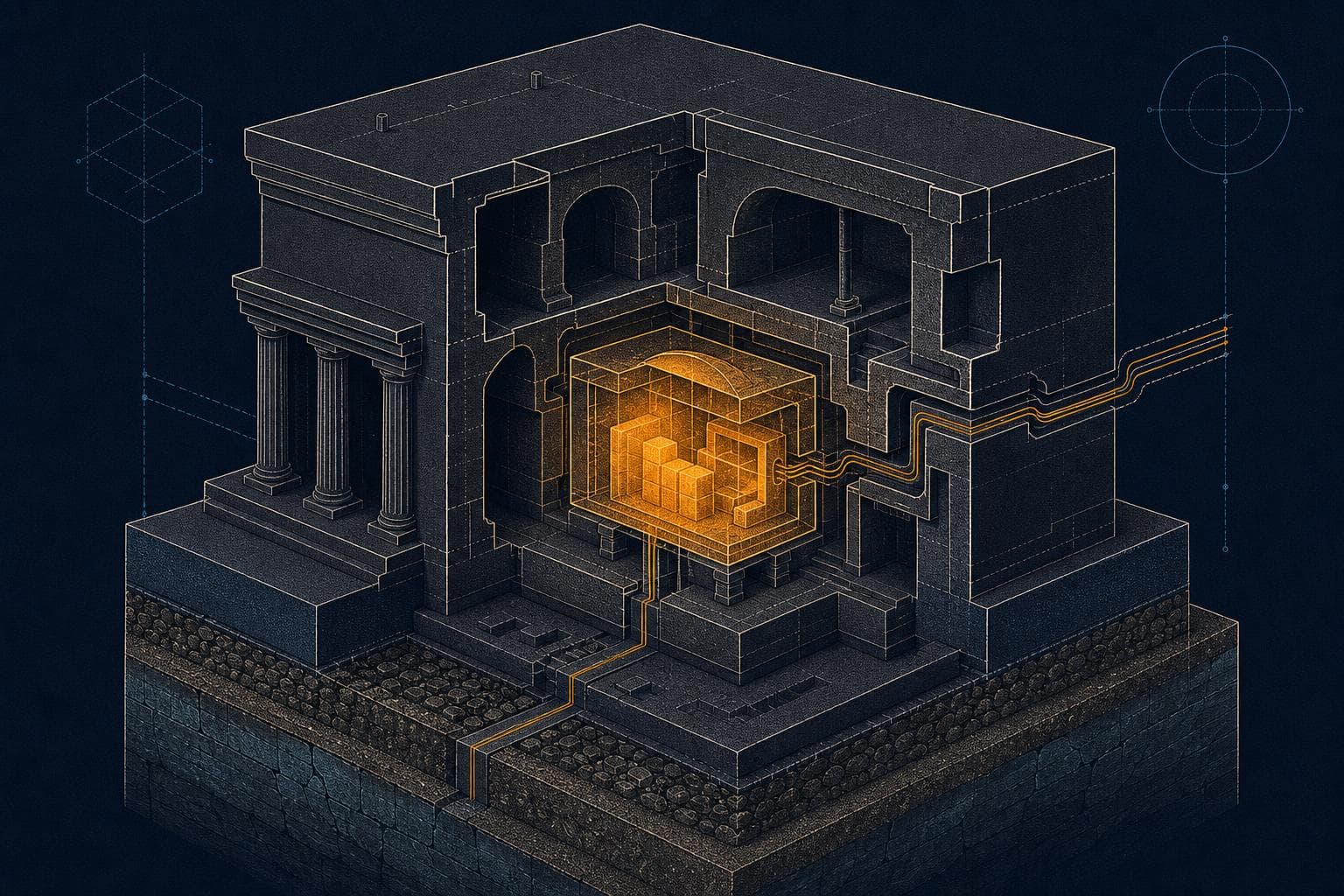
Most languages are designed from the inside out — they define their own runtime, their own memory model, their own I/O. Lua was designed from the outside in. The host application owns the process. Lua is a tenant. A well-behaved, evictable tenant.
This is what I'd call designing for a hostile environment — not hostile in the sense of adversarial users, but hostile in the sense that the language has no guaranteed rights. It can be suspended, restarted, sandboxed, or replaced. It has to earn its place in every application that uses it.
What "Guest Language" Architecture Actually Looks Like
The practical consequence of this philosophy shows up in how Lua interfaces with its host. The raw Lua C API is a stack-based interface: you push values, pop values, and communicate between C and Lua through a shared virtual stack. It's explicit, low-level, and gives the host complete control over what Lua can see and touch.
As one practitioner described it: "the raw Lua C API is a stack-based interface where you push and pop values by index, trust at runtime that types match, and get error messages that tell you something failed somewhere in the virtual machine. It works. The debugging experience is archaeology."
That's not a bug. The stack-based design means the host decides what gets exposed. If you want Lua scripts to access a game object's position but not modify its health directly, you expose exactly those functions and nothing else. Lua has no way to reach around the boundary. The host application is the gatekeeper by design.
The Bitsquid game engine team captured the other side of this tradeoff well. Because Lua is fully dynamic and the host controls the API surface, you can redefine functions at runtime, reload scripts without rebooting the game, and even intercept engine API calls for debugging — all without the host application losing stability. The guest language's dynamism becomes a feature precisely because the host's control layer contains it.
This is the design insight: constraints on the guest create freedom for the host. Lua's limitations aren't compromises. They're the product.
The Lesson for Language Design Generally
Here's what this teaches that applies well beyond Lua.
Most language design optimizes for the programmer writing in the language. Expressiveness, type safety, ergonomics — these are all about the author's experience. Lua optimized for the programmer embedding the language. The author experience was secondary. The integration experience was primary.
That inversion produces different tradeoffs everywhere. Lua's tables-as-everything data model isn't elegant for large-scale software architecture, but it's trivially serializable across a C boundary. Lua's global-by-default variable scoping is a footgun for solo projects, but it's predictable enough that a host can audit and sandbox the global namespace. The language's small standard library looks like a weakness until you realize it means fewer surprise capabilities for embedded scripts to exploit.
I'd argue this is the underappreciated axis of language design: not just "what can programmers do with this?" but "what can the environment do with this language?" Erlang made a version of this bet with its process isolation model. WebAssembly makes it explicitly — the entire design is about running untrusted code safely inside a host. Lua got there in 1993, from a Brazilian university lab, because import restrictions forced a question that most language designers never have to ask.
Your Next Step
Before the next issue: find one place in your own work where you've embedded or extended a system — a plugin API, a configuration DSL, a scripting hook. Ask what the host application can and cannot control about that guest code. If the answer is "not much," you've found a Lua-shaped problem waiting for a Lua-shaped solution.