



Here's the thing nobody tracking air freight rates wants to say out loud: belly space isn't a cargo decision. It's a byproduct of someone else's seat map. When passenger airlines cut winter schedules to protect margins, cargo forwarders lose capacity they never had a say in, on routes they don't control, with no warning beyond a quiet schedule filing.
That's exactly the dynamic building into this winter, and it's not being driven by weak freight demand. It's being driven by fuel costs and conflict-related disruption hitting passenger network economics first.
The Passenger Side Is Cutting, and Cargo Rides Along
US airlines spent $42.9 billion on fuel through the end of August, $13.2 billion more than the same period a year earlier — a roughly 25 percent year-over-year jump, according to Bureau of Transportation Statistics data reported by Air Cargo Week. Lufthansa has already released reduced winter capacity schedules in response, per the same reporting, which cites the Financial Times' coverage of carriers "sounding the alarm" ahead of a bleak winter.
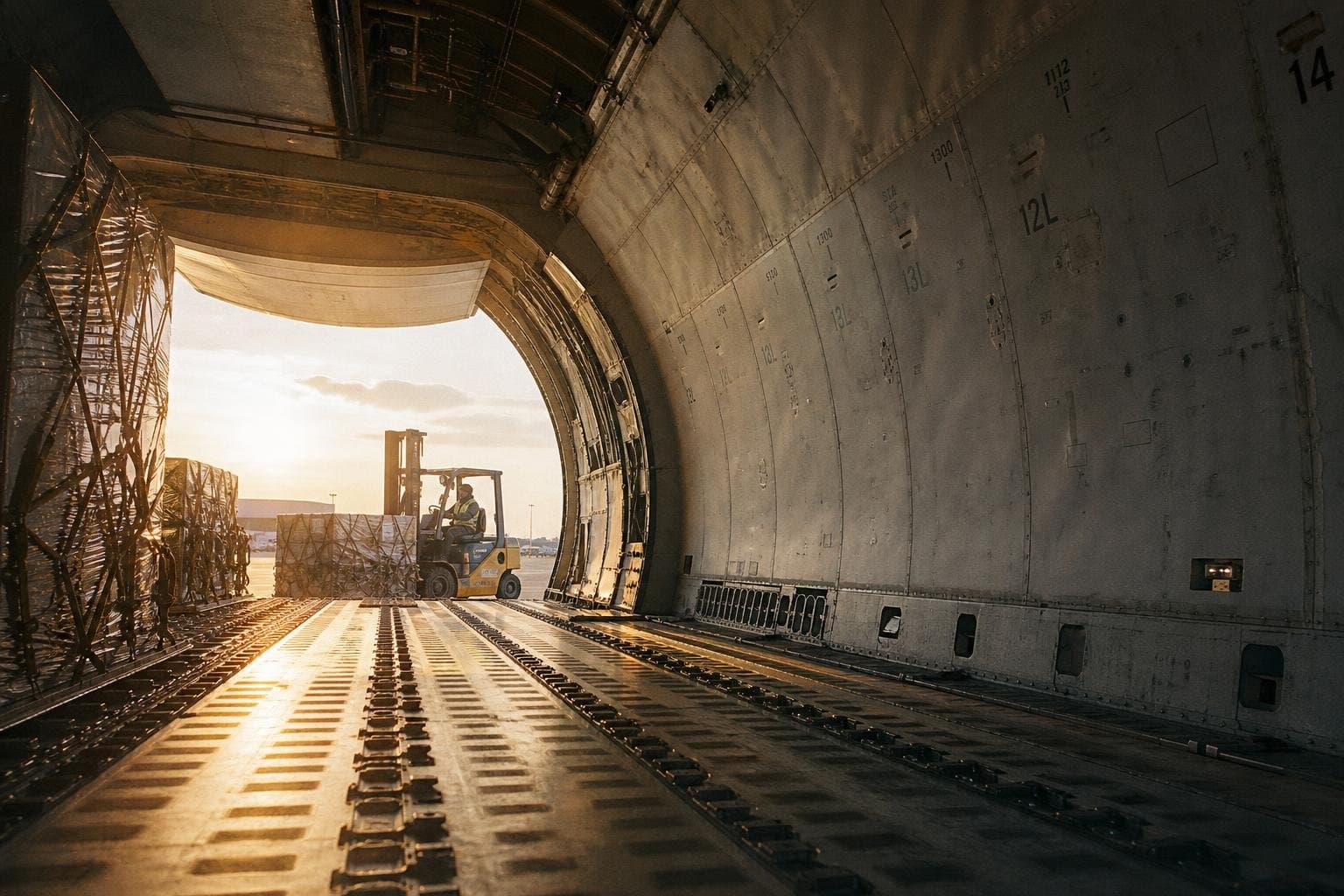
That matters for cargo because wide-body passenger aircraft carry a meaningful share of the world's air freight in their bellies, not in dedicated freighters. When a carrier trims a winter schedule to cut fuel burn and protect yield, the capacity that disappears isn't just seats — it's the lower deck space forwarders were counting on for peak-season volume. Delta's quarterly fuel expenses rose 62 percent year over year, and the carrier slashed its annual profit forecast by $6 billion, according to Air Cargo Week's summary of reporting from RTÉ — a number large enough that it's hard to imagine network planners not reaching for capacity cuts as a lever.
I want to be precise about what this is and isn't. It's a passenger-side cost shock with a cargo-side consequence, not a cargo demand collapse. The forwarders losing space aren't losing it because shippers pulled back — they're losing it because the aircraft that would have carried their freight is flying fewer frequencies, or not flying at all on certain legs.
Capacity Is Also Moving, Not Just Shrinking
The other half of this story is reallocation, not just reduction. Airlines are shifting capacity toward booming China and Hong Kong outbound markets, according to the Journal of Commerce. That's an outbound-from-Asia dynamic — carriers chasing where the yield is strongest this season, which by definition means thinner coverage somewhere else on the network. If a widebody gets redeployed onto a Hong Kong departure, the belly space it used to provide on a different inbound or transpacific leg doesn't just vanish into thin air — it moves to wherever the passenger revenue is better.
For procurement teams booking winter freight, that means the squeeze isn't uniform. It's concentrated on whichever lanes are losing frequency to fuel-driven cuts or losing aircraft to more profitable Asia-outbound redeployment. A shipper on a lane that isn't attracting that reallocated capacity could be facing a real space constraint even while headline cargo demand looks flat.
What's Still Missing From This Picture
Here's where I have to be honest about the limits of what's in front of me: I don't have belly-space utilization numbers by route, and I don't have quantified air cargo rate movements tied specifically to these capacity cuts. The passenger-side fuel cost shock is well documented. The cargo-side consequence is logical, and the mechanism is real, but the actual squeeze — measured in available tonnage or rate spikes on specific lanes — isn't in the public data yet. That gap is itself the story for anyone in procurement right now. The schedule cuts are visible months before the capacity crunch shows up in a spot quote, which is exactly the kind of lead time that rewards paying attention to passenger network filings instead of waiting for the freight rate to move.
Watch Lufthansa's published winter 2026-27 capacity figures when they're finalized, and watch whether other European and Gulf carriers follow with their own reduced schedules. If belly capacity on transatlantic and Asia-Europe passenger routes contracts in step with the fuel-cost pressure already visible in airline earnings, that's when this stops being a passenger-finance story and starts being a cargo-rate story.