


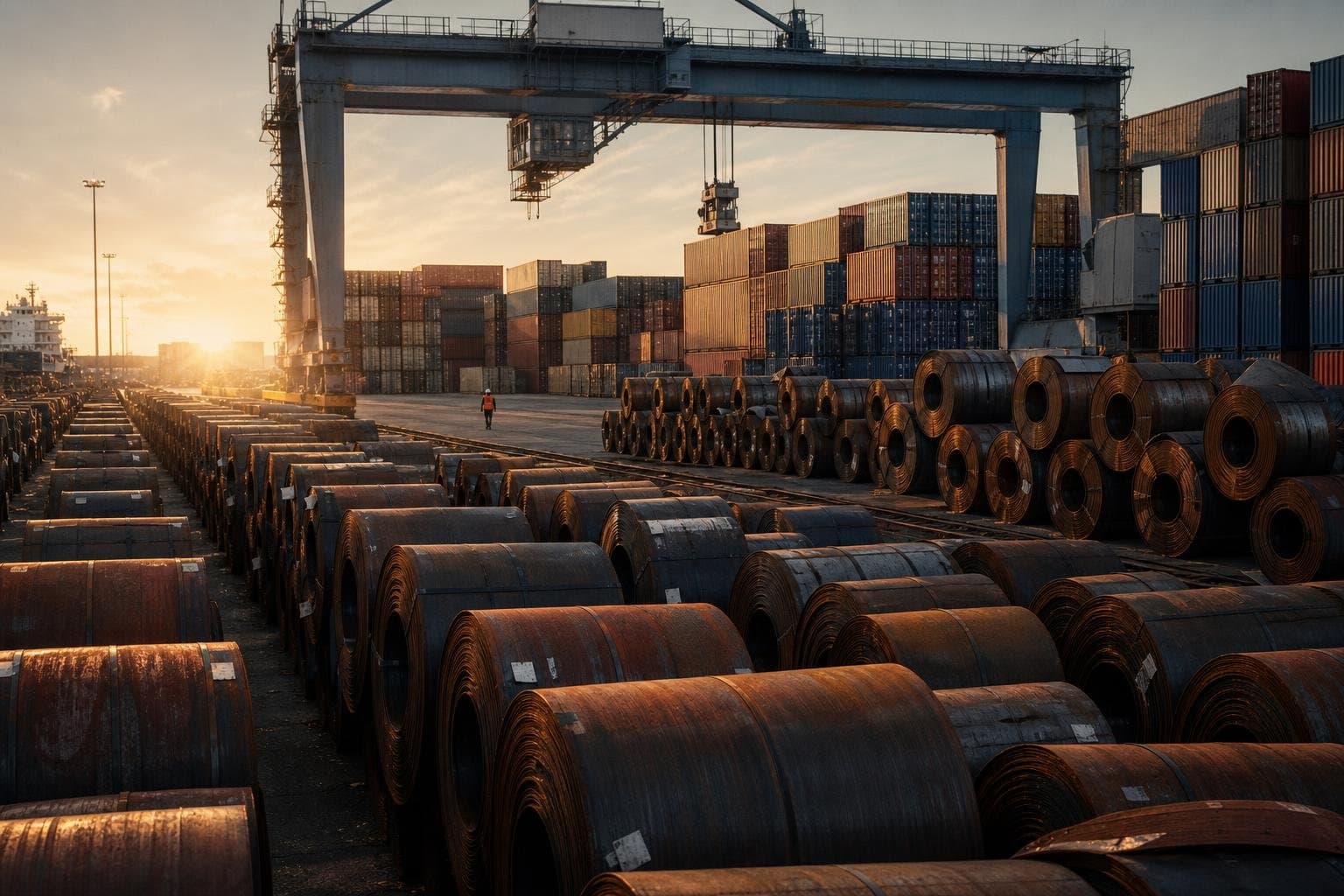

Steel imports through Port Houston jumped 54% year over year as overall container volumes edged higher, according to numbers highlighted in FreightWaves' American Shipper roundup published this week. That's the kind of number that should make procurement teams sit up — a Gulf Coast terminal absorbing a sudden surge of heavy, awkward freight. It's also the kind of number that invites a tidy narrative: containers piling up, chassis nowhere to be found, inland hubs starved of boxes. I went looking for the chassis evidence specifically. It isn't in this week's source pool. What is there tells a related but different story, and it's worth being precise about which one we can actually back up.
What the Data Actually Shows
The steel surge at Port Houston is real and sourced, but the pool gives no chassis availability figures, no equipment-shortage reporting, and no specific evacuation-delay data tied to that terminal (via FreightWaves). Separately, Journal of Commerce reporting on Enstructure describes a Gulf Coast network expansion driven by data center construction demand — more bulk and breakbulk volume moving through the region's terminal infrastructure, not container chassis specifically. That's an adjacent pressure point, not confirmation of the assigned claim. When a topic brief asserts a specific mechanism the sources don't back, the responsible move is to report what's actually there: rising Gulf Coast import volumes, concentrated in commodities that stress inland handling capacity in ways that have nothing to do with a 40-foot dry van chassis.
The Real Constraint Right Now Is Rail Dwell, and It's Not a Gulf Coast Story Yet
The dwell time data that does exist this month comes from the West Coast, and it's worth citing precisely because of how different it looks from the inbound surge narrative. The Pacific Merchant Shipping Association reported truck dwell holding at 2.95 days in August at the San Pedro Bay complex (Los Angeles/Long Beach), while rail dwell climbed to 6.75 days — among the highest levels of the past year — per Transport Topics. Harbor Trucking Association CEO Robert Loya connected that rail dwell directly to empty-return friction: "As import dwell goes up and rail dwell goes up, then the turn times go up and the ports get congested... Then we're having problems returning empties because there's no room," he told Transport Topics. That's an inbound-to-inland bottleneck story, but it's rooted in rail car turnaround and yard space at San Pedro Bay, not chassis supply, and it's not a Gulf Coast phenomenon on the evidence available.
Meanwhile, rail industry voices are already flagging that the broader intermodal expansion carriers have been counting on for inland capacity relief isn't guaranteed to hold. Journal of Commerce reports that Asia port congestion pulled functional capacity out of the trans-Pacific trade in September, stretching what was already an early peak season further into the calendar, while truck capacity is simultaneously tightening as carriers exit the market. Union Pacific is reportedly betting on transcontinental truckload conversions, while J.B. Hunt and Swift see the deepest convertible freight pool in shorter-haul lanes — a detail that matters because it signals where rail operators expect inland pressure to actually bite, and it isn't the Gulf.
What This Means for Procurement Right Now
If you're moving freight through Gulf Coast gateways, the honest read is that Port Houston's steel-driven volume growth and the Enstructure-linked data center buildout are adding tonnage to a regional network that hasn't, as of this reporting, shown up in dwell or chassis-specific metrics anywhere in the trade press I can verify. The documented stress sits on the West Coast, in rail dwell numbers, and in a national truck capacity market that's tightening for reasons tied to carrier exits rather than equipment shortages at any single port.
The watch item for the next few weeks isn't a Gulf Coast chassis crisis — it's whether PMSA's October dwell figures for San Pedro Bay extend the rail dwell climb past 6.75 days, and whether Port Houston's own terminal operators start publishing gate or chassis turn data that would actually let us test the inland-evacuation claim instead of guessing at it.