



Day 30 until kickoff
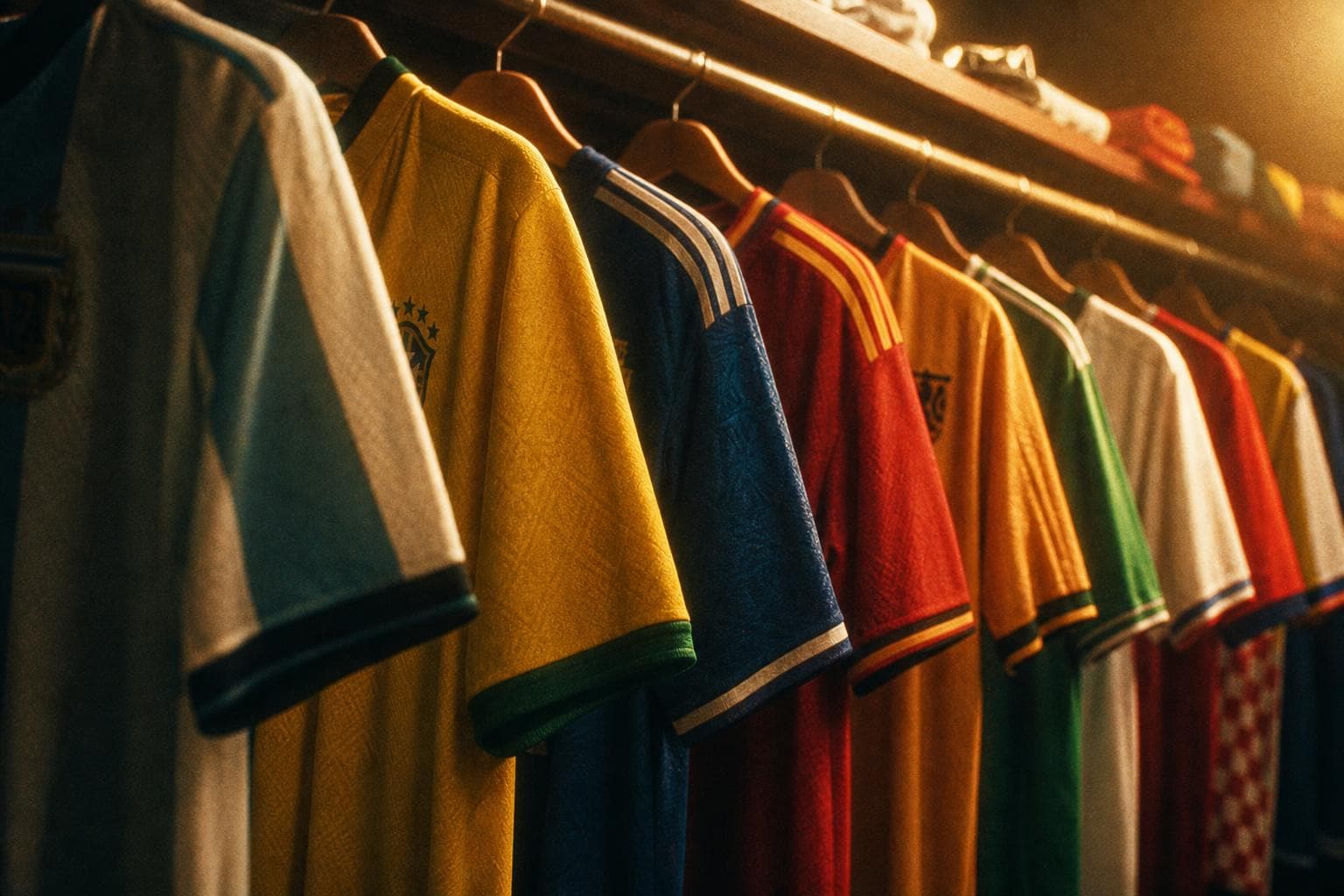
Every four years, a kit drop is really a statement of identity — whether the federation knows it or not. Some teams use the moment to say something bold. Others play it safe and accidentally say something anyway. With 30 days to go and the provisional squads now locked, the 2026 kits are all out in the world, and the design choices are worth reading like text.
The USMNT Kits Are the Most Interesting Story in Sportswear This Cycle
Start here, because this one is genuinely different. After the 2022 Qatar kits — a white shirt and an "ice-dyed" blue that players reportedly despised so much they drew straws to avoid being photographed in them — the USMNT essentially staged a design intervention. The Guardian reported that players including Weston McKennie and Diego Luna were given real creative input this cycle, with Nike executive Jordy Romick telling the group they wanted something "undeniably American."
What they landed on: a Stars Kit with sublimated design and a Stripes Kit that consciously echoes the 1994 wavy stripes and the 2012-era "candycanes" — two of the most beloved American kits in the federation's history. Even the goalkeeper kit got a Jorge Campos-inspired overhaul: green and red, loud, unapologetic.
The design philosophy here is federation-as-coming-of-age story. The USMNT is hosting its first World Cup in 30 years, playing in front of home crowds for the first time since that 1994 tournament, and the kits are explicitly reaching back to that moment while insisting the team has grown up since. It's nostalgia weaponized as confidence. Whether the team earns that confidence on the pitch is another question — but as a piece of communication, it works.
Puma's Approach: Identity Hidden in Plain Sight
On the other end of the spectrum, Forbes reported that Puma took a deliberately minimalist approach for its 2026 nations — Ghana, Morocco, Mexico, and Portugal among them — with cultural and ancestral textile references buried beneath the fabric in fine lines, described as "almost like white-ink tattoos: hidden at first glance, yet revealing far more upon closer inspection."
That's a genuinely interesting design philosophy, and it maps onto something real about how those federations tend to present themselves internationally. Morocco, fresh off their 2022 semifinal run, doesn't need to shout. Ghana has a long history of kits that carry cultural weight without being garish about it. The restraint isn't absence of identity — it's a different kind of confidence. You have to look closely. That's the point.
Adidas Drops 22 Nations at Once — and the Tension That Creates
Goal.com noted that on November 5, 2025, Adidas dropped home strips for 22 nations simultaneously — Germany, Spain, Belgium, and co-host Mexico among them — billing the collection as blending "each team's heritage with a modern, forward-looking design."
The problem with releasing 22 kits at once is that it flattens the individual stories. When Germany and Mexico and Belgium all drop on the same day under the same brand umbrella, the narrative becomes Adidas's narrative, not each federation's. South Africa's home jersey, for instance — yellow base, green trim, instantly recognizable — carries real symbolic weight as the Opening Match opponent. But in a 22-kit drop, it risks becoming a footnote.
The federations that control their own kit story tend to be the ones whose kits actually land culturally. The USMNT's player-driven design process is the clearest example of that this cycle. When the players are invested enough to revolt over the previous kit and demand creative input, the result tends to feel like it means something.
Player Spotlight: The Kit as Player Story
One small detail worth flagging: Al Jazeera reported that FIFA's provisional squad lists — submitted by May 11 — are intended for internal use only and won't be published publicly. The final 23–26 player squads are due June 1. Which means for the next three weeks, the kits will be doing a lot of the visual storytelling while the actual rosters stay under wraps. The jersey is the face of the team before the team has a face.
That's worth sitting with. When Lamine Yamal pulls on Spain's 2026 shirt for the first time in tournament play, or when the USMNT's Stripes Kit runs out at a packed MetLife Stadium, the kit isn't just clothing. It's the frame around the moment.
Countdown Corner
The 1994 US World Cup kit — the one the 2026 Stripes Kit is explicitly calling back to — was designed by Umbro and featured a denim-inspired pattern that was widely mocked at the time. It's now considered one of the most iconic American soccer kits ever made. Thirty-two years later, Nike is betting that the same nostalgia cycle applies. The lesson: the kits that get laughed at tend to age the best.