


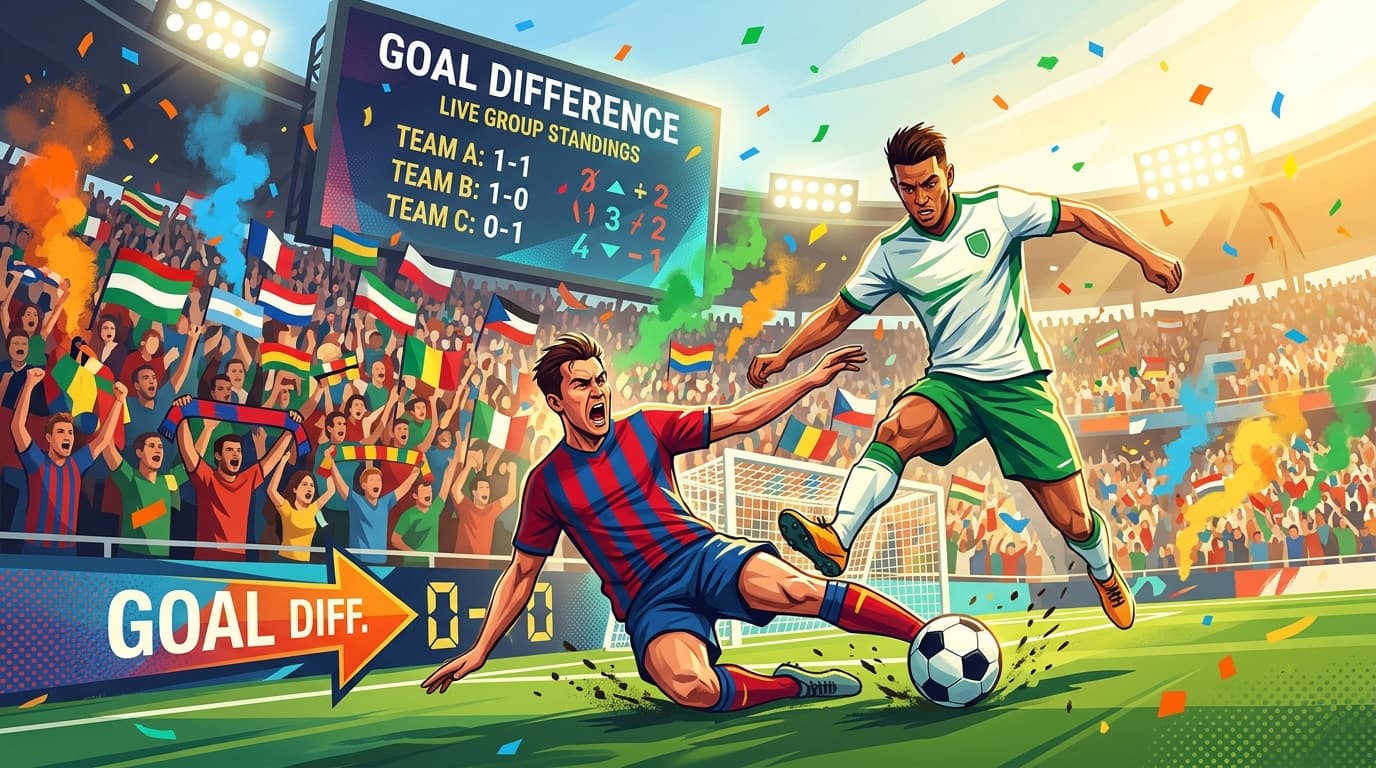

The math is simple and the consequences are not. With 48 teams across 16 groups of three for the 2026 World Cup, every group ends with one team eliminated and two advancing — and in a three-team group, the final standings will regularly come down to goal difference, goals scored, or head-to-head margins that teams are actively trying to manipulate in real time.
That's not a flaw in the format. It's the format.
In a traditional four-team group, the third-place finisher usually knows their fate before the final whistle. In a three-team group, the arithmetic stays live until the very end. Two teams play their final group match knowing exactly what scoreline they need — and knowing the other team knows too. The incentive to game the result isn't theoretical. It's structural.
I'd argue this is the format's defining tension, and FIFA hasn't fully reckoned with it publicly. The expansion to 48 teams was driven by commercial and political logic — more nations, more markets, more broadcast revenue — but the three-team group format it produced creates a specific kind of match integrity problem that four-team groups largely avoided by scheduling the final two games simultaneously.
FIFA's solution, per their published format, is to schedule the final match in each three-team group simultaneously with the other group game. That helps. It doesn't solve it. Two teams can still enter that final game knowing a draw sends both through, which is exactly what happened in the 1982 World Cup's "Disgrace of Gijón" — a match so notorious it prompted FIFA to mandate simultaneous final group games in the first place. Three-team groups bring that ghost back in a new form.
The flip side — and there is one — is that the format genuinely expands the tournament's global footprint. Nations that historically exit in qualifying now reach the world stage, and a 48-team field means more first-time qualifiers, more upsets, more of the "giant-killing" moments that casual fans remember for decades. The group stage becomes less predictable, not more.
But unpredictability and integrity risk aren't the same thing, and conflating them does the format a disservice. The chaos of a 48-team tournament is mostly good. The specific chaos of a three-team group's final matchday is a problem FIFA is hoping doesn't become a headline.
Watch the group draw carefully when it drops — which groups pair two heavyweights against a minnow will tell you exactly where the integrity pressure lands.
Countdown Corner: The 2026 World Cup will be the first to feature 48 teams, up from 32 — a 50% expansion that makes it, by participant count, the largest men's World Cup in history. Sixteen nations will be eliminated after just two group games. Do the math on your favorite team's group before the tournament starts. It matters more than it used to.