


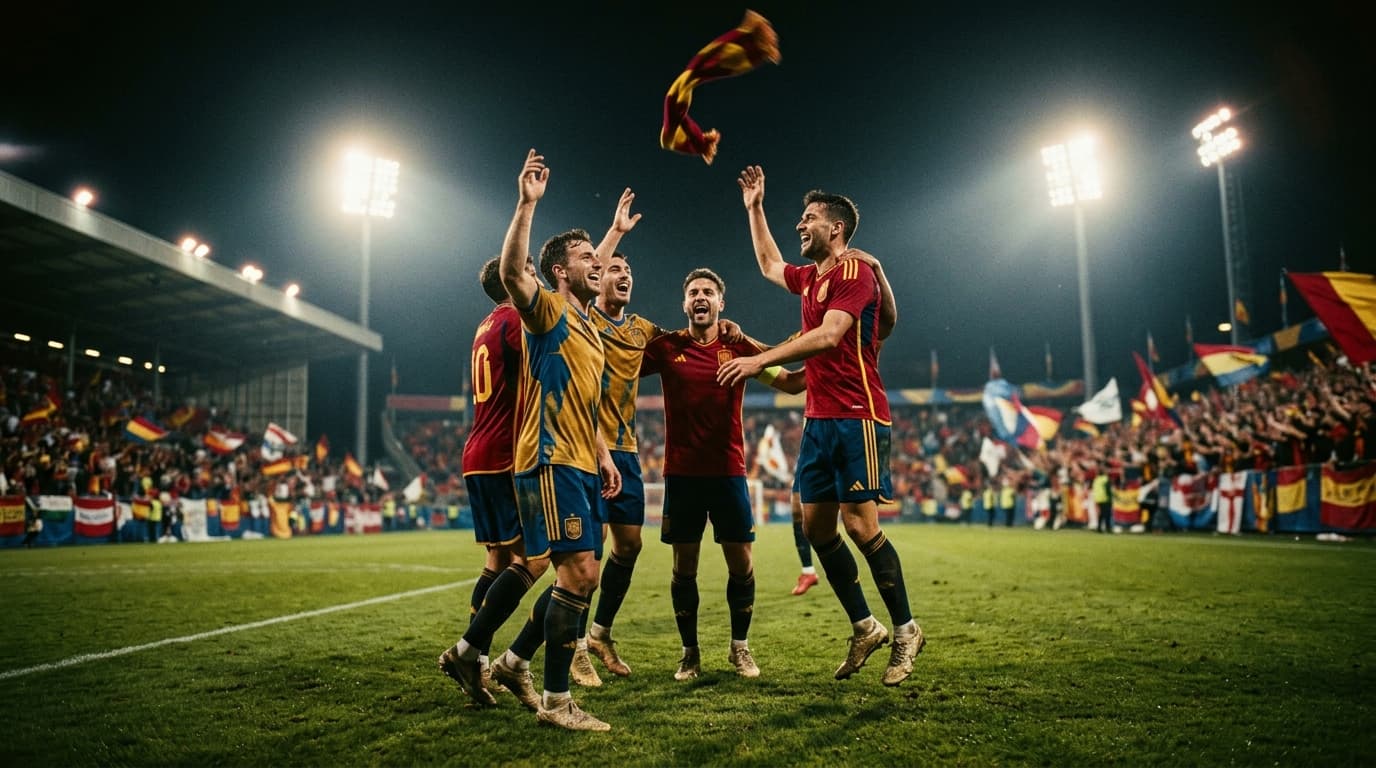

Day 45 until kickoff
This week, the World Cup machine shifts into a higher gear. With all 48 qualified nations now confirmed, the focus turns to squad announcements, pre-tournament friendlies, and the first real tactical signals from national coaches. Expect federation press conferences, injury updates from club sides wrapping their domestic seasons, and growing chatter about who's actually going to surprise us this summer. The draw groups are set. The rosters are coming. The question everyone's starting to ask out loud: who's going to blow this thing up?
The Underdogs With a Real Case
Let's be honest — "dark horse" is a phrase that gets thrown around so loosely it loses meaning. So here's a tighter definition: teams that have a plausible path to the quarterfinals that most casual fans aren't taking seriously. Based on what we know from the confirmed field, a few names stand out.
Bosnia and Herzegovina might be the most compelling story of the entire tournament. They're here because they knocked Italy out on penalties in the UEFA play-offs — the same Italy that had already missed the 2018 and 2022 World Cups. That's not a fluke result; that's a statement. Goal.com's power rankings describe them as "a popular dark-horse pick," and FOX Sports echoes that framing, noting Bosnia as a team worth watching carefully despite their group draw. A nation of roughly 3.5 million people, playing in their first-ever World Cup, having just eliminated a four-time world champion to get there. If that's not a story, nothing is.
Curaçao is the other name that keeps coming up. Goal.com notes they've risen from 150th to 82nd in the FIFA world rankings over the past decade — a remarkable climb — and their qualification still felt unlikely right up until the final whistle of their decisive group game against Jamaica, where the Jamaicans hit the woodwork three times and had a late penalty overturned. Curaçao survived on sheer nerve. Whether that translates to the main stage is a genuine open question, but the trajectory of this program is real.
Iraq deserves a mention too. They stunned Bolivia in the inter-confederation play-off in Mexico — a result that Goal.com flagged as one of the more surprising outcomes of the final qualifying round. They'll face France and Norway in the group stage, which is brutal, but they earned their place.
I'd argue the broader pattern here is what makes 2026 genuinely different: the expanded 48-team field means more of these stories get to play out on the biggest stage. More nations, more upsets, more moments where a country of a few million people holds its breath in unison. That's the trade-off FIFA made when it expanded the format, and for neutral fans, it's mostly a good one.
Player Spotlight: Sweden's Resurgent Qualifying Run
Sweden qualified for 2026 after beating Poland 3-2 in Solna — a result that also ended Robert Lewandowski's World Cup career, since Poland finished outside the playoff spots. Goal.com's rankings describe Sweden as "resurgent," which tracks: this is a squad rebuilding its identity after the Zlatan era, and making the World Cup without a generational superstar is its own kind of achievement. Watch for their group draw opponents and whether their defensive structure — historically Sweden's calling card — holds up against top-tier attacking sides.
Host City Note: Three Countries, One Tournament
A quick reminder of the scale here: Sky Sports confirms the 2026 tournament will be played across 16 cities in the United States, Canada, and Mexico — the first World Cup ever hosted by three nations simultaneously. The opening game is set for Mexico City on June 11. For dark horse teams like Bosnia or Curaçao, the host city they land in could shape their entire tournament experience: crowd atmosphere, travel logistics, altitude, heat. These things matter more than people admit.
Countdown Corner
48. That's the number of teams at this World Cup — up from 32 in Qatar. It means 16 more nations get to experience the tournament for the first time or return after long absences. Bosnia and Herzegovina are making their debut. Curaçao are making theirs. History is being written before a ball is kicked.
The squads are coming. The friendlies are starting. And somewhere in this field of 48, a team nobody's talking about is quietly preparing to make everyone pay attention.