
Day 2 until kickoff
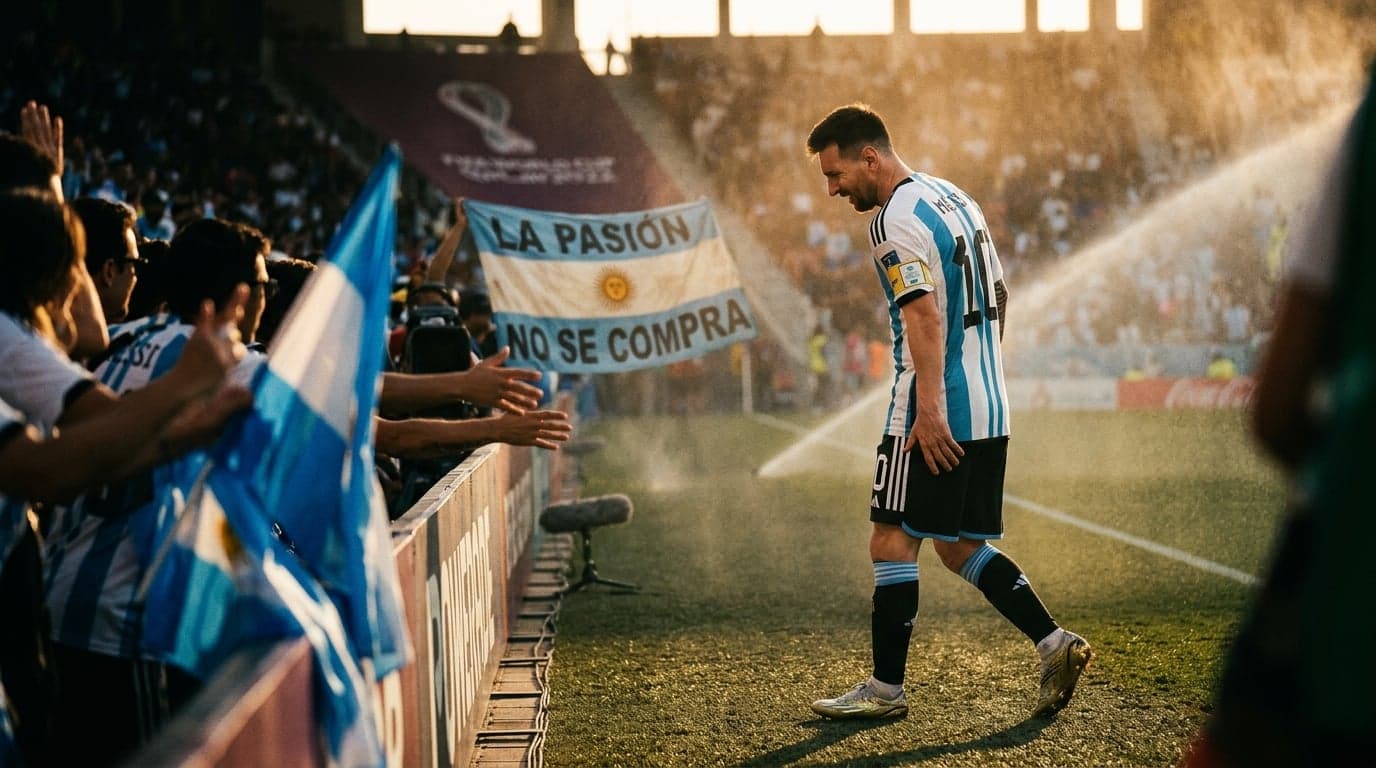
He walked off the pitch in the 73rd minute, feeling the back of his left leg, and for a few hours the entire football world forgot about every other storyline at this World Cup. Messi's hamstring scare during Inter Miami's MLS match against Philadelphia Union was eventually diagnosed as muscle fatigue rather than a structural injury — BBC Sport confirmed the "muscle fatigue" classification — but the collective intake of breath said everything about how the world still relates to this Argentina squad. They are, in the popular imagination, Messi's team. The question worth sitting with, two days before kickoff, is whether that framing is still accurate — or whether it's become the most dangerous assumption in the tournament.
The Hamstring Heard Around the World
Scaloni's response to the injury scare was telling. "It's not just him; many players have yet to fully recover from injuries," he told DSports. "Our main priority now is their rehabilitation to ensure they reach the World Cup in peak condition." That's a coach managing expectations, yes — but it's also a coach who has spent eight years building something bigger than any one player. The 38-year-old is confirmed in Scaloni's 26-man squad, alongside 17 players who were part of the Qatar 2022 triumph. The core is intact. The question is what shape it arrives in.
Goalkeeper Emiliano Martínez fractured a finger in the Europa League final. Cristian Romero is recovering from a sprained knee ligament. Nahuel Molina and Gonzalo Montiel are both nursing muscle injuries. This is not a squad gliding into the tournament on a wave of momentum — it's a squad that has been through the wringer of a brutal European club season and is now being asked to peak on demand. The Guardian's Argentina team guide puts it plainly: the holders arrive "perhaps not with its players in peak physical condition."
The Machine Scaloni Built
Here's what gets lost in the Messi conversation: Argentina finished nine points clear at the top of CONMEBOL qualifying, including a first World Cup qualifying win in Brazil. They did that as a team, not as a one-man show.
Scaloni's tactical blueprint — a 4-3-3 with attacking fullbacks, dynamic midfielders, and genuine pressing structure — has been refined over eight years and three major trophies. The chemistry within the squad is genuinely unusual for an international side: Marseille's center-back pairing of Leonardo Balerdi and Facundo Medina have played together all season at club level; several attackers share years of Atlético Madrid combinations; backup goalkeeper Gerónimo Rulli knows that same Marseille environment. This isn't a collection of stars assembled in a hotel lobby — it's something closer to a club side wearing national colors.
Julián Álvarez and Lautaro Martínez give Argentina a striking partnership that doesn't need Messi to function. Enzo Fernández anchors a midfield that The Guardian identifies as "dynamic with excellent passing." And then there's Thiago Almada, flagged as a potential breakout star, and Nico Paz — described by FIFA as "highly regarded by the coaching staff following his strong performance at Como" — who represent the generational injection Scaloni has quietly threaded into an otherwise experienced group.
What 2026 Actually Requires
Argentina open against Algeria on June 16 in Kansas City, then face Austria and Jordan in Group J. On paper, a favorable draw — but Scaloni himself has pushed back against any sense of ease. "It will be a very complex and difficult World Cup," he said. "You can't always win."
The back-to-back question is the real one. No team has successfully defended the World Cup since Brazil in 1962. That's not a coincidence — it reflects how hard it is to sustain the physical and psychological peak across a four-year cycle, especially when opponents have four years to study you. Argentina's opponents in the knockout rounds will have watched every minute of Qatar 2022. They know the shape, the triggers, the personnel.
What they may not have fully accounted for is that this Argentina is not the same team that won in Qatar — it's a more complete one. Messi remains the irreplaceable creative force, the player who can unlock anything when he's right. But as Scaloni's squad selection makes clear, the formula isn't built around hoping Messi is brilliant. It's built around a system deep enough to win even when he isn't.
That's the real magic trick. Not whether a 38-year-old can replicate 2022 — but whether the machine Scaloni built is strong enough to carry him, and Argentina, to something that's never been done in the modern era.
Watch for Messi's fitness status when Argentina's first training session reports emerge this


