


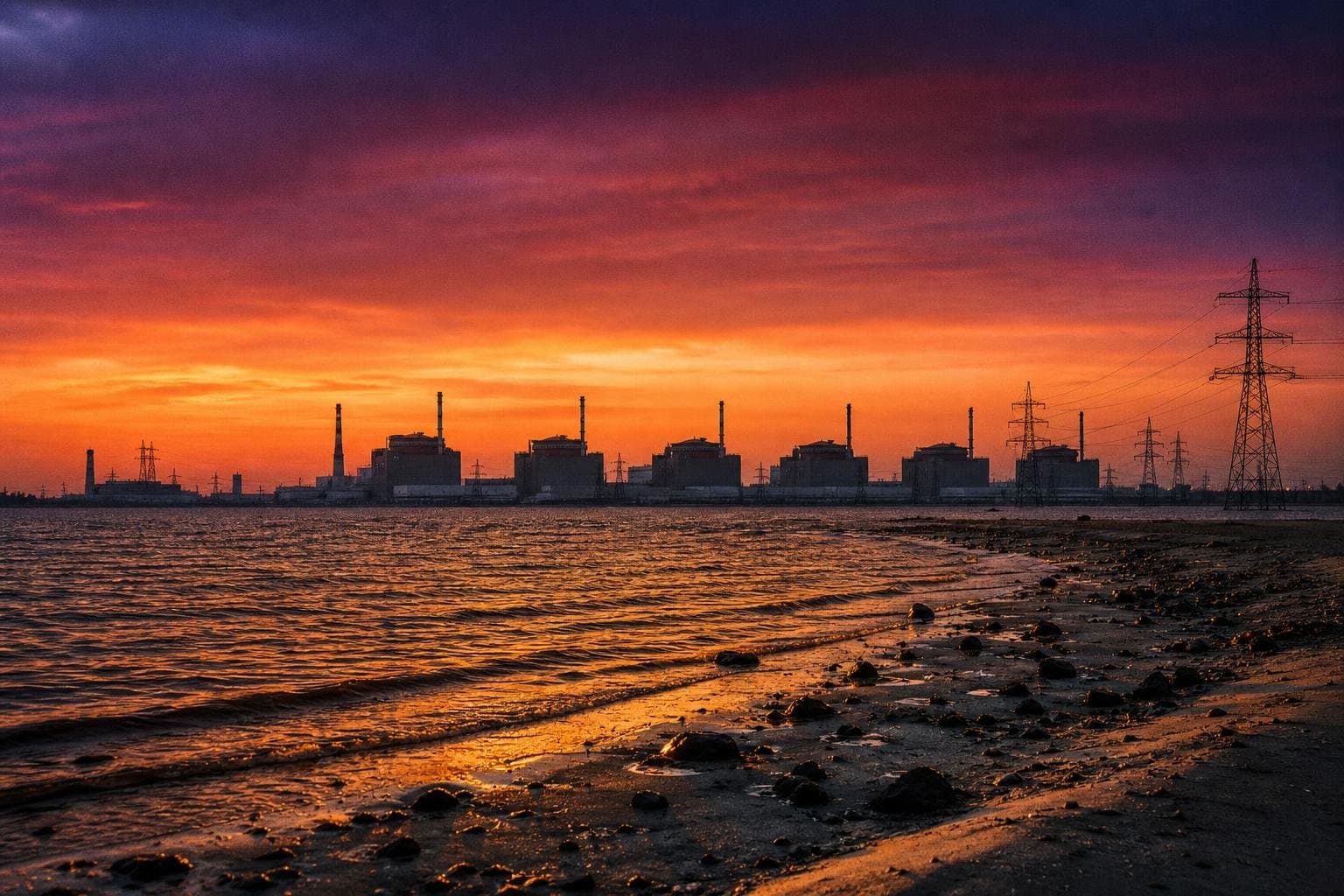

The 19th time should be the one that breaks you. According to Reuters, Ukraine's Zaporizhzhia Nuclear Power Plant lost all off-site power for nearly three days after an attack on an electrical substation severed its Ferosplavna back-up line — forcing the facility to run on emergency diesel generators to cool six shutdown reactors. This was the 19th such outage since the war began. The plant reconnected only after an IAEA-brokered localized ceasefire allowed repair crews in.
Let that number sit: nineteen grid disconnections. And the reactors are still standing.
That's not a story about nuclear fragility. That's a stress test that no other generation technology would survive. Diesel generators keeping six reactor cores cool while artillery decides the fate of a substation across the river — and the plant holds. The engineering margins built into nuclear infrastructure are, frankly, staggering.
But here's the civilizational read: Zaporizhzhia is also a warning about what happens when grid infrastructure becomes a military target. The plant isn't generating power right now — it's a hostage. Six reactors, roughly 6 GW of nameplate capacity, sitting idle while a war determines whether Europe's largest nuclear facility ever comes back online. That's not a technical failure. That's what energy insecurity looks like at its most naked.
Meanwhile, Vattenfall just selected Rolls-Royce SMR to build three small modular reactors at the Ringhals site in Sweden — the first new Swedish nuclear capacity in over 40 years, targeting roughly 1,500 MW total output. The contrast is almost too clean: one country watching its nuclear fleet held hostage by war, another country deliberately rebuilding its nuclear sovereignty from scratch.
The future belongs to nations that own their electrons. Zaporizhzhia is the argument for why you build more nuclear, faster, with redundant grid connections and distributed architecture. Not because war is inevitable — but because energy abundance that depends on a single substation across a river isn't abundance at all.
Build the reactors. Harden the grid. This is what we're fighting for.