
The 2022 Russian gas cutoff was supposed to be a warning. European chemical plants idled. Fertilizer production collapsed. Aluminum smelters went dark. Governments spent hundreds of billions stabilizing energy bills, and the underlying vulnerability — industrial production chained to a constant flow of imported combustible fuel — remained completely intact.
Then came 2026. According to analysts writing in The Polycrisis, IEA head Faith Birol described the current energy shock as larger than "the twin shocks of the 1970s that triggered recessions and fuel rationing around the world." The difference this time, as Ember analysts put it in the same piece: "this is the first energy shock with a superior alternative."
That alternative is electricity. And the transition from burning fuel in industrial processes to running those same processes on electrons is not just an environmental story. It is a commodity story, a labor story, and a geopolitical story — one that is accelerating faster than most forecasters predicted, and reshaping the foundations of industrial civilization in the process.
The "Hard-to-Abate" Label Was Always a Political Choice, Not a Physics Verdict
For decades, heavy industry — steel, cement, chemicals, food processing — wore the "hard-to-abate" badge like a hall pass. The implicit message: don't expect us to change anytime soon. The label stuck partly because it was technically defensible (high-temperature industrial heat is genuinely difficult to electrify) and partly because it was convenient for incumbents who preferred the status quo.
A new meta-analysis called High Voltage, synthesizing bottom-up engineering studies and 1,600 global mitigation scenarios, dismantles this framing systematically. Today, electricity meets roughly a fifth of industry's final energy demand. Across the full scenario set, the median rises to 35% by 2050. But in scenarios combining early infrastructure investment, clean affordable power, and consistent industrial policy, electrification reaches a median of 51% by 2050 — with the upper tail reaching 85%. By 2100, high-electrification pathways cluster around 68–70%.
The crucial insight from that analysis: the gap between the low and high pathways "does not reflect a technical ceiling. It reflects enabling conditions." The physics permits near-complete industrial electrification. What determines whether we get there is whether we build the infrastructure and set the policy this decade.
The DOE's Electrified Processes for Industrial Excellence (EPIXC) program is operating from the same premise. Process heating — the thermal energy used to convert feedstock into products — accounts for 63% of all energy use in manufacturing, which itself represents more than 30% of U.S. national energy consumption. EPIXC is funding projects specifically targeting electric heating for chemicals, steel, and cement: the hardest of the hard-to-abate sectors. Industrial heat pumps, electric boilers, electro-thermal storage, and resistance heating can all substitute for gas combustion in most process heating applications. The technology exists. The question is deployment speed.
Every industrial gas boiler replaced by a heat pump cuts emissions immediately — and then keeps cutting them automatically as the grid gets cleaner. That compounding dynamic is what makes industrial electrification structurally different from efficiency improvements: it's not a one-time gain, it's a permanent coupling to the trajectory of the power sector.
The Commodity Cascade: What Happens When Industry Stops Burning Things
Industrial electrification doesn't just change how factories run. It restructures the commodity markets that supply them.
The IEA's Electricity 2026 report forecasts global electricity demand growing at an average annual rate of 3.6% through 2030, driven by industry, electric vehicles, air conditioning, and data centers. For the first time in three decades — excluding crisis-related disruptions — electricity demand growth is outpacing overall energy demand growth. That's the structural signal: electrons are eating the BTU.
On the fossil fuel side, the math runs in reverse. Every industrial process that switches from gas to electricity removes a unit of gas demand permanently. The IEA's Energy Technology Perspectives 2026 projects the combined global market for clean energy technologies — including electric vehicles, heat pumps, and industrial electrification equipment — reaching nearly USD 3 trillion by 2035 under stated policy scenarios, up from USD 1.2 trillion in 2025. Electric cars alone account for roughly three-quarters of that market value. The fossil fuel demand that clean energy technologies displace doesn't disappear into thin air; it shows up as stranded assets, repriced reserves, and restructured commodity trade flows.
The geopolitical implications are direct. As Kate Mackenzie and Tim Sahay argue in The Polycrisis, oil and gas "are no longer reliably available where and when they are needed at bearable prices." Countries that electrify their industrial base are buying structural insurance against supply disruptions that no amount of diplomatic maneuvering can fully hedge. The countries that don't — that remain dependent on a constant flow of imported combustible fuel — will keep paying the volatility premium, in both economic and political terms. The 2026 shock is accelerating this calculation everywhere simultaneously.
The Infrastructure Bottleneck Nobody Saw Coming: Transformers
Here's the part of the electrification story that doesn't make the headlines but determines whether any of this actually happens on schedule: the physical hardware of the grid itself is in short supply.
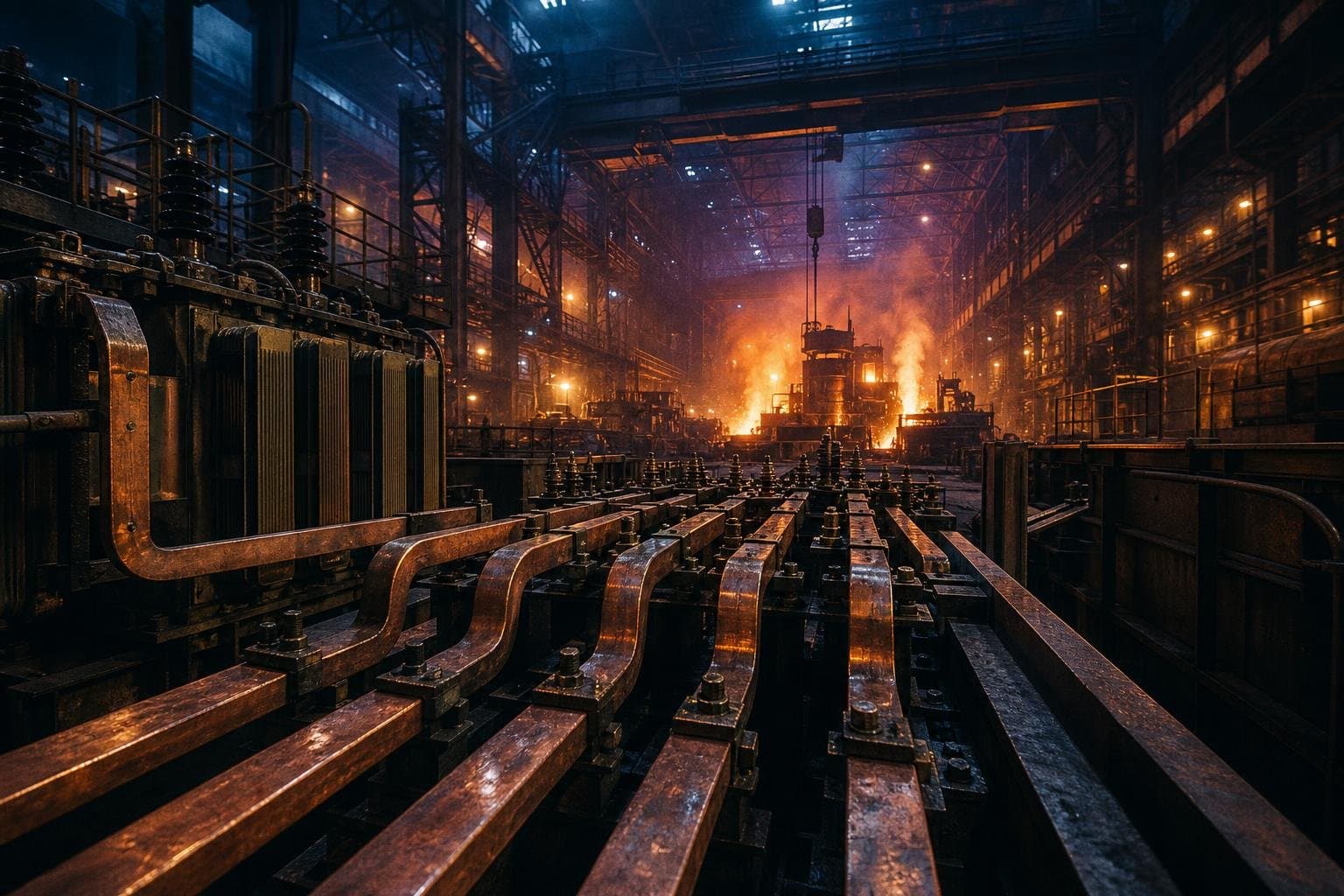
A detailed analysis of China's transformer export boom reveals what's happening at the foundational infrastructure layer. Transformers — the unglamorous devices that step voltage up and down across the grid — have moved from a low-profile industrial product to a critical constraint in the physical infrastructure of both the AI buildout and the energy transition. Foreign buyers are entering transformer factories in Liyang, Changzhou, and Jiangxi to conduct factory acceptance inspections and lock in future production capacity in advance. European customers are paying premium prices just to secure delivery windows. Order backlogs are stretching further into the future at factories running at full capacity.
China's advantage in this market isn't simply cost. It's delivery speed, supply-chain density, engineering responsiveness, and industrial-cluster coordination — the ability to move from order to shipment faster than Western manufacturers can. The analysis frames this as a strategic shift: China's manufacturing system is moving from "world factory" toward "global infrastructure capability supplier" for AI, electricity, and energy-transition systems.
This matters enormously for the electrification timeline. You cannot electrify industrial processes without upgrading the grid connections that serve those facilities. You cannot upgrade grid connections without transformers. And right now, transformer lead times in many markets are measured in years, not months. The arxiv preprint on grid capacity expansion under data center and electrified manufacturing loads projects data centers alone accounting for 6.7% to 12% of total U.S. electricity consumption by 2028 — equivalent to 326 to 578 TWh — with electrified manufacturing adding substantial additional load on top of that. The grid infrastructure required to serve these loads is not yet built, and the equipment required to build it is backlogged.
The labor constraint compounds the hardware constraint. Reuters reported that around 41% of the current construction workforce is projected to retire by 2031, according to the National Center for Construction Education. Demand for electricians and power line installers is surging precisely as the experienced workforce ages out. The data center rush is already worsening shortages of both power and grid workers — and industrial electrification will compete for the same constrained pool of skilled labor.
This is the bottleneck that capital alone cannot solve quickly. You can announce a trillion-dollar grid buildout. You cannot instantly train the electricians and lineworkers needed to execute it, or manufacture the transformers needed to energize it.
Geopolitical Power Runs on Kilowatts Now
The civilizational stakes here are not abstract. The Polycrisis analysis documents what the current energy shock is doing in real time: bidding wars for LNG leaving countries without deep pockets paying "in increased hunger, lost wages, and shrinking economies." Governments forced to triage between power generation and fertilizer production. The material underpinnings of the global economy — cooking gas, fertilizers, sulfur, helium — exposed as a web of interdependence that can be severed by conflict or accident.
Electrification offers what the authors call "a structural exit from instability." Countries that build out domestic renewable generation and electrify their industrial base are not just reducing emissions — they are converting their energy supply from a flow commodity (you need a constant stream of fuel delivered continuously) to a stock-and-infrastructure commodity (you build the capacity once, then operate it). The geopolitical implications of that shift are profound. A country that generates its industrial energy from domestic solar, wind, and nuclear cannot be embargoed on that energy. It cannot be held hostage by a chokepoint in the Strait of Hormuz.
BloombergNEF's New Energy Outlook 2026 frames this year's analysis around exactly this tension: how countries balance resilience, affordability, and decarbonization against a backdrop of geopolitical tension and rising electricity demand. The three goals are not in conflict — they converge on the same answer. Build more electricity generation. Electrify more end uses. Reduce exposure to combustible fuel flows.
The countries moving fastest on industrial electrification are not doing so primarily for climate reasons. They're doing it because the alternative — continued dependence on fuel markets that two wars in four years have demonstrated are structurally unreliable — is increasingly untenable. The energy transition is being pulled forward not by idealism but by the cold logic of supply security.
What the Next Five Years Actually Decide
The High Voltage analysis is unambiguous on timing: the difference between an industry stuck at one-third electrified and one approaching the high tail of near-complete electrification is "choices we make this decade." The IEA's 3.6% annual electricity demand growth forecast through 2030 reflects a world already moving in this direction — but the pace of industrial electrification specifically will be determined by infrastructure investment decisions being made right now.
Three concrete things to watch: First, whether EPIXC-funded projects in chemicals, steel, and cement actually demonstrate commercial-scale electric process heating — moving the technology from "technically feasible" to "bankable." Second, whether transformer and grid equipment supply chains can scale fast enough to serve both the data center buildout and industrial electrification simultaneously, or whether the two demand streams compete for constrained capacity and slow each other down. Third, whether the 41% workforce retirement wave in construction trades triggers a serious national apprenticeship and training response, or whether the labor gap becomes the binding constraint that no amount of capital can overcome.
The furnace going electric is not a metaphor. It is a physical transformation of the most energy-intensive processes in the global economy — one that restructures commodity markets, rewires geopolitical leverage, and demands infrastructure investment at a scale and speed that will stress every supply chain involved. The physics permits it. The economics increasingly demand it. The only question is whether the enabling conditions — infrastructure, workforce, policy continuity — arrive fast enough to match the urgency that two energy shocks in four years have made impossible to ignore.
The future is electric. The bottleneck is everything between here and there.


