
This Week in Voltage
The federal government just committed to unlocking 5 GW of additional nuclear output from the existing fleet through low-cost financing, targeting delivery by 2029 to meet surging demand from data centers and manufacturing. Five gigawatts. That's meaningful capacity, and the financing mechanism matters — it signals Washington is finally treating nuclear uprates as infrastructure investment, not regulatory paperwork.
Meanwhile, FERC confirmed it will act on the large-load interconnection docket by June 2026 — the proceeding that will determine how data centers actually plug into the grid at scale. I covered the setup for this vote two issues ago. The deadline is holding. Now we wait to see if the rule matches the urgency.
Both moves are good. Neither solves the deeper problem.
Deep Charge: You Can Build All the Power Plants You Want. If the Wire Doesn't Reach, None of It Matters.
Here's the thing that keeps me up at night: we are in the middle of a genuine nuclear renaissance, a data center construction boom, and a federal push to accelerate grid infrastructure — and the bottleneck isn't generation. It's governance.
Think about what that means in practice. TerraPower's Natrium reactor cleared its NRC construction permit in 18 months — a genuinely historic acceleration. The DOE's Speed to Power initiative announced $1.9 billion in SPARK funding to accelerate transmission upgrades. Nuclear uprates are getting cheap financing. Advanced reactors are getting built. And yet: if the transmission infrastructure connecting generation to load remains fragmented across competing jurisdictions with misaligned incentives, every one of those wins gets partially stranded.
The Nature Energy paper is direct about the cause: grid governance is "largely to blame for insufficient investment in electricity transmission," and governance reform is "a critical precondition to constructing a stronger grid." Not a nice-to-have. A precondition.
This is the part of the energy abundance argument that electricity maximalists sometimes skip past, because it's less exciting than reactor approvals and more frustrating than market signals. But it's real. The DOE's own grid reliability report warned that absent new firm capacity and continued retirements of reliable generation, blackout frequency could increase by up to 100 times by 2030. That's not a projection from a degrowth think tank. That's the federal government's own analysis.
The FERC June decision on large-load interconnection is therefore more consequential than it sounds. It's not just about data centers getting grid access faster — it's a test of whether the regulatory architecture can actually adapt to the demand curve we're already on. Reuters reported that DOE Secretary Chris Wright directed FERC to consider these reforms. The directive exists. The deadline exists. The question is whether the rule that emerges has teeth or just intent.
By the Numbers
- 5 GW — Additional nuclear capacity targeted through low-cost federal financing by 2029
- $1.9 billion — DOE SPARK funding committed to accelerate transmission upgrades and reconductoring
- 100x — DOE's projected increase in blackout frequency by 2030 absent new firm capacity additions
- June 2026 — FERC's self-imposed deadline to act on the large-load interconnection rulemaking
- 18 months — Time for TerraPower's Natrium reactor to clear NRC construction permitting, versus a multi-decade historical norm
What We're Fighting For
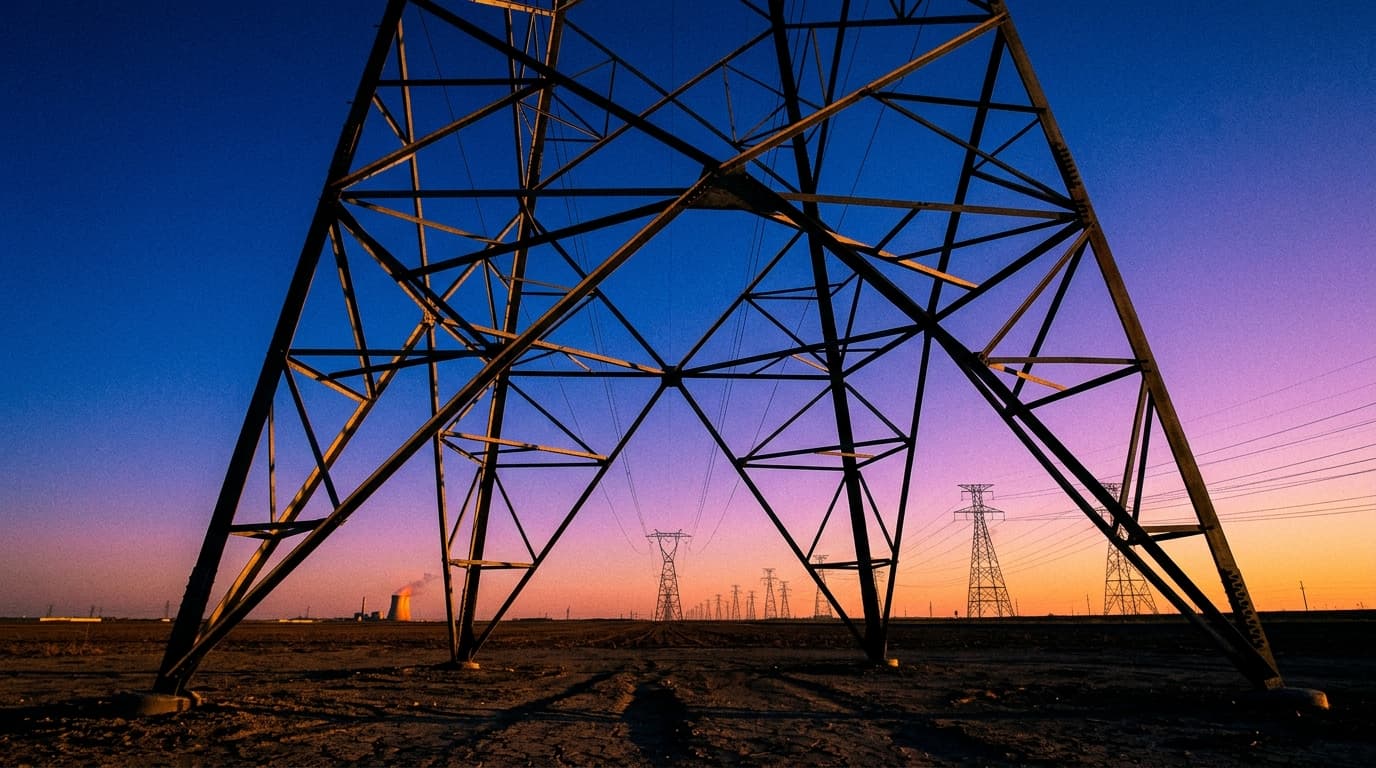
Every gigawatt of new generation we build is a bet on the wire. Nuclear uprates, advanced reactor approvals, renewable buildouts — they all terminate at the same chokepoint: a transmission system whose governance was designed for a different century and a different demand curve.
The good news is that the federal government is, for the first time in a long time, treating this as an emergency rather than a planning exercise. The SPARK funding, the Speed to Power initiative, the FERC June deadline — these are real moves. The Nature Energy analysis gives us the diagnostic. The DOE gave us the warning. Now we need the governance reforms to match the ambition of the generation buildout.
Watch June. If FERC delivers a large-load interconnection rule with real teeth — clear timelines, enforceable cost allocation, streamlined queue management — it becomes the most important grid policy decision in a decade. If it punts or produces something toothless, we'll be writing this same issue again in 2028, wondering why all the power plants we built aren't keeping the lights on.
The wire is the wall. Break through it or build nothing.


