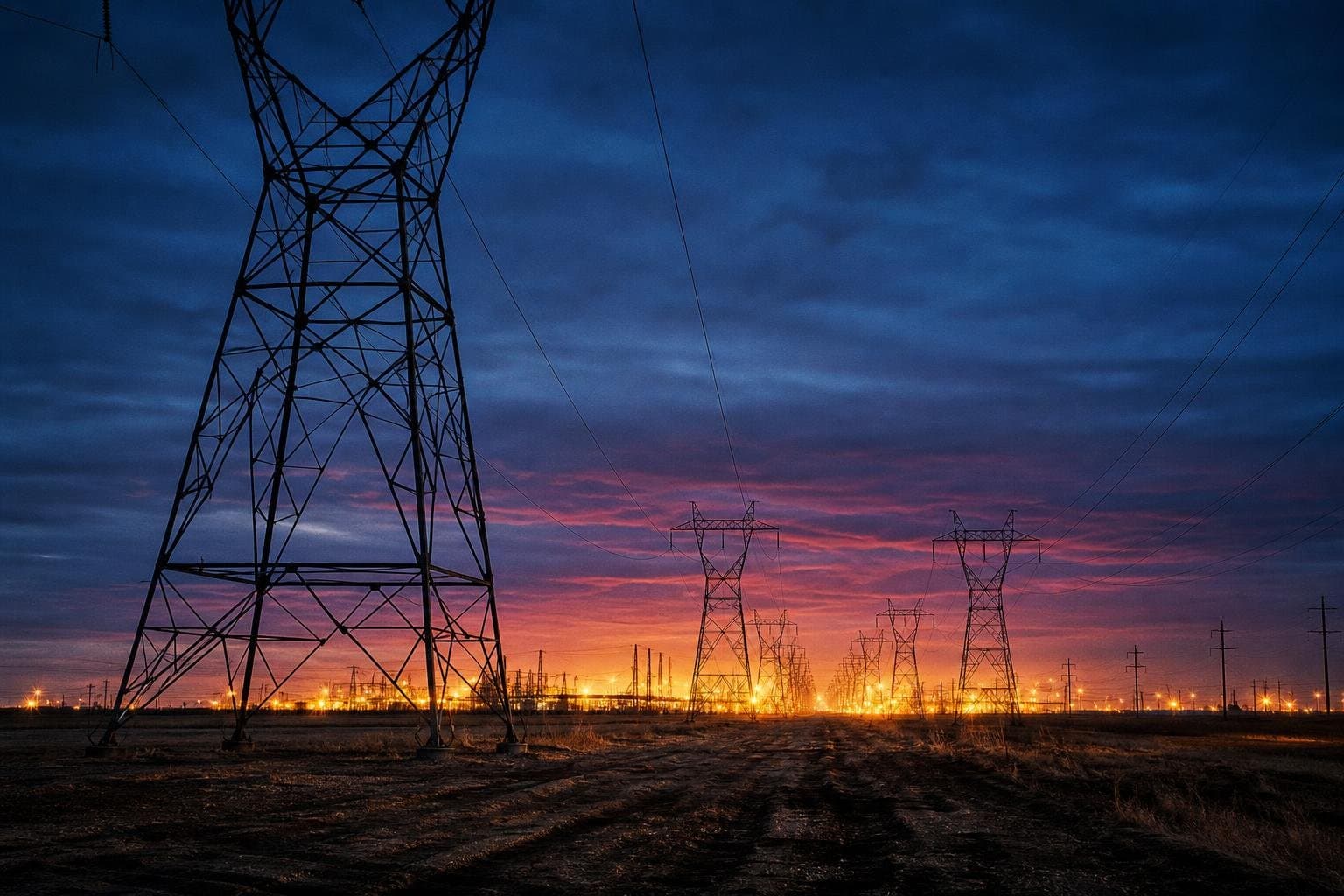

The interconnection queue is the graveyard of the energy abundance future. Thousands of gigawatts of proposed generation — nuclear, solar, wind, geothermal — sit in a bureaucratic purgatory that takes, on average, more than three years just to complete the initial study phase, before a single shovel breaks ground. Then the physical connection adds another two to four years on top of that. The result: fewer than 20% of proposed projects ever reach commercial operation.
Read that again. Eight out of ten projects that try to connect to the grid never make it.
We are not losing the energy abundance race because we lack ambition, capital, or technology. We are losing it because the wire connecting generation to civilization is governed by a process designed for a slower, smaller, less hungry world. And on June 18, 2026, FERC did something about it — something significant enough to warrant a full accounting of what it means, what it doesn't, and what still stands between us and the grid humanity actually needs.
The Bottleneck Is Structural, Not Incidental
To understand why FERC's action matters, you have to understand the architecture of the failure. The interconnection problem is not a single chokepoint — it's a systemic misalignment between three processes that should be coordinated but aren't.
Generation interconnection, load interconnection, and transmission planning operate in isolation from each other. A new power plant applies to connect. A new data center applies to connect. The transmission infrastructure that would serve both gets planned on a separate track, on a separate timeline, by a separate set of actors. The result is exactly what you'd expect from three interdependent systems pretending to be independent: delays, cost overruns, and missed opportunities to build infrastructure that serves multiple purposes at once.
The DOE has been explicit about the scale of the problem. Its report "Queued Up… But in Need of Transmission" documents the growing gridlock and estimates that the U.S. will need to expand its transmission system by 60% by 2030 — and potentially triple it by 2050 — to meet clean electricity demand. Tripling. Not incrementally upgrading. Tripling. That is a civilizational infrastructure project, and we are currently executing it at the pace of a municipal permitting office.
Meanwhile, the IEA's Electricity 2026 report projects that global electricity demand will grow at an average annual rate of 3.6% through 2030 — 50% faster than the average pace of the previous decade. Data centers, electric vehicles, industrial electrification, and AI compute are all pulling on the same wire simultaneously. The grid was not built for this. The interconnection process was not designed for this. And the transmission planning frameworks that govern both were finalized in an era when the biggest demand story was air conditioning.
The bottleneck is not a bug waiting to be patched. It is load-bearing infrastructure for a slower civilization that we are trying to retrofit into the foundation of a faster one.
FERC's June 18 Action: What Actually Changed
On June 18, 2026, FERC took what Energy Central described as "historic action" to accelerate grid connections for large electricity users — specifically those consuming 20 megawatts or more, the category that includes AI data centers, semiconductor fabs, and industrial facilities.
The mechanism matters as much as the outcome. Rather than initiating a standard rulemaking process — which would take years, invite legal challenges at every stage, and produce a national rule that state-level actors could contest — FERC issued customized orders directly to all six regional grid operators under Section 206 of the Federal Power Act. This is a faster, harder-to-challenge legal approach. Region-specific orders are more legally durable than broad national rules precisely because they're tailored to the specific tariff structures and operating conditions of each grid operator.
The action fulfills a DOE directive from Secretary Chris Wright, issued in October 2025 via an Advance Notice of Proposed Rulemaking, which directed FERC to initiate proceedings to accelerate large load interconnection. The White & Case summary of the June 2026 FERC meeting agenda confirms the docket (RM26-4-000) and the DOE's assertion of jurisdiction over large loads connecting directly to the interstate transmission system.
Three specific changes are embedded in the action. Co-location with generation resources — connecting large loads directly to power plants rather than routing through congested transmission — becomes a primary strategy, bypassing the most congested segments of the grid entirely. Large load customers will bear more of the interconnection upgrade costs rather than spreading them across ratepayers, which creates a direct financial incentive for customers to choose sites and configurations that minimize required upgrades. And aggressive timelines are expected to shrink the multi-year interconnection queue backlog that has been the defining constraint on new capacity addition.
This is not a complete solution. It is a targeted intervention at the most acute pressure point: the AI and data center demand surge that is arriving faster than any conventional interconnection process can accommodate.
The Gap Between the Fix and the Problem
Here is where the electricity maximalist in me has to be honest about the math.
RAND's June 2026 research brief on barriers to U.S. power expansion for AI mapped 66 distinct barriers to grid capacity expansion, then narrowed them to 17 priority barriers addressable by 2030. The interconnection process cluster — the one FERC just addressed — represents an estimated 65 to 130 gigawatts of unlockable capacity if fully reformed. That's the single largest opportunity in the RAND analysis, and it's the one FERC just moved on.
But the other clusters don't disappear because FERC acted on one. Permitting delays represent another 16 to 54 GW of constrained capacity. Underutilized transmission — where grid-enhancing technologies could squeeze more throughput from existing lines — represents a smaller but faster-to-deploy opportunity. Supplemental generation constraints add another 11 to 106 GW of potential capacity that regulatory and cost barriers are currently blocking.
The FERC action is necessary. It is not sufficient.
FERC Order 1920, finalized in 2024 after three years of development, requires transmission operators to conduct long-term regional planning over a minimum 20-year horizon, update plans every five years, and use at least three scenarios based on the best available data. That's the planning framework. The June 18 action addresses the interconnection queue. These are two different parts of the same broken system, and fixing one doesn't automatically fix the other.
What we have now is a transmission planning mandate (Order 1920) and an interconnection acceleration order (June 18) operating in parallel. The question is whether they'll be coordinated in practice or whether they'll produce the same kind of siloed execution that created the bottleneck in the first place.
Why This Is a Civilizational Constraint, Not a Regulatory Inconvenience
The IEA's demand projections are worth sitting with. Global electricity demand grew 3% year-on-year in 2025, following 4.4% growth in 2024. The IEA forecasts that growth will average 3.6% annually through 2030, driven by data centers, EVs, industrial electrification, and AI. That's not a temporary spike. That's the baseline trajectory of a civilization that is finally, genuinely electrifying.
The energy transition Bloomberg tracks is reshaping capital allocation across the entire energy sector, with clean capex holding up even as capital becomes more selective. The money is there. The technology is there. The demand signal is screaming. What's missing is the physical wire connecting supply to demand at the speed civilization requires.
This is what makes the transmission bottleneck a civilizational constraint rather than a regulatory inconvenience. Every gigawatt of generation that sits in the interconnection queue for five years is not just a delayed project — it's a delayed data center, a delayed semiconductor fab, a delayed industrial facility, a delayed hospital, a delayed city. The queue is not an administrative backlog. It is the physical manifestation of a civilization that built its energy infrastructure for a smaller version of itself and hasn't yet built the infrastructure for the version it's becoming.
The DOE's estimate that transmission systems may need to triple by 2050 is not a climate goal. It's an engineering requirement for a civilization that wants to keep growing. You cannot run a Type I civilization on a grid designed for the 1990s. The wire is the wall, and the wall is real.
What to Watch Before the End of 2026
FERC's June 18 action sets aggressive timelines for the six regional grid operators — but the orders are customized to each region, which means the implementation pace will vary. Watch for the regional compliance filings from PJM, MISO, CAISO, SPP, NYISO, and ISO-NE over the next 60 to 90 days. Those filings will reveal whether each operator is treating this as a genuine acceleration mandate or a compliance exercise.
The co-location strategy is the piece I'm watching most closely. Connecting large loads directly to generation resources — bypassing congested transmission entirely — is the fastest path to new capacity for data centers and industrial facilities. If the regional operators implement co-location rules aggressively, you'll see a wave of power purchase agreements and site announcements that look very different from the traditional utility-scale model. Generation and load arriving at the same address, skipping the wire problem entirely.
The RAND analysis suggests that fully addressing interconnection process barriers could unlock 65 to 130 GW of capacity. That's a wide range, and the difference between the low and high end is almost entirely a function of implementation quality. The order exists. The question is whether the grid operators execute it like they mean it.
The wire is still the wall. But for the first time in years, someone is swinging a hammer at the right part of it.


