


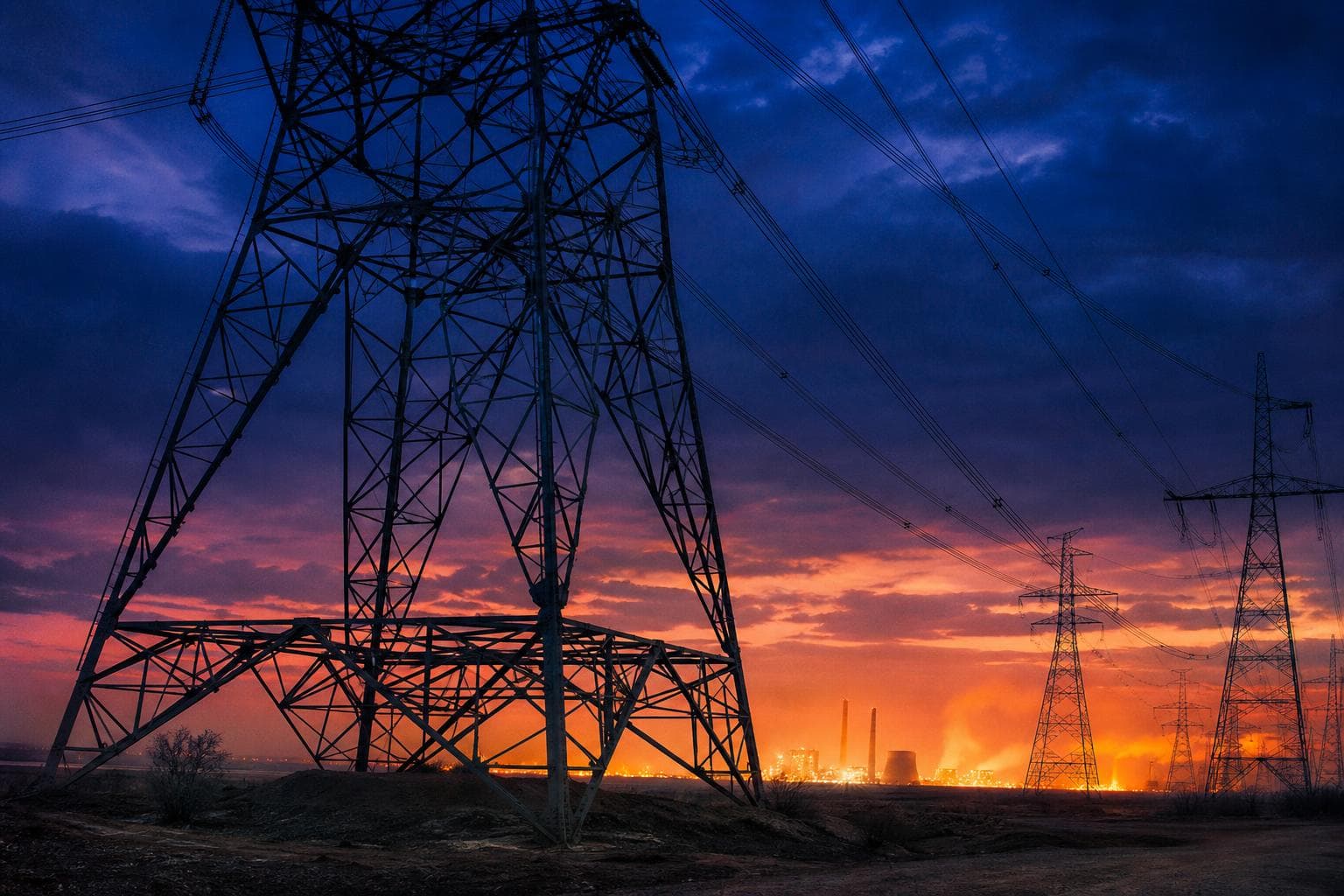

That's the bottleneck nobody wants to talk about at the ribbon-cutting.
The numbers are clarifying. US electric and gas utilities are forecast to spend nearly $1.3 trillion on infrastructure between 2026 and 2030 — capex climbing from roughly $108 billion in 2026 toward $112 billion by 2028. That sounds enormous until you map it against the demand signal. Between 2023 and 2024 alone, utilities' five-year summer peak demand forecasts jumped from 38 GW to 128 GW — a more than threefold increase in a single planning cycle, driven almost entirely by AI data center buildout. Goldman Sachs projects global data center power demand hitting 84 GW by 2027, with AI workloads accounting for 27 percent of that total.
The supply side is trying. The demand side is sprinting. The wire between them is the problem.
Interconnection queues are where ambition goes to age. Renewable and storage projects in PJM and MISO — systems serving 110 million people — face interconnection costs that have doubled in recent years, with median wait times for solar and wind exceeding four years. New generation, whether nuclear or renewable, cannot reach customers faster than the queue allows. FERC has committed to acting on its large-load interconnection rulemaking by June 2026 — that vote is now weeks away, and it may be the most consequential regulatory decision of the year.
I'd argue the $1.3 trillion capex figure, impressive as it is, is being spent heavily on generation and distribution while transmission — the actual connective tissue — remains chronically underbuilt. You can have TerraPower's reactor, a field of solar panels, and a fleet of offshore wind turbines, and still fail to deliver electrons where they're needed if the wires aren't there.
Watch the FERC June ruling closely. If it meaningfully streamlines large-load interconnection, it could unlock years of queued capacity almost immediately. If it punts, the bottleneck hardens — and all the groundbreakings in Wyoming won't change the math.
The future is electric. The wire has to be too.