



Every week this fall has produced another small modular reactor announcement — a site selected, a design licensed, a utility signing a letter of intent. The order book looks like the start of something enormous. And it is. But orders are not megawatt-hours, and the gap between the two is where this year's most honest energy story is hiding.
Concrete Is Pouring. Commissioning Isn't Close.
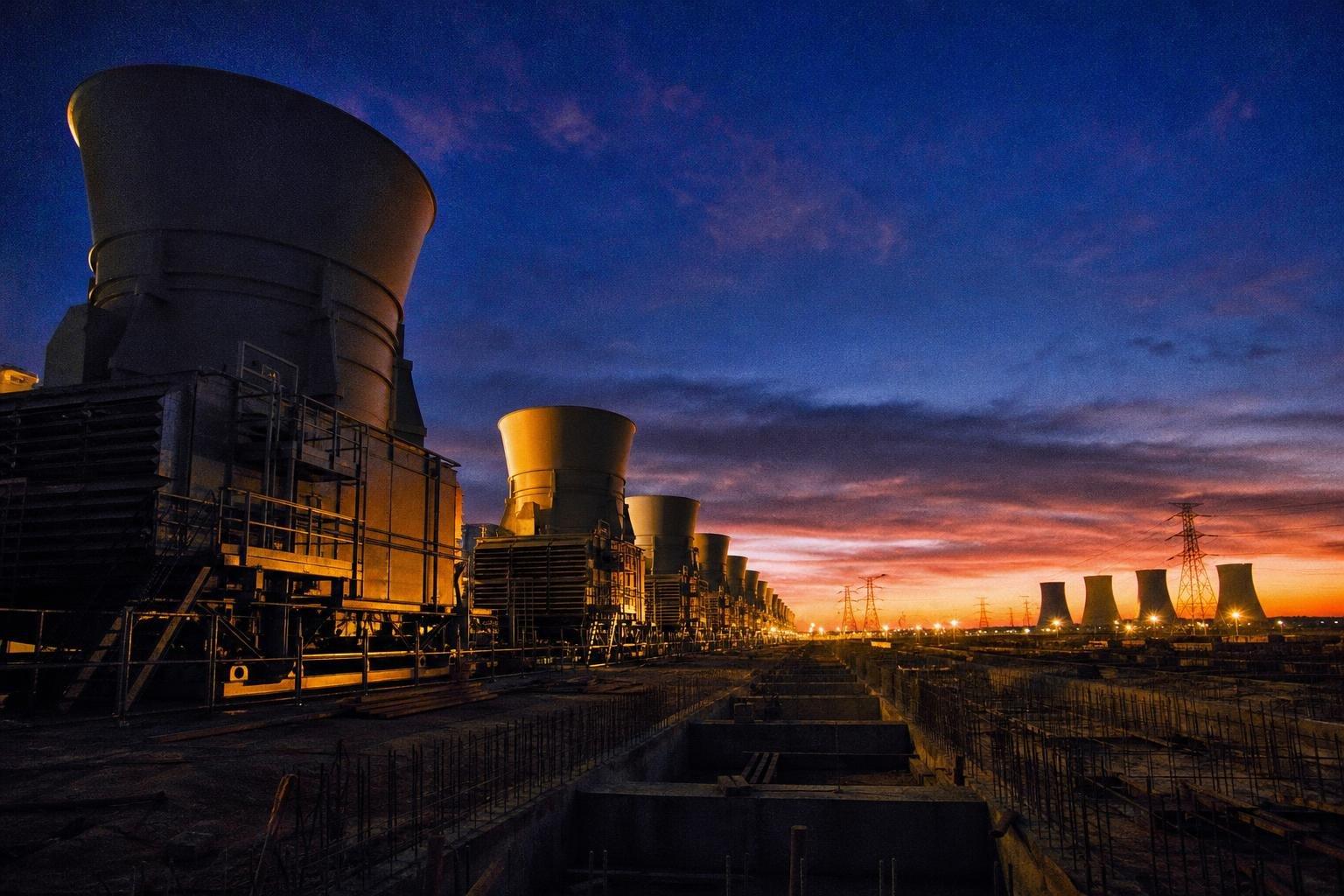
An industry analysis of the global SMR sector describes 2026 as the year the technology "moved past paper blueprints into physical concrete pouring," pointing to active construction across sites in Hainan, China; Ontario, Canada; and Wyoming and Tennessee in the United States. That's a genuine milestone — these are not renderings, they're rebar. But the same analysis is blunt about what hasn't happened yet: only a handful of the dozens of competing designs have secured formal construction permits or reached hot functional testing, and first-of-a-kind capital costs are running above conventional gigawatt-scale nuclear on a per-megawatt basis, not below it, which undercuts the original pitch that SMRs would be the cheap, fast answer to grid-scale baseload. I'd treat that cost comparison as directional rather than audited — it comes from a single industry writeup, not a DOE or IEA cost study — but it matches what anyone tracking nuclear-grade component supply chains has been saying all year: the "plug-and-play" marketing got ahead of the fabrication capacity.
This is the pattern I keep hammering on in this newsletter. Abundance doesn't arrive because a press release says it will. It arrives when forgings, turbine blades, and licensed fuel assemblies show up on a loading dock. Right now, the SMR sector has more signed intent than poured concrete, and more poured concrete than licensed, operating reactors. That's not a failure — it's where a new reactor class is supposed to be eight years into a restart of an industry that spent three decades building almost nothing. But it means anyone penciling SMR megawatts into a 2028 power purchase agreement is pricing in a technology that, by the industry's own accounting, is still in its hot-testing phase at best.
The Gas Turbine Is the Bridge, and It's Getting Longer
While reactors slip, somebody still has to power the AI buildout in the meantime, and that money is going somewhere very specific. Siemens Energy told investors this week that profit margins will swell to as much as 22% by 2030, with annual revenue growth averaging up to 14% through fiscal 2030 — and the company was explicit that this isn't a short-term AI spike, it's demand extending into the next decade. The firm also expanded its shareholder buyback by roughly $10 billion. Translation: the smartest capital allocators in the gas turbine business are betting that the bridge between "AI needs power now" and "SMRs deliver power at scale" is not a two-year gap. It's most of a decade.
That's the real story behind every SMR headline this fall. The order surge is civilizationally correct — I want every utility and hyperscaler signing reactor contracts, because that demand signal is what eventually drags fabrication capacity and licensing throughput up to where they need to be. But in the window between now and first criticality, the grid runs on what can actually be built fast, and gas turbines are winning that window by default. Siemens Energy isn't betting against nuclear. It's betting on the lag.
What to Watch
The number that matters isn't another SMR order — it's the next construction permit actually issued, and whether any of the Hainan, Ontario, Wyoming, or Tennessee projects move from "under construction" to "fuel loaded" in the next twelve months. Watch Siemens Energy's fiscal 2027 guidance too: if gas turbine order books keep lengthening alongside SMR announcements rather than shrinking, that's confirmation the industry itself doesn't believe the reactors are landing before the back half of the decade.
None of this is an argument for patience. It's an argument for building both tracks at full speed — gas now, fission as soon as the supply chain can carry it — instead of pretending the second one is further along than the concrete says it is. The civilization that gets to abundance is the one that's honest about which bridge it's standing on.