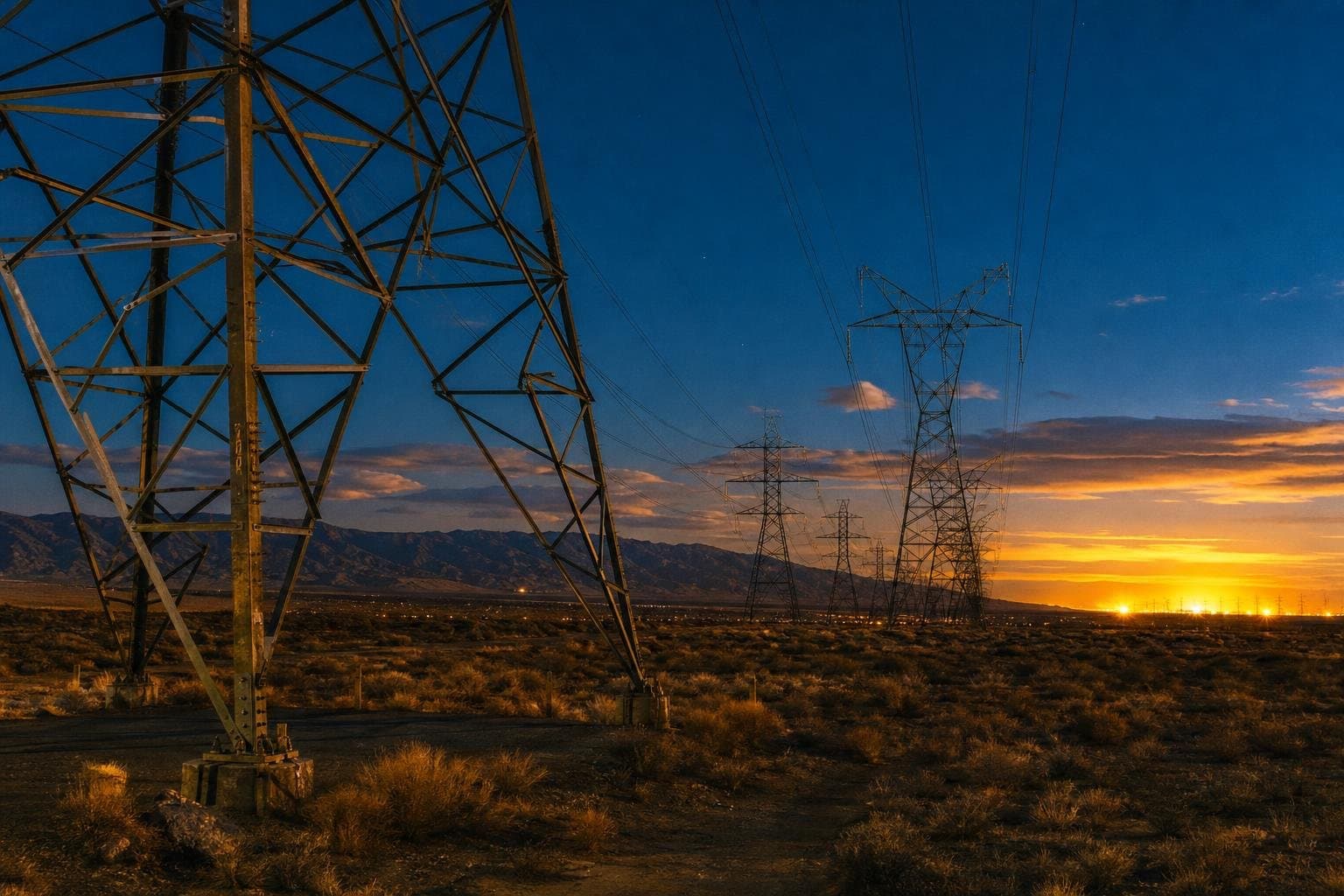

Congress has spent a decade talking about permitting reform while the queue of stalled transmission lines, nuclear projects, and renewable buildouts just kept growing. On September 30, 2026, Senate negotiators finally produced something with teeth: a 417-page bill called the Bipartisan American Affordability and Jobs Act of 2026, the product of a years-long negotiation between the chairs and ranking members of the Senate Energy and Natural Resources Committee and the Environment and Public Works Committee, according to National Law Review. If you care about getting electrons flowing faster than the current system allows, this is the most consequential legislative text to watch right now — not because it's guaranteed to pass, but because it's the first serious attempt in years to rewrite the rulebook that governs how fast America can build.
I've written before about permitting bottlenecks from the agency side — the NRC approving reactors that won't generate a watt for a decade, interconnection queues sorting themselves by who can afford to wait. This bill attacks the problem from the other direction: the statutory architecture itself. NEPA, the Clean Water Act, the Endangered Species Act. The laws that determine whether a transmission line gets built in three years or twelve.
What's Actually in the Text, and Why Transmission Gets Its Own Title
The bill would make the most substantial amendments to the National Environmental Policy Act since its 1969 enactment, according to National Law Review. It narrows federal jurisdiction, shifts more authority to states, imposes mandatory agency review deadlines, vests original jurisdiction over NEPA and historic preservation disputes directly in federal appeals courts, and caps judicial review at 150 days. It also limits standing and remedies for litigants who challenge permitting decisions — the mechanism that has, for years, let a single lawsuit freeze a transmission corridor or a mine permit for the better part of a decade.
The detail that matters most for this publication's beat is the dedicated transmission title. Dykema reports the bill addresses transmission permitting, transmission planning, activity within existing rights-of-way, generator interconnection queues, advanced transmission technologies, and even offshore transmission infrastructure. That's not a token gesture. The interconnection queue — the single biggest chokepoint standing between a financed renewable or gas project and an operating one — gets its own reform language, as does the right-of-way question that determines whether new lines can piggyback on existing corridors instead of fighting for brand-new easements.
The bill also creates what Dykema describes as a unified federal review framework: formally designated "key permitting agencies," lead-agency coordination requirements, standardized procedures across agencies, and a public environmental review and permitting tracker meant to add transparency to a process that currently operates as a black box for developers.
None of this is operational yet. It is text that Senate negotiators agreed on — a draft, not a grid upgrade. I want to be precise about that distinction because it's the one the permitting-reform conversation always blurs: an agreed bill text is not a passed law, a passed law is not an issued permit, and an issued permit is not a generator connected to the grid. Every stage between "senators shook hands" and "megawatts flowing" is a place this can still die, as it has in previous Congresses.
The Coalition Backing This Is Unusually Wide — and That's the Real Signal
What makes this round different from the permitting-reform attempts that collapsed in 2023 and 2024 is who's lined up behind it. The bill was drafted jointly by Senators Martin Heinrich (D-N.M.), Mike Lee (R-Utah), Sheldon Whitehouse (D-R.I.), and Shelley Moore Capito (R-W.Va.) — the top Democrat and Republican on both the Energy and Natural Resources Committee and the Environment and Public Works Committee, according to the Senate Energy and Natural Resources Committee. That's the full leadership spread of the two committees that actually control this territory, from both parties, on both panels. Previous permitting pushes have usually had one party's enthusiastic backing and the other's grudging tolerance. This one has four principal authors spanning the ideological range from Mike Lee to Sheldon Whitehouse, which tells you the political cost-benefit calculation on permitting gridlock has shifted.
The labor response backs that up. LIUNA General President Brent Booker said the bill "exceeds" his union's standards on prevailing wages and apprenticeship requirements while maintaining environmental safeguards, and noted that LIUNA has backed "numerous iterations of permitting bills only to see every effort and attempt fail in final hours of the congressional calendar," per the Senate Energy and Natural Resources Committee. That's not boilerplate enthusiasm — that's an organization that has watched this exact movie end badly multiple times, saying this cut looks different. I'd treat that as a meaningful data point, though it's still one stakeholder's assessment, not a prediction of passage.
The bill's backers also frame it as a data center cost-allocation measure, intending to make growing data centers "pay the full cost of their associated transmission needs rather than passing those costs on to families and small businesses," per the same committee release. That's a policy aspiration in a press statement, not a modeled outcome — I'd flag it as the authors' stated intent rather than a verified cost projection.
Why the Urgency Is Real Even If the Bill's Fate Isn't Certain
Strip away the legislative mechanics and ask why this matters now rather than three years ago. The answer is demand. The IEA's Electricity 2026 report projects global electricity demand will grow at an average annual rate of 3.6% from 2026 through 2030 — a pace the agency describes as 50% higher than the average annual growth rate over the previous decade — driven by industrial load, EVs, air conditioning, and data centers. Global demand grew 3% in 2025, following 4.4% growth in 2024 that the IEA attributes partly to heat waves and industrial activity. I want to flag the obvious methodological point here: IEA figures are modeled global aggregates, not a one-to-one match for U.S. interconnection-queue backlogs, and different agencies (IEA versus DOE's EIA, for instance) build their demand curves on different assumptions about electrification pace and data center buildout. But the direction is unambiguous across every credible source I've tracked this year: demand is accelerating faster than the legacy permitting system was built to handle.
That's the civilizational stakes case in one sentence. A 3.6% average annual growth rate compounded across a five-year window is not a rounding error — it's the difference between a grid that enables the AI build-out, the reshoring of industry, and electrified transport, and one that chokes on its own interconnection queue while China keeps approving reactors on a different timeline. Every month a transmission line sits in litigation instead of construction is a month of demand growth the existing grid has to absorb without the new capacity that was supposed to meet it. Permitting reform isn't an abstract legal housekeeping exercise. It's the connective tissue between "we have the capital and the demand" and "we have the electrons."
What a Passed Bill Would and Wouldn't Prove
Even in the best case, this legislation does not build a single transmission tower. What it would do, if enacted roughly as described, is shorten the legal runway between financing a project and energizing it — mandatory agency deadlines, capped judicial review windows, a narrower path for litigation to stall a permitted project indefinitely. That's a meaningful change to the odds, not a guarantee of faster grid reliability or capacity additions. I'd resist any temptation to declare the permitting bottleneck solved the moment ink hits paper; the real test comes in how key permitting agencies implement the coordination requirements and whether the 150-day judicial review cap survives inevitable court challenges to its own constitutionality.
What to Watch
The next marker is whether this text gets a committee markup or heads straight to floor consideration — and whether the coalition that produced it (Heinrich, Lee, Whitehouse, Capito, plus the labor and industry support already on record) holds once amendments start attaching riders the original four negotiators didn't intend. Previous permitting efforts have died exactly at that stage. If this one clears committee intact, it becomes the most important energy infrastructure story of the year, full stop. If it doesn't, the interconnection queue keeps sorting itself by who can afford to wait, and the 3.6% demand curve keeps climbing regardless of what Congress decides to do about it.


