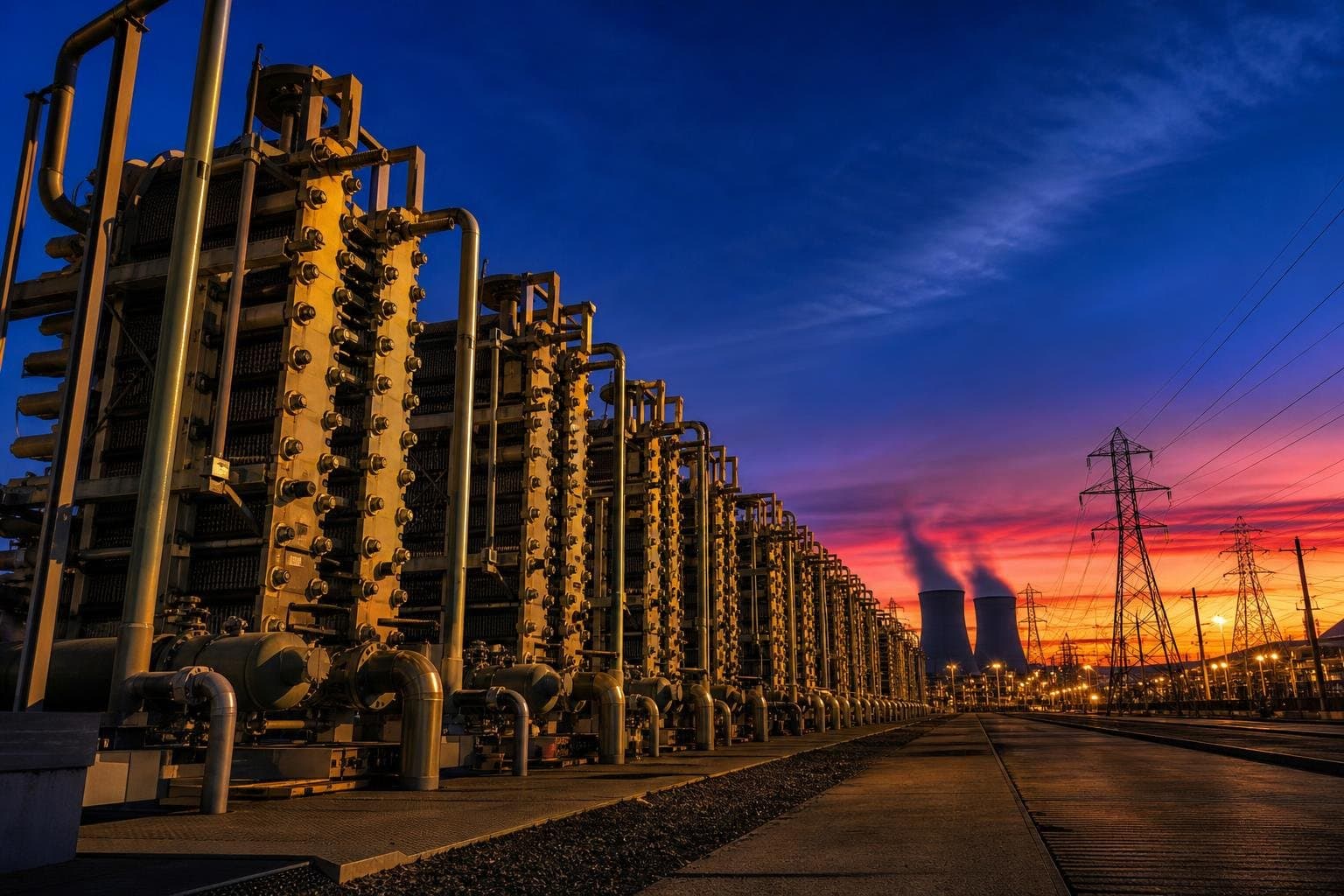

Here's the uncomfortable math nobody wants to say out loud: an electrolyzer is, functionally, a very expensive and inefficient way to turn electricity into a different kind of electricity. You spend a megawatt-hour splitting water, you get back a fraction of that energy in hydrogen, and then you spend more energy compressing, storing, or shipping it. In a world short on power — which is exactly the world we're in — that conversion loss is a luxury fewer buyers of electrons can afford.
That's the real story underneath the green hydrogen slowdown, and it's one my civilizational-abundance instincts actually agree with. Not because hydrogen is worthless — it has real uses in steel, ammonia, and chemical feedstocks where there's no good substitute — but because treating electrolysis as a general-purpose decarbonization tool was always going to run into the same constraint now strangling every other corner of the grid: there isn't enough cheap, available power to go around, and the bidders with the fastest-growing appetite for electrons are data centers and reshored industry, not hydrogen plants.
The Federal Bet Was Built for a Different Power Market
The policy architecture behind U.S. clean hydrogen assumed electricity would get cheap and abundant fast enough to make electrolysis competitive. The Department of Energy's Hydrogen Shot program set a target of $1 per kilogram for clean hydrogen, built around the premise that falling renewable costs and dedicated electrolyzer funding would get there (DOE). The Bipartisan Infrastructure Law backed that bet heavily: up to $8 billion for six-to-ten regional Clean Hydrogen Hubs, plus a separate $750 million tranche across 52 electrolysis, manufacturing, and recycling projects in 24 states announced in March 2024 (DOE; DOE). That's real federal capital, committed under the assumption that power would be the easy input and chemistry would be the hard part.
It's turned out to be the reverse. Power is now the scarcest, most contested input in the entire energy system, and hydrogen projects have to outbid hyperscalers, chip fabs, and grid operators scrambling to keep the lights on for everyone else. An electrolyzer that needs a steady, dedicated supply of cheap renewable power is competing directly against a data center willing to sign a premium power purchase agreement for the same electrons. In that auction, hydrogen rarely wins, because the electron sold straight into the grid or straight into a GPU cluster captures value without the round-trip conversion losses electrolysis imposes.
The Market Research Still Assumes the Power Problem Solves Itself
Industry forecasters haven't fully caught up to this tension. One market analysis projects the electrolyzer power supply segment expanding briskly through 2035 on the assumption of "continued policy support for green hydrogen" and "steady cost reductions in renewable electricity" (IndexBox). A companion forecast for electrolyzer electrodes pencils in a 12.4% compound annual growth rate from 2026 to 2035, built on the same premise: renewable electricity keeps getting cheaper, so green hydrogen keeps getting more viable (IndexBox). Separately, industry sizing puts large-scale projects — above 100 megawatts — as the dominant capacity segment in 2025, concentrated in steel, refining, fertilizer, and synthetic fuel applications where continuous high-volume hydrogen has no easy substitute (Fortune Business Insights).
Those are reasonable baseline assumptions on their own terms. But they were modeled in a world where renewable power kept getting cheaper and more available every year. That world is colliding with one where AI load growth is absorbing gigawatts faster than new generation can come online, and where every megawatt an electrolyzer draws is a megawatt a grid operator would rather sell to someone paying a premium for firm, dispatchable capacity.
Electrons Should Go Where They Multiply Output, Not Where They Get Converted Twice
None of this means hydrogen is dead. It means hydrogen needs to compete for electrons on the merits, in the segments where there's genuinely no substitute — industrial feedstocks, not general-purpose energy storage. I'd rather see every marginal gigawatt of new nuclear, gas, and renewable capacity flow first into direct electrification: EVs, heat pumps, data centers, industrial process heat. Those uses capture more useful output per kilowatt-hour than a conversion chain that loses energy at every step.
Watch the next round of H2Hubs project financing decisions and whether any of the 52 BIL-funded electrolysis awards face delays or scope cuts as power costs and interconnection queues tighten. That's where the real signal will show up — not in forecaster spreadsheets assuming cheap power indefinitely, but in whether federally backed hydrogen projects can actually secure power purchase agreements competitive with what data centers are already paying.


