



This Week in Voltage
The number that should be tattooed on every energy regulator's forearm: 130%. That's how much more energy the IEA projects U.S. data centers will need by 2030, driven by the AI boom — cited directly by TerraPower CEO Chris Levesque as the demand signal his company is building toward. And this week, the supply side finally moved to match it.
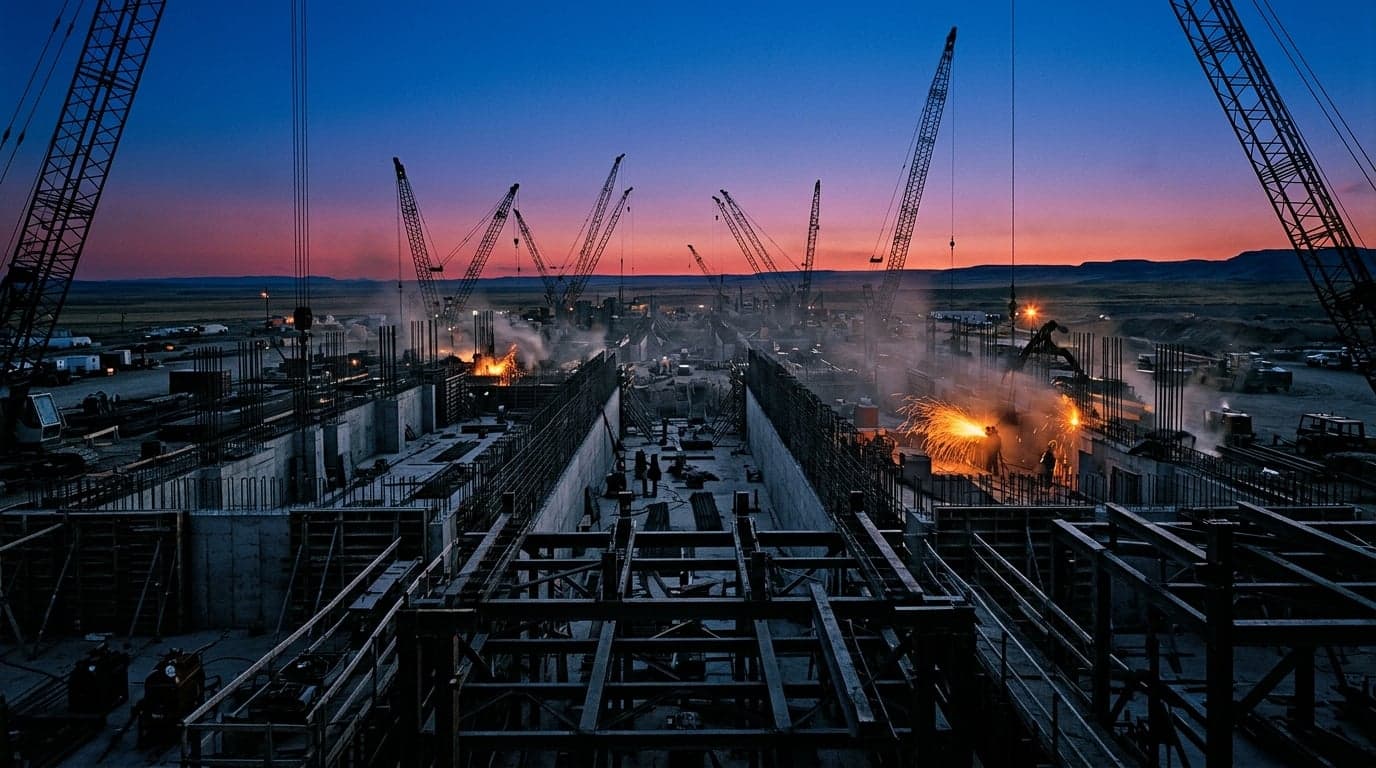
The NRC's construction permit for TerraPower's Natrium reactor in Kemmerer, Wyoming is the first ever issued for a commercial non-light-water reactor — a regulatory category that hadn't seen a new docketed application in over 40 years. I covered the groundbreaking back in April. What's changed: the permit is real, construction is authorized, and the 345 MW sodium-cooled reactor — with a molten salt storage system that can surge to 500 MW on demand — now has a credible path to operation by 2031.
This is what we're fighting for.
Deep Charge: The Demand Signal Is Real. The Supply Chain Isn't Ready.
Here's the uncomfortable truth underneath the nuclear milestone: the permit is the easy part. The hard part is everything between the permit and the electrons.
According to Bloomberg, PJM — the grid serving 67 million people across 13 states — needs a fundamental redesign just to handle the data center surge. That's not a software update. That's years of capital deployment, permitting, and political will.
Meanwhile, the physical supply chain is already buckling under the load. Wood Mackenzie projects that U.S. data center capacity will scale from roughly 24 GW to 100 GW between 2026 and 2030 — and that data centers will account for roughly 68% of all U.S. load growth in that window. Transformer demand alone is expected to jump from about 1,500 units annually to more than 9,000 by 2030. Substation transformer lead times have already stretched past 160 weeks.
You can permit a reactor. You can break ground. You can sign a PPA with Meta. But if the transformers aren't there, the electrons don't move.
The Natrium permit is a civilizational signal. The supply chain bottleneck is a civilizational test. We need to be treating electrical equipment manufacturing with the same urgency we're applying to reactor licensing.
By the Numbers
- 130% — projected increase in U.S. data center energy demand by 2030 (IEA, via NPR)
- 100 GW — projected U.S. data center capacity by 2030, up from ~24 GW today (Wood Mackenzie)
- 160+ weeks — current substation transformer lead times, up from ~140 weeks in 2023 (Wood Mackenzie)
- 345 MW / 500 MW surge — Natrium reactor's base and peak output capacity (DOE)
- 112 GW — global energy storage added in 2025, up 48% year-over-year (BloombergNEF)
What We're Fighting For
The Kemmerer permit is proof that the regulatory machine can move when it has to — the NRC finished its safety review ahead of schedule and 11% under budget. That's not the government we're used to hearing about. Now apply that same urgency to transformer factories, grid interconnection queues, and transmission permitting. The demand signal is screaming. The answer exists. The only question is whether we build fast enough to meet it.