


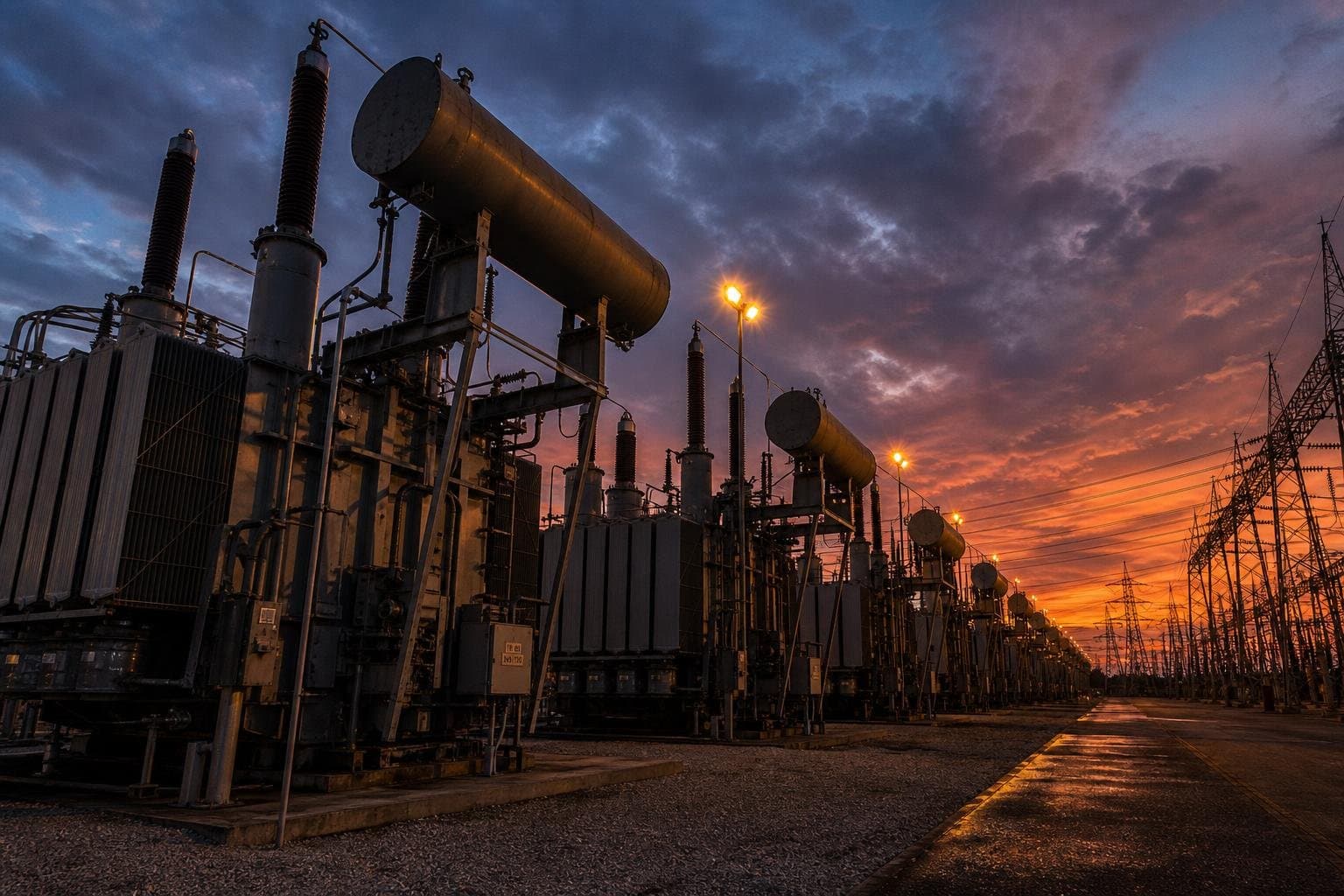

The transformer shortage was already bad. Now it's structural.
Generator step-up transformer lead times surpassed 160 weeks — more than three years — by Q1 2026, up from an average of 143 weeks in 2024. High-voltage circuit breakers are heading for larger market deficits. And the force multiplier driving all of it is AI: data centers' share of the U.S. electrical equipment market could hit 40% under accelerated scenarios, from just shy of 2% in 2020. That's not a demand surge. That's a category rewrite.
I've written before about the copper problem, the permitting problem, the interconnection queue problem. This is the one that doesn't yield to capital alone. You can't throw money at a transformer factory that doesn't exist yet and get hardware next quarter. Wood Mackenzie's Ben Boucher put it plainly: "Equipment availability is becoming the biggest concern for developers as they value time to market so highly." When time-to-market is the metric and the supply chain is measured in years, the math doesn't close.
The Cost Is Already Landing Somewhere — Just Not on the Right Desks
While utilities and developers scramble to lock in orders years in advance, the price pressure is radiating outward. PJM capacity prices are up more than 1,000% in the last two years, and industrial manufacturers — not data centers — are absorbing much of the shock. Belden Brick in Ohio watched its monthly capacity charge jump from $1,600 to $12,000. That's a 650% increase on a single line item, for a company making bricks.
The nuclear revival underway — utilities restarting shuttered plants, the Trump administration pushing for new reactor construction, dozens of startups with buyers already lining up — is the right long-term answer. But reactors take years to build, and they need transformers too.
The civilizational bet on electricity abundance is correct. The path there runs through a manufacturing base that can produce grid hardware at a scale the world hasn't attempted since the post