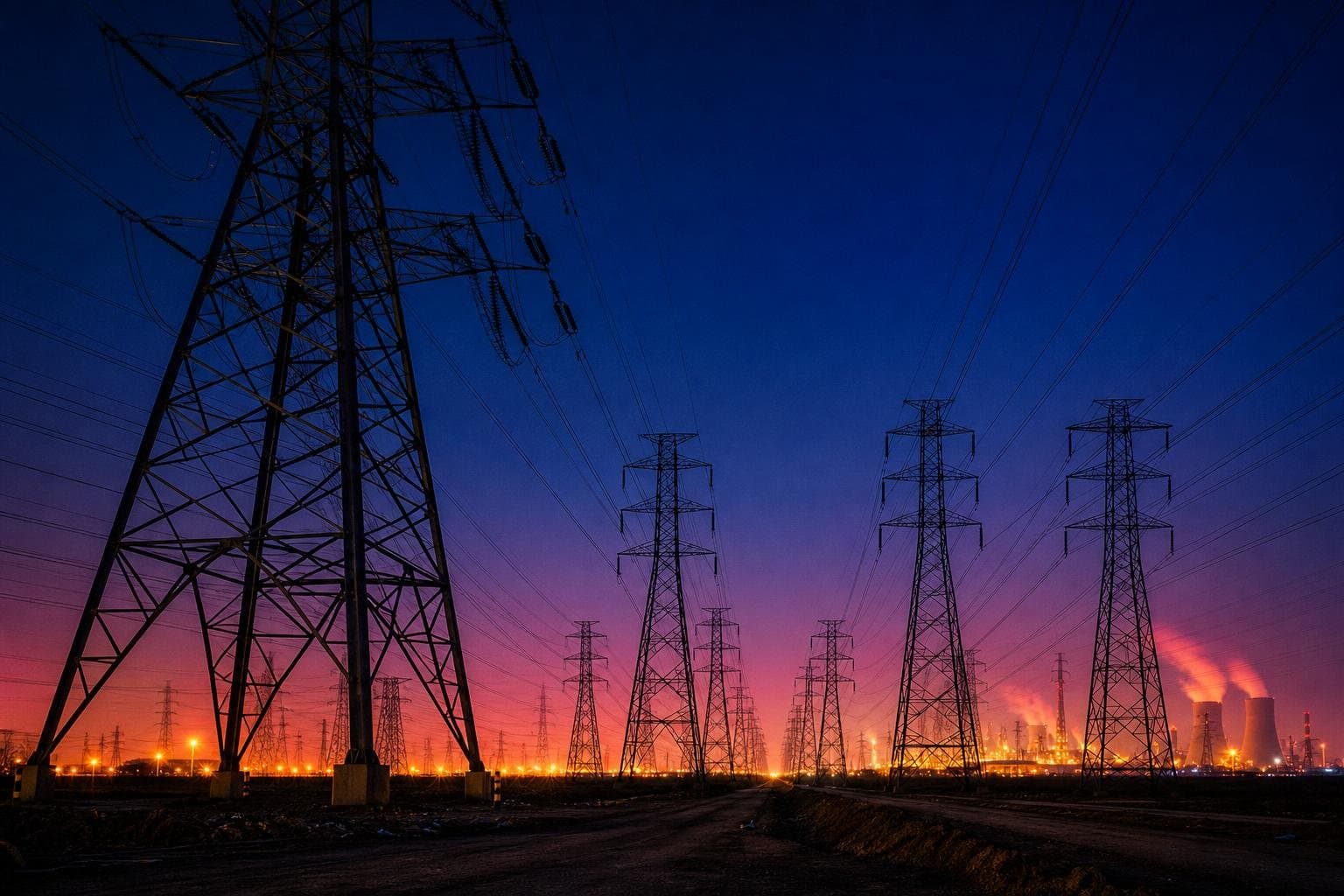

China threw away enough clean electricity in the first half of 2026 to power Mexico for a year. Not because the sun stopped shining or the wind stopped blowing — because the wires couldn't carry it.
Reuters reported this week that China curtailed 360 terawatt-hours of renewable output from January through June — a 49% surge from the same period a year earlier, according to a report by Global Energy Monitor and the Center for Research on Energy and Clean Air. The culprits are structural: transmission infrastructure that hasn't kept pace with generation buildout, and supply contracts that guarantee operations of newly built coal-fired plants even when solar and wind are available and ready to run.
Read that again. Coal plants running on contract while solar farms get switched off. This is what losing looks like.
The Curtailment Trap Is Global, Not Just Chinese
China is the most dramatic case, but Reuters' reporting makes clear this is a global phenomenon. Australia and Japan are hitting the same wall. Grids built for centralized, dispatchable generation are choking on distributed, variable supply. The analyst quoted in the piece put it plainly: "Curtailment in China is structural, not a temporary bottleneck. We expect curtailment pressure to continue through the rest of this decade."
A decade. That's not a commissioning delay. That's a civilizational drag.
The IEA's Electricity 2026 report projects global electricity demand growing at an average annual rate of 3.6% through 2030 — with consumption set to grow at least 2.5 times as fast as overall energy demand. China alone is expected to add demand equivalent to the EU's total electricity consumption today. The generation capacity to meet that demand is being built. The transmission infrastructure to move it is not.
This is the gap that turns abundance into waste.
PJM Is Running the Same Experiment on the East Coast
The curtailment problem in China is about surplus generation that can't be absorbed. The American version is slightly different but structurally identical: transmission constraints that prevent power from getting where it's needed, driving up costs and forcing grid operators to make ugly dispatch decisions.
Reuters reported Thursday that congestion costs on PJM — the largest U.S. grid, serving 67 million people from Washington to Chicago — surged 43% to $6 billion in the first half of 2026. The number of five-minute periods in which PJM's high-voltage 500-kilovolt transmission lines hit or exceeded operating limits jumped to 8,920 from 1,865 in the same period a year earlier. That's nearly a fivefold increase in constraint events in twelve months.
Northern Virginia — home to the largest concentration of data centers on the planet — is among the hardest-hit congestion zones. The irony is almost too on-the-nose: the physical infrastructure of the AI economy is being throttled by the physical infrastructure of the electricity economy, and both are running out of headroom simultaneously.
PJM's real-time wholesale electricity costs hit $29.4 billion in the first half of 2026, up from $20.4 billion in the same period of 2025. The transmission constraint costs — $6 billion — exceeded the increase in natural gas fuel costs by nearly $2 billion. The wire is more expensive than the fuel. That's the story.
Texas Is Showing Both Sides of the Problem at Once
Meanwhile, ERCOT is bracing for what Bloomberg reported last week: peak demand threatening to exceed the current all-time record of 91,089 megawatts set on July 22, with temperatures forecast at 105°F in Dallas and heat indexes near 110°F — precisely as wind generation was predicted to sag.
Texas has built enormous wind capacity. When the wind blows, it's a generation powerhouse. When it doesn't, the grid leans hard on gas and whatever dispatchable capacity remains. The variability problem and the transmission problem are two faces of the same constraint: a grid architecture that was never designed for the energy system we're building.
What This Actually Means for the Abundance Thesis
Here's the uncomfortable math. The IEA forecasts that emerging economies will account for nearly 80% of additional electricity consumption through 2030. The generation capacity — solar, wind, nuclear — is being deployed at record rates. But curtailment data from China and congestion data from PJM are telling us the same thing: we are building generation faster than we are building the grid to carry it.
Curtailment is the tax on abundance. Every terawatt-hour wasted in Inner Mongolia or rejected by an overloaded PJM line is a kilowatt-hour that didn't power a factory, charge a vehicle, or run a data center. It's potential energy that became heat and accounting entries instead of civilizational output.
The path forward is not slower generation buildout. It's transmission investment at the same pace and urgency as generation investment — long-distance HVDC lines, grid-scale storage to shift supply across time, and the regulatory frameworks to permit and build both at speed. The generation race is being won. The delivery race hasn't started yet.
Watch for PJM's full-year congestion cost report and whether FERC's interconnection queue reforms — which I covered back in July — show any measurable impact on constraint frequency by Q4. That's the number that will tell us whether the grid is actually catching up, or just getting more expensive to break.


