


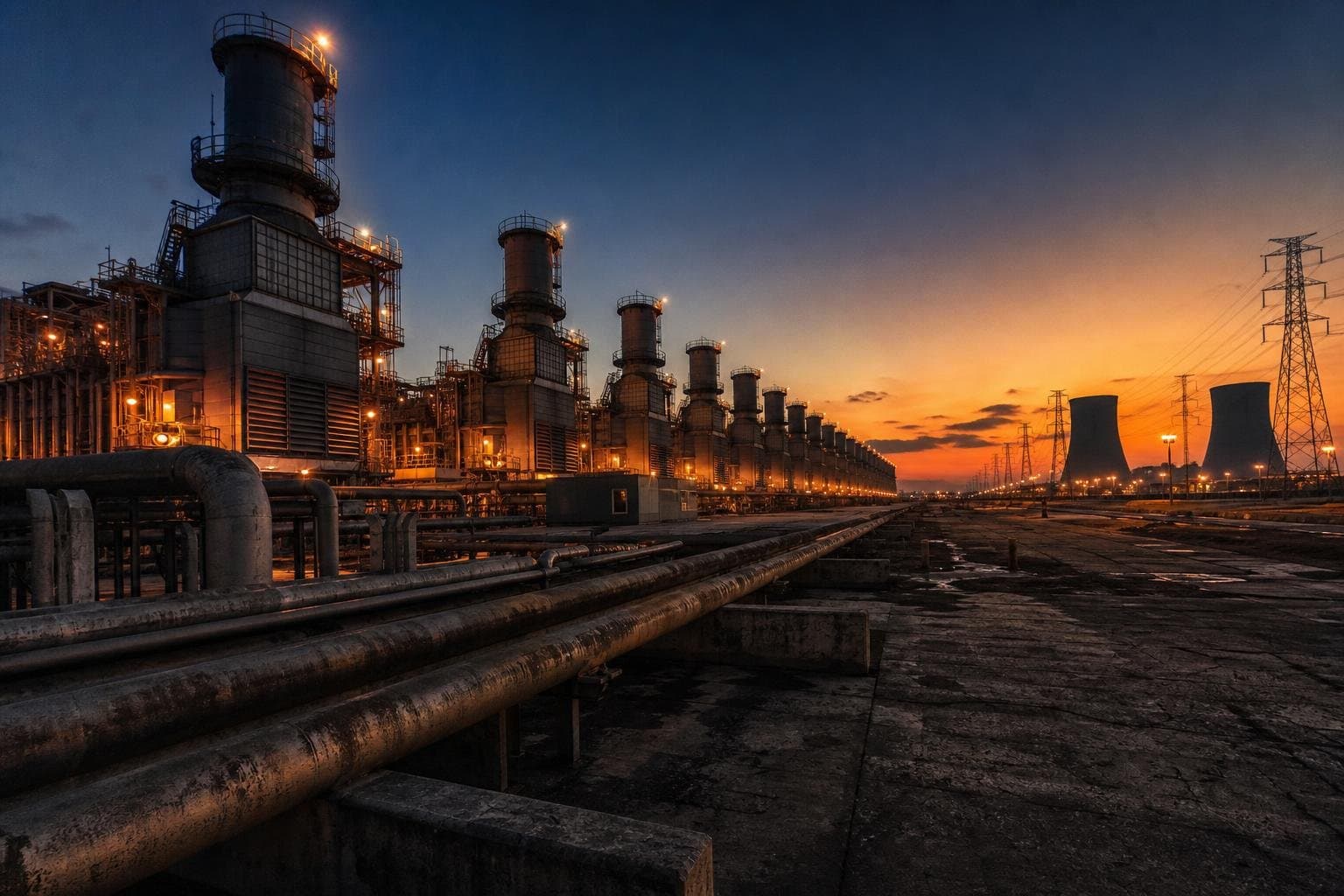

Ninety-nine proposed natural-gas power plants, built specifically to feed data centers, would add roughly 318 million metric tons of CO₂ annually if run at industry-standard utilization rates. The entire US power sector emitted about 1,485 million metric tons last year, per EIA data cited by Bloomberg. Do the math: one slice of data center infrastructure — not the whole AI buildout, just the bespoke gas plants — could lift US power sector emissions by 20%. That's not a rounding error. That's a civilizational choice being made in utility filings and zoning boards while everyone debates permitting reform.
Here's what makes this genuinely interesting rather than just alarming: most of these plants will never get built. Wood Mackenzie projects that only about 28% of the 1,066 gigawatts requested for US data center projects will actually materialize — the rest is phantom demand, speculative pitches, and projects that will die in the interconnection queue. So the 99-plant figure is a ceiling, not a forecast.
The Real Story Is What Fills the Gap
The question electricity maximalists should be asking is: if gas is the default when the grid can't keep up, what does that say about the alternatives?
Look at Europe this week for the answer. Spain just extended the Almaraz nuclear plant through June 2030, reversing a decommissioning timeline that had the reactors going offline in 2027 and 2028. The government cited the Iran war's impact on fossil fuel supplies — not the April 2025 blackout, officially, though analysts aren't buying that distinction. Meanwhile, Romania's Nuclearelectrica shut down its sole remaining working reactor this week due to record-low Danube levels, forcing the country into an energy emergency and firing up a lignite plant to compensate.
Two countries, two opposite nuclear trajectories, same underlying lesson: when the grid gets squeezed — by drought, by war, by AI demand — the fallback is always something dirtier and more fragile than what you gave up.
The US gas buildout for data centers is what happens when you