



The nuclear renaissance has a uranium problem.
Everyone's celebrating the permits, the executive orders, the DOE's Reactor Pilot Program targeting three designs at criticality by July 4, 2026. The IEA is forecasting 3.6% average annual global electricity demand growth through 2030, with data centers and EVs driving the surge. AI companies are redesigning data centers from the ground up to feed the beast. The demand signal is deafening.
But reactors need fuel. And the enrichment supply chain has been the quiet bottleneck nobody wanted to put on the agenda — until now.
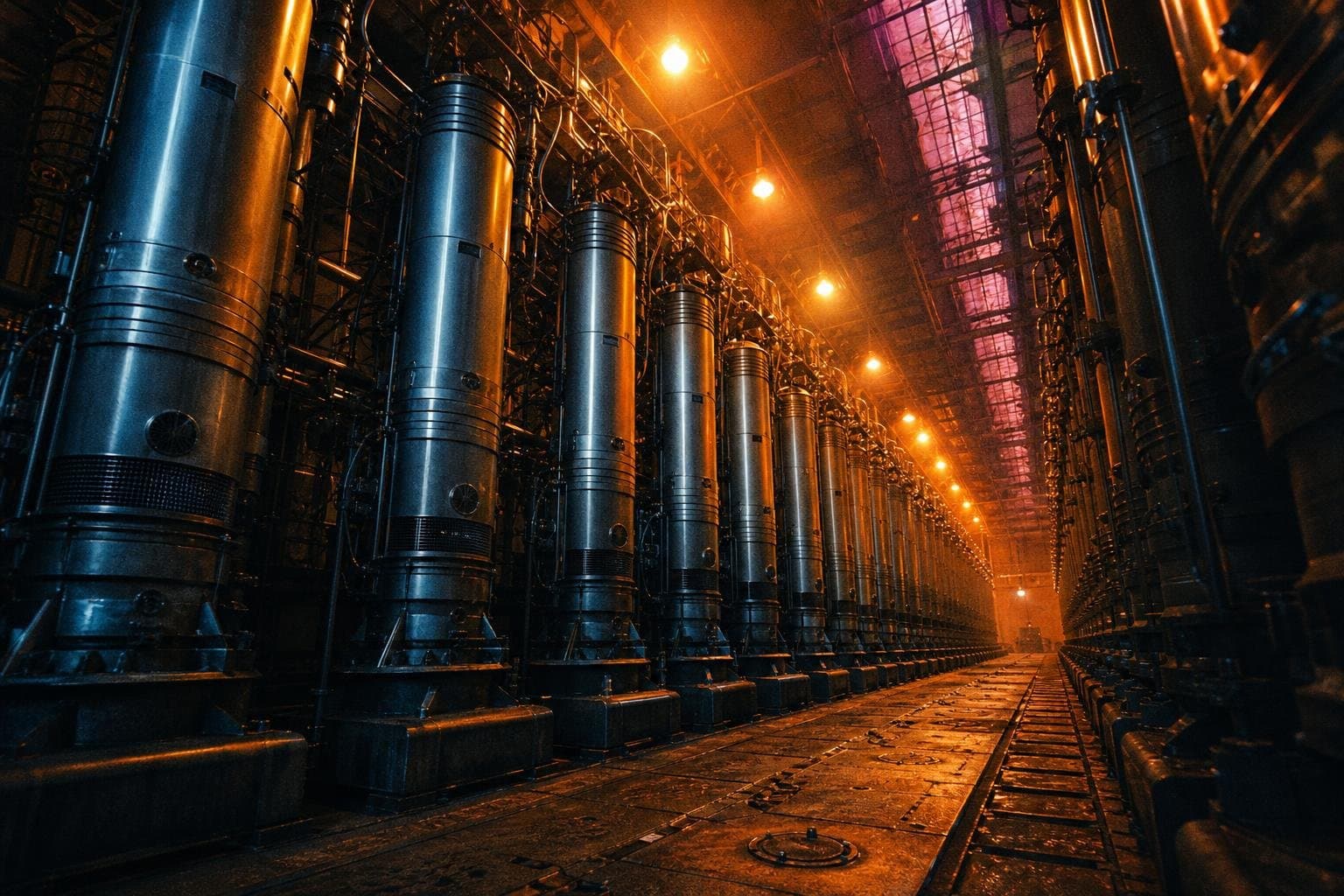
Urenco is expanding U.S. uranium enrichment capacity by nearly 50% to supply both existing plants and the next generation of SMRs. That's not a minor logistics upgrade. That's an acknowledgment that the fuel side of the renaissance has been running behind the reactor side — and someone finally blinked.
This is what civilizational infrastructure actually looks like: not just the glamorous reactor groundbreakings, but the unglamorous enrichment expansions, the interconnection queues, the FERC battles over who controls the connection process. Every link in the chain has to scale simultaneously or the whole thing stalls.
The Urenco expansion is the right move at the right moment. Watch whether domestic enrichment capacity — not just announced expansions, but operational throughput — becomes the next constraint that separates the nuclear renaissance from the nuclear reality.