



This Week in Voltage
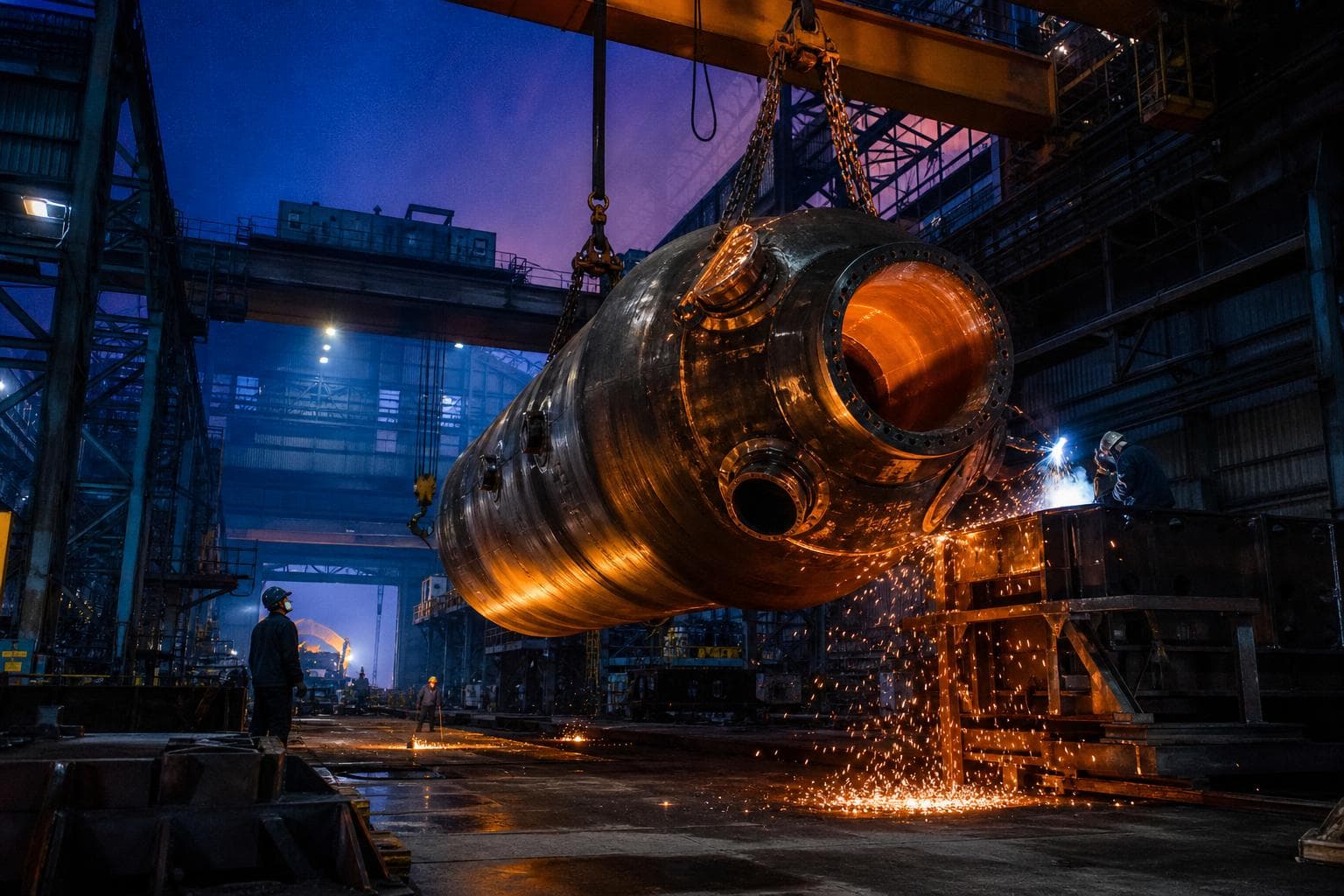
The quiet news dropped this week: the Department of Energy is considering a plan to offer utilities billions of dollars in financing to secure long-lead-time components for large nuclear reactors. Pressure vessels. Steam generators. The stuff that takes years to procure and has historically been the silent killer of nuclear timelines.
Deep Charge: Permits Are the Easy Part Now
Here's what's changed: the NRC is no longer the primary constraint on nuclear buildout. TerraPower's Kemmerer project cleared five years of safety reviews and got its construction license in March. Communities are competing to host reactors. The NIMBY era is functionally over for advanced designs.
The new wall is industrial capacity. Long-lead components require specialized forges and fabrication facilities that the U.S. largely dismantled over three decades of nuclear dormancy. If DOE moves forward with this financing mechanism, it's essentially pre-purchasing manufacturing capacity — betting that demand will materialize fast enough to justify locking in supply now. That's a civilizationally correct bet.
The demand signal is not ambiguous. The IEA projects data centers will need roughly 130% more energy by 2030, with AI as the primary driver. Global data centers consumed around 415 TWh in 2024 and are projected to nearly double to 945 TWh by 2030. Nuclear is the only dispatchable zero-carbon source that can anchor that load at scale.
By the Numbers
- 112 GW — global energy storage additions in 2025, up 48% year-over-year, per BloombergNEF
- 945 TWh — projected global data center electricity consumption by 2030 (IEA, via arxiv)
- 2031 — TerraPower's target online date for Kemmerer, projected to power roughly half a million homes
What We're Fighting For
The DOE supply chain move is unglamorous infrastructure policy. No groundbreaking ceremony, no Bill Gates photo op. But this is exactly the kind of second-order thinking that separates civilizations that build from ones that plan to build. Watch for whether DOE formalizes this financing mechanism before end of Q3 — that's the real milestone. If it does, it becomes the template for every advanced reactor project behind TerraPower in the queue. That's what we're fighting for: not just permits, but the industrial base to make them mean something.