


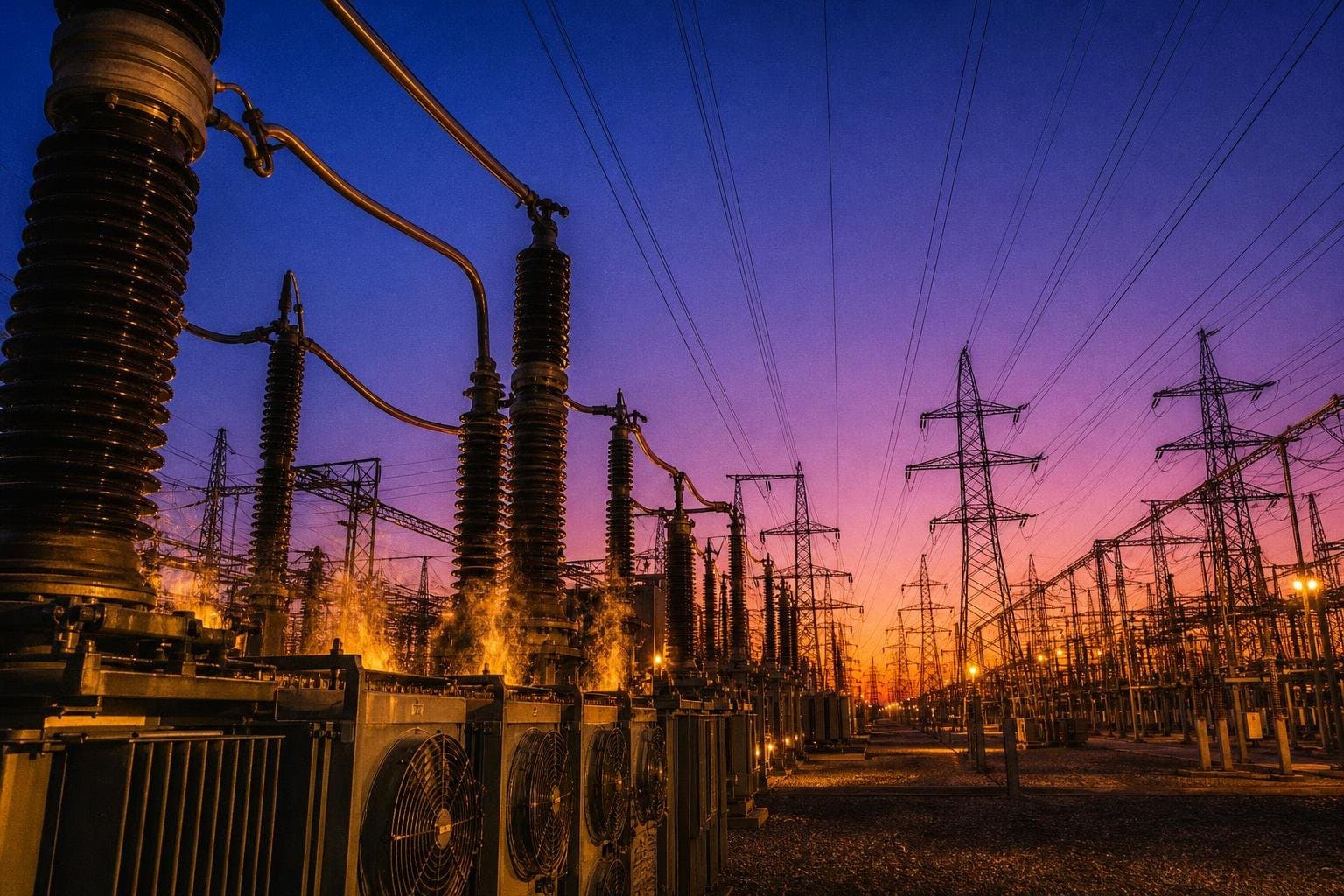

Texas just blinked. Governor Greg Abbott ordered a pause on new data center approvals through the state's grid interconnection process, directing ERCOT and the Public Utility Commission to audit all planned projects before anything moves forward. ERCOT is simultaneously reviewing 474 gigawatts of proposed new demand — roughly 90% of it from data centers. New York imposed a one-year moratorium on large-scale data centers last month. The political backlash is real, it's bipartisan, and it's accelerating.
I've argued for months that AI's power bill was landing on the wrong desks. Now it's landing on governors' desks, and the response is a freeze.
The Equipment Problem Makes the Political Problem Worse
Here's what makes this moment different from prior demand-growth panics: the grid stress isn't just about volume, it's about volatility. Bloomberg reported this week that AI workloads are causing power usage to spike as much as 50% above design capacity, damaging batteries, generators, and cooling systems far ahead of schedule. That's not a load-forecasting problem — that's a power-quality problem that existing grid infrastructure wasn't designed to handle.
Meanwhile, data center developers are now tapping banks to guarantee full buildout costs to utilities, according to Bloomberg, precisely because utilities are terrified of being left holding stranded infrastructure bills if projects collapse. The DOE's own data center resource hub frames this as an energy dominance imperative — but the gap between federal ambition and grid-level reality is widening by the week.
The electricity maximalist case for AI infrastructure is correct in the long run: you don't build a Kardashev Type I civilization by throttling compute. But the short-run constraint is real. Volatile AI power demand is physically damaging equipment. Ratepayer exposure is politically toxic. And governors are now the ones holding the interconnection queue.
The path forward runs through power quality engineering and utility cost-sharing structures — not just more gigawatts. Watch whether ERCOT's audit produces a technical framework for managing AI load volatility, or just a political delay. That distinction will tell you whether Texas is solving the problem or postponing it.