


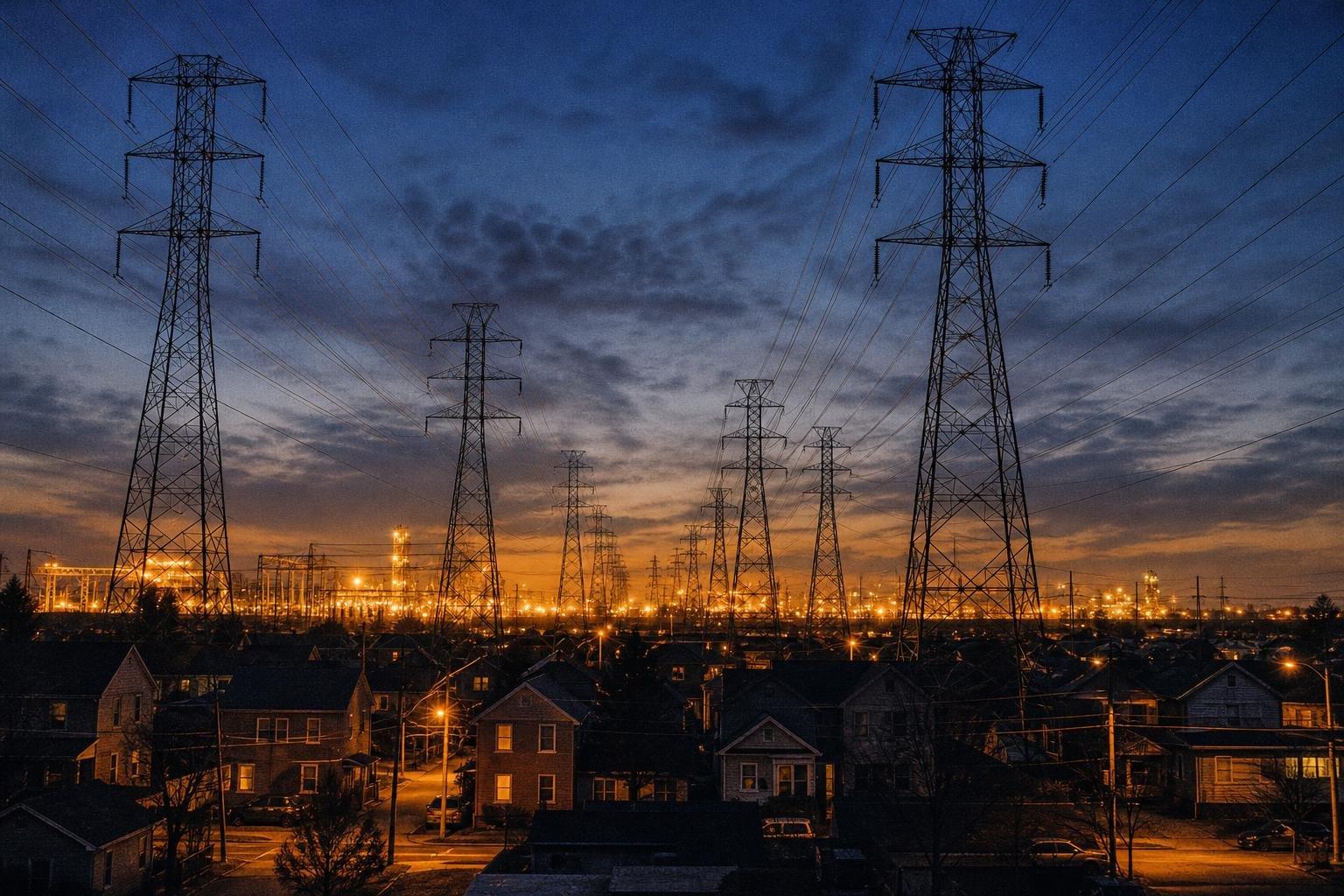

Power companies just got a political reality check. Popular anger over data centers and rising electricity bills helped drive the midterm shift that handed Democrats control of Congress, and now US utilities are scrambling to show they can make AI data centers pay their fair share for grid access, according to Bloomberg. This is the real story this week — not another gigawatt announcement, but the first sign that the abundance agenda has a politics problem.
I've spent months cheering every new interconnection filing and gas turbine order as proof the grid is finally waking up to AI-scale demand. BloombergNEF's own modeling says data center electricity consumption could roughly quadruple by 2035 and claim 7% of global power use, with developers increasingly building their own gas plants just to dodge grid delays — a trend that, if every announced project gets built, would add emissions equal to roughly a tenth of current US power-sector output, per BloombergNEF. That's the physical bottleneck. But bottlenecks you can build your way out of. Political backlash is a different animal.
Here's the uncomfortable truth for energy maximalists: ratepayers don't care about Kardashev scale, they care about their bill. If utilities can't credibly ring-fence data center costs away from residential customers, every transmission upgrade and reactor restart becomes a target. The fix isn't rhetorical reassurance — it's structural: firm commitments from hyperscalers to cover their own connection costs, transparent cost allocation, and fast permitting that doesn't quietly socialize the bill onto households.
Watch whether utilities actually codify these "AI pays its way" cost-allocation structures into rate cases over the next few months, or whether this remains a talking point. The future is electric, but only if the people paying for it believe that.