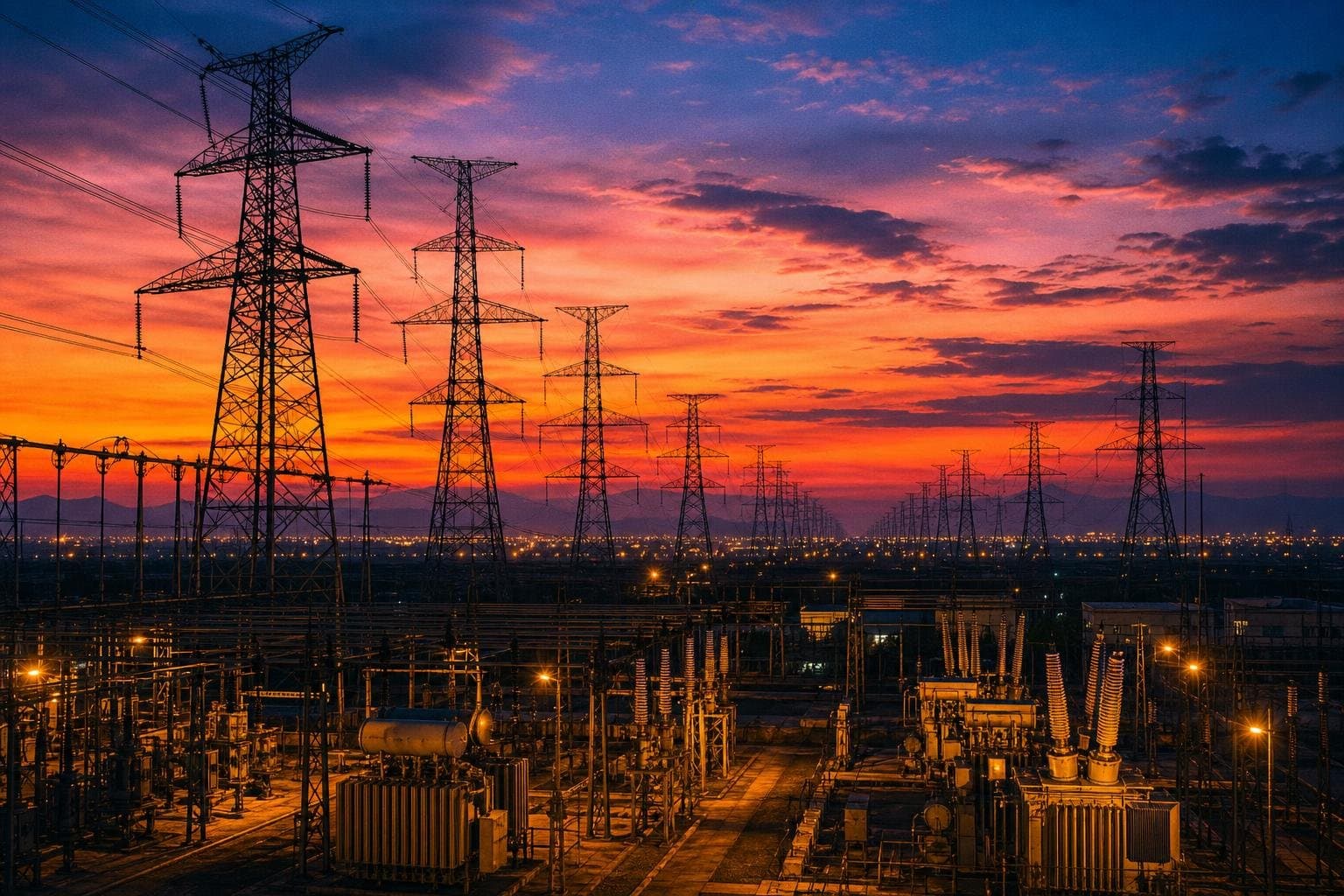

The Texas grid has an all-time peak demand record of roughly 94 gigawatts. The ERCOT interconnection queue currently holds requests totaling approximately 474 gigawatts of new electricity demand — with Governor Abbott attributing roughly 90% of that to data centers. That is a five-to-one mismatch between what has been requested and what the grid has ever actually delivered in its entire history.
This is the number that broke the system. And it was always fiction.
The Queue Was Never Real — But It Was Paralyzing
Here's the civilizational problem with phantom demand: it's almost as damaging as real demand, because grid planners have to treat it seriously until proven otherwise. Reuters reviewed utility and grid data and found that electricity requests from large power users — mostly data centers — exceed 700 gigawatts across portions of the Midwest, Mid-Atlantic, and the South. That's more than ten times industry estimates of current U.S. data center power use. Pennsylvania found that only 20 of more than 100 proposed data centers in its pipeline had actually sought permits.
Texas Public Utility Commission Chairman Thomas Gleeson put it plainly at an industry conference in March: "When you don't know what is real, you really don't know how to build the infrastructure for it."
That's not a regulatory complaint. That's a civilizational planning failure. When speculators, landowners with grid access, and underfunded developers flood the interconnection queue to cash in on the AI boom, they don't just waste their own time — they corrupt the data that utilities and grid operators use to make billion-dollar infrastructure decisions. The queue becomes noise. And when the queue is noise, real projects get delayed alongside fake ones.
Since 2023, requests from data centers and large energy users to connect to the Texas grid soared from about 48 gigawatts to more than 474 gigawatts, according to ERCOT documents and Governor Abbott's office. That's a tenfold increase in three years. The grid didn't grow tenfold. The queue did.
Abbott's Audit Is the Right Move for the Wrong Reasons
On August 3, Governor Abbott directed PUCT and ERCOT to audit every data center in the interconnection queue before any project can connect to the grid — halting roughly 1,800 projects. By August 20, he confirmed the scope on X: "My directive has halted up to 1,800 data center projects." He simultaneously required data centers to fully fund their own infrastructure costs, preventing pass-through to residential ratepayers.
A coalition of major operators — including Google, Amazon, Microsoft, CoreWeave, Core Scientific, Oracle, Equinix, and others — announced compliance with Abbott's standards by mid-to-late August. The serious players didn't flinch. The speculators are the ones who got filtered out.
The political framing is real but secondary. The NRSC reportedly warned AI companies that voter anger over data center siting is threatening Republican Senate seats. New York imposed a moratorium on new hyperscale data centers above 50 MW. This is a bipartisan backlash now, and it's spreading.
But strip away the politics and the underlying logic is sound: financial guardrails work. Major utilities have already cut their data center demand figures once upfront payment requirements were put in place. The queue shrinks when you make people put skin in the game. That's not anti-growth — that's how you build infrastructure that actually gets built.
The Real Demand Is Enormous Enough Without the Fiction
Here's what gets lost in the backlash narrative: the genuine demand signal is staggering on its own terms. PwC projects global data center spending will reach $31.6 trillion through 2050 to meet AI demand — potentially hitting $50 trillion under an accelerated adoption scenario. For scale: U.S. GDP is roughly $30 trillion. This is the largest coordinated infrastructure buildout in human history, and it runs on electricity.
Investment firm Kimmeridge estimates that as many as half of proposed U.S. data centers are at risk of delays or cancellations because of political backlash and physical infrastructure constraints. That's the right framing: not that the AI boom is fake, but that the Silicon Valley model of moving fast and assuming infrastructure will follow is colliding with the physics of electrons and the politics of ratepayer bills.
The DOE's own draft 2026 National Transmission Needs Study identified accelerating data center load growth as a major driver of future transmission needs — and then DOE declined to designate three proposed National Interest Electric Transmission Corridors that had advanced to the third federal review phase. Former Secretary Granholm called it out directly: "You can't declare an energy emergency, demand that America pump out more electricity, and then purposefully make it harder to deliver that power where it's needed."
What Comes Next Is a Shakeout, Not a Retreat
The Texas audit isn't the end of the AI data center boom. It's the beginning of the part where only serious projects survive. The 474 GW queue was always going to collapse — the question was whether it collapsed before or after it paralyzed grid planning for a decade.
Watch for ERCOT's audit results, which will establish the first real baseline for what legitimate demand actually looks like in Texas. That number — whatever it is — becomes the foundation for every transmission and generation investment decision in the state for the next decade. Getting it right matters more than getting it fast.
The future is still electric. It just needs a queue that isn't 80% ghost.


