



This Week in Voltage
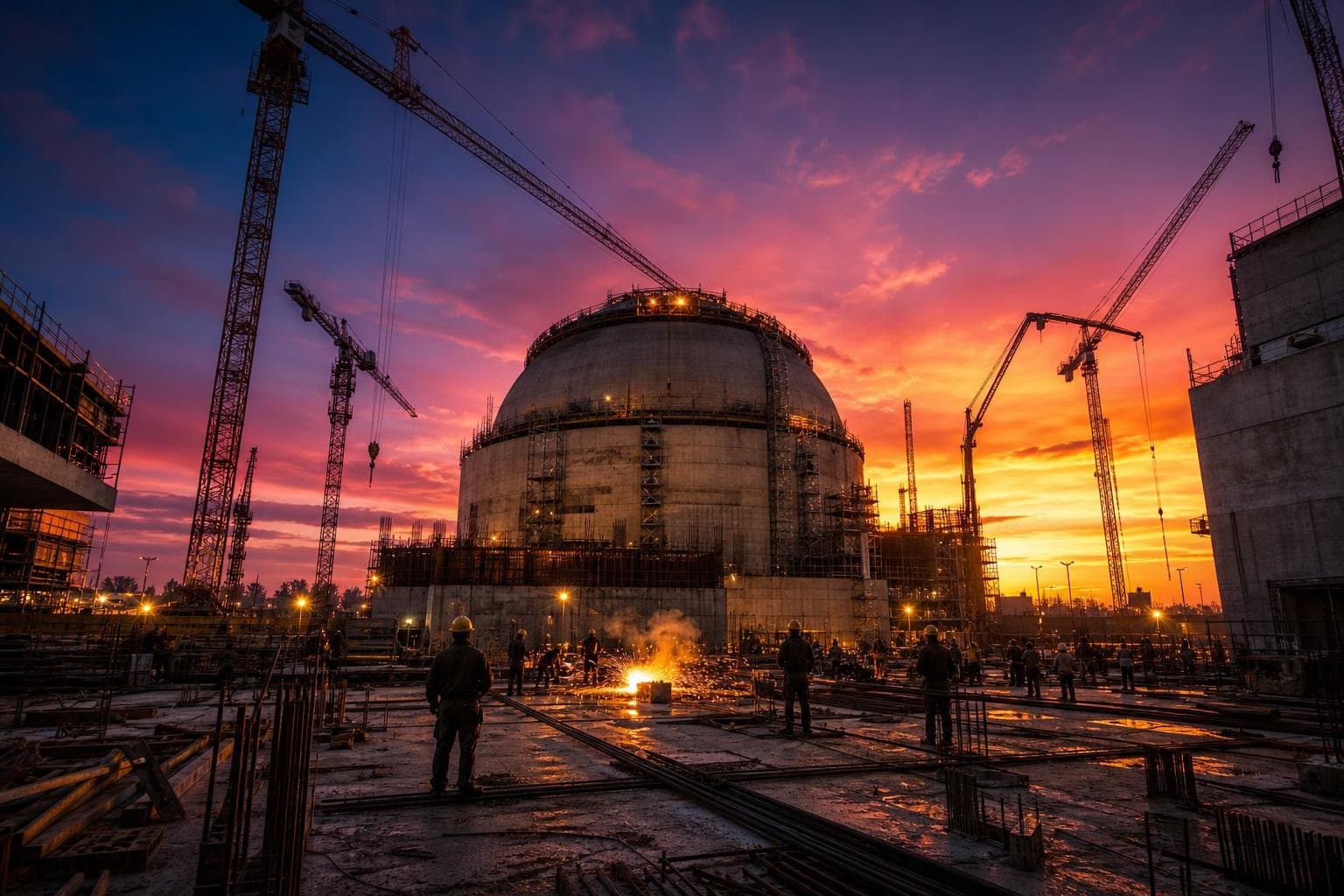
One year after Trump's nuclear executive orders, the DOE is claiming momentum — and for once, the receipts are real. The DOE's own accounting shows 11 projects selected for the Reactor Pilot Program, three of which secured Final Documented Safety Analyses as of May 2026, with a target of at least three reactor designs reaching criticality by July 4, 2026. Meanwhile, Reuters reports the NRC confirmed it will allow microreactor developers to load fuel and test reactors in factories — a licensing reform that removes one of the most stubborn physical bottlenecks in the advanced reactor pipeline.
These are announced milestones and regulatory changes, not operational gigawatts. The distinction matters enormously. But the direction is unmistakable.
Deep Charge: 100 GW to 400 GW — The Math Behind the Mandate
Here's the civilizational framing you need: the U.S. sits at roughly 100 GW of nuclear capacity today. The Trump administration's stated target, per Reuters, is 400 GW by 2050. That's a 4x expansion in 24 years — in an industry that took 40 years to build its first 100 GW and then stalled completely.
The demand signal driving this is real. AI hyperscalers and large manufacturing facilities are creating electricity appetite that dwarfs anything the grid has seen. The Bipartisan Policy Center notes that as recently as March 2026, the White House was convening AI companies around ratepayer protection pledges — a sign that policymakers understand the political volatility of a demand surge hitting a constrained grid.
Nuclear is the only dispatchable zero-carbon source that can answer that call at scale. The microreactor push — Pentagon-driven for now, with Reuters flagging that commercial hurdles around refueling and regulation remain significant — is the right technology direction even if the timeline is brutal.
The 400 GW target is either the most important industrial mobilization since the Interstate Highway System, or a number someone wrote on a whiteboard to sound serious. The Reactor Pilot Program's July 4 criticality deadline will be the first real signal of which one it is.
Watch for it. Three reactor designs reaching criticality in 31 days would be the loudest proof-of-concept the nuclear renaissance has produced. Miss that milestone, and the gap between announcement and reality widens again. The future is electric — but only if we actually build it.
By the Numbers
- ~100 GW — current U.S. nuclear capacity (Reuters)
- 400 GW — administration target by 2050 (Reuters)
- 11 projects selected for DOE's Reactor Pilot Program (DOE)
- 3 designs targeted for criticality by July 4, 2026 (DOE)
What We're Fighting For
A civilization that can think at the speed of AI, manufacture at the scale of abundance, and eventually leave this planet — runs on electrons. Every reactor that reaches criticality is a vote for that future. The July 4 deadline isn't a PR stunt. It's a test of whether American industrial will has actually returned.