


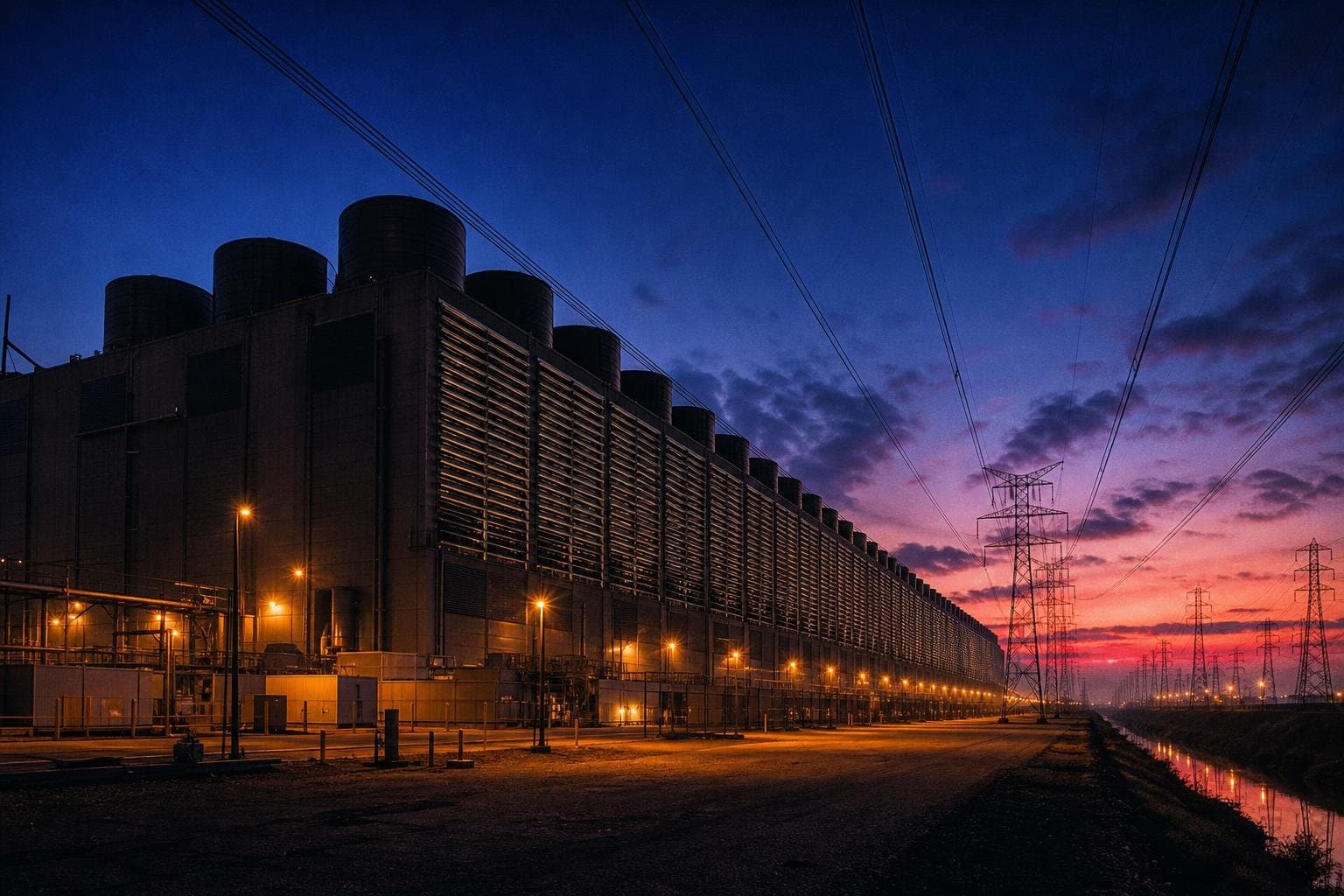

Greg Abbott lost the Texas governorship to a state legislator who ran against data centers, and that single sentence should terrify anyone who thought electricity abundance was an inevitability rather than a fight you have to keep winning (Bloomberg). Abbott embraced the AI buildout, then paused it in August as poll numbers soured, then lost anyway. Not even the most business-friendly governor in the country could defend the server farms.
This is the civilizational bottleneck right now, and it isn't transformers or turbines — it's permission. While Texas voters were rejecting "noisy behemoths," the actual plumbing of grid expansion ground forward on parallel tracks. CAISO's board approved a large-load interconnection framework on October 28, built around a single flexible interim service that lets 50 MW-plus loads connect before network upgrades are finished, in exchange for accepting curtailment when the grid needs it (mgrid.org). PJM, meanwhile, is pushing for a March data-center power auction after FERC called its original cost-allocation plan "deeply flawed" and delayed it five months (Bloomberg).
Every one of these mechanisms — flexible interconnection, revised auctions, cost-allocation fights — exists because regulators are trying to answer the question voters just answered differently: who absorbs the cost and risk of plugging a gigawatt-scale load into a grid that wasn't built for it. That question sits underneath every interconnection queue in the country (Abacus).
Engineers can solve interconnection math. They cannot out-engineer a ballot box. If builders don't start treating community buy-in as load-bearing infrastructure, the queue problem becomes the least of their worries — watch whether Kansas's new governor moves on data-center permitting next.