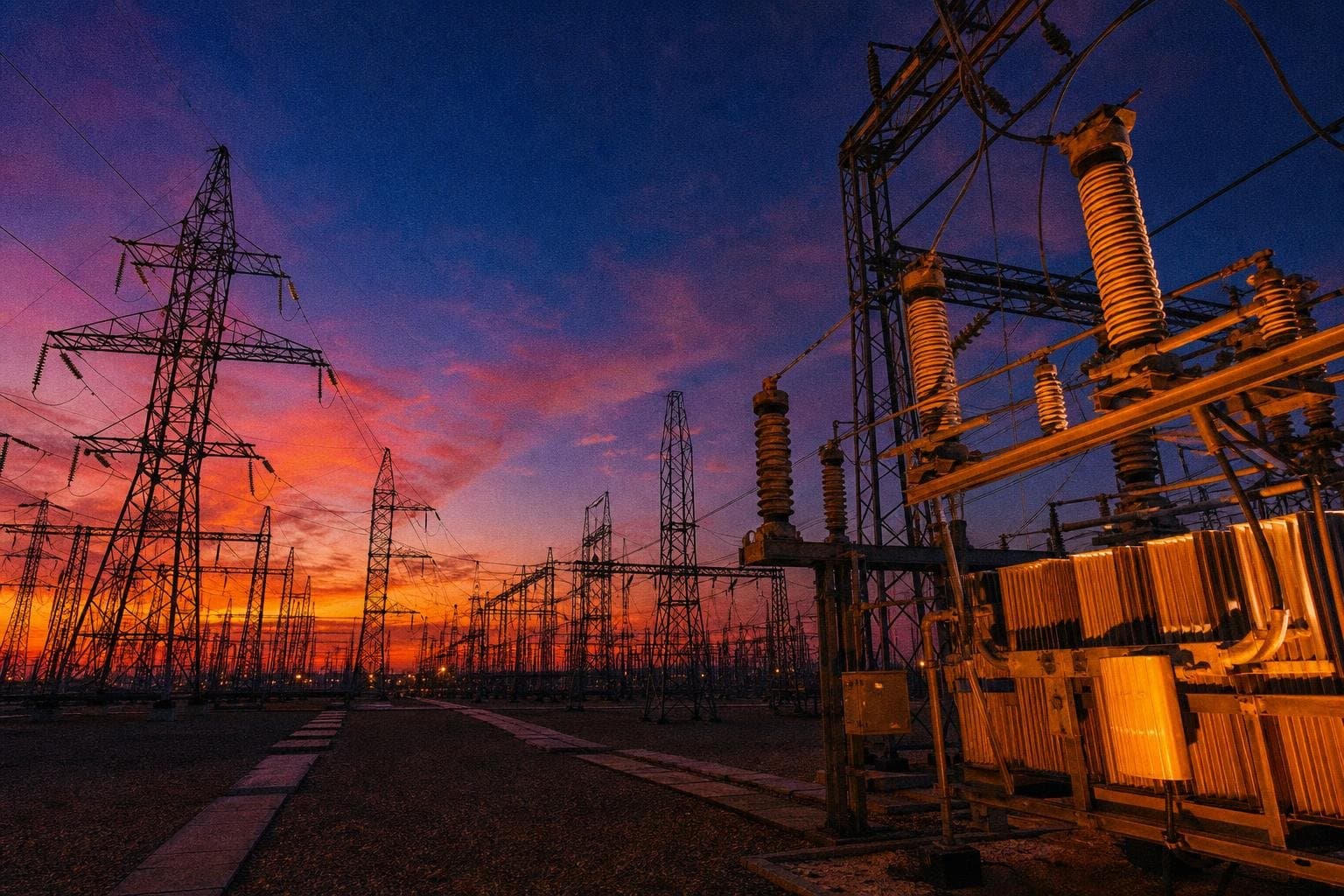

The heat dome that cooked the eastern seaboard over the July 4th weekend didn't just cancel fireworks. It pushed the largest grid in the United States to the edge of its all-time peak demand record — and in doing so, handed electricity maximalists the clearest possible proof of what we've been arguing for years: the grid is undersized for the civilization we're trying to run.
Let's talk about what actually happened, because the Texas framing undersells the story.
PJM Just Stared Down Its Biggest Demand Test in Two Decades
PJM Interconnection — the grid operator serving 13 states and Washington D.C. — issued a Maximum Generation Alert and a Load Management Alert simultaneously for July 2, forecasting a peak load of 166,147 MW. For context: PJM's existing all-time summer hourly integrated peak is 165,563 MW, set in 2006. The grid was staring down a potential record-breaker, and operators responded by deferring maintenance on generation units, warning neighboring systems that electricity exports might be curtailed, and putting demand response programs on standby.
That's not a close call you shrug off. That's a system operating at the absolute margin of its designed capacity — in 2026, with two decades of supposed grid modernization behind us.
Bloomberg reported that power demand on the PJM grid did in fact surge to a record on July 3, as temperatures soared above 100°F across much of the mid-Atlantic. The heat dome forced the Great American State Fair in Washington D.C. to shut down for several hours on the Fourth of July itself.
This is what we're fighting for. Not the ability to run air conditioning during a heat wave — that's the floor, not the ceiling. The fight is for a grid so overbuilt, so redundant, so abundant in generation capacity that a 100°F heat dome is a footnote, not a crisis.
Data Centers Are the Demand Signal — and the Scapegoat
Here's where the story gets politically complicated. The Department of Energy's emergency order during the heat event cited North American Electric Reliability Corporation findings that PJM demand is growing at its fastest pace in years, "driven primarily by data centers," followed by electrification and manufacturing loads. The same order noted that PJM faces tightening capacity due to generator retirements and project delays.
The emergency order gave grid operators authority to curtail data centers and other large loads with backup generation as a last resort before voltage reductions or load shedding. Northern Virginia — the world's largest data center market by operational capacity at 11.3 gigawatts, per Cushman & Wakefield — sits squarely in PJM's footprint.
The scarcity-minded response to this is predictable: data centers are the problem, slow them down, manage demand, conserve. That framing is exactly backwards. Data centers are the demand signal that tells you where civilization is going. The correct response is to build the generation and transmission capacity to serve them — not to treat AI compute as a grid liability.
I wrote about the clustering problem two weeks ago: AI compute geography is breaking regional grids because we built the demand before we built the supply. The PJM heat event is the same dynamic in acute form. The grid wasn't built for this load. The answer is more grid, not less compute.
The Renewable-Gas Balance Isn't a Balance — It's a Race
The assigned topic asks about Texas specifically, and the renewable-natural gas balance. The honest answer from this week's sources: the acute stress event was in PJM, not ERCOT. Texas grid officials indicated they expected to manage near-term demand, per Newsweek's reporting on the broader grid strain picture.
But the underlying tension is real everywhere. The IEA projects global renewable capacity to more than double by 2030, with solar PV accounting for roughly 80% of that increase. That's the supply trajectory. The demand trajectory — driven by AI, electrification, and industrial load — is accelerating faster than most agency forecasts anticipated.
Solar and wind are intermittent by nature. Peak capacity numbers don't tell you what's generating at 8 p.m. on a 102°F day when the sun is setting and demand is still at its apex. Natural gas fills that gap today. The question for the next decade isn't whether renewables can replace gas — it's whether we can build nuclear, long-duration storage, and transmission fast enough that gas doesn't become a permanent structural dependency rather than a transitional one.
The heat dome just made that question urgent. Watch for ERCOT's summer reliability assessment and PJM's post-event capacity review — those documents will show whether grid operators are finally revising their demand growth assumptions upward to match reality, or whether they're still planning for the civilization we had in 2019.
The future is electric. The grid just needs to catch up.


