


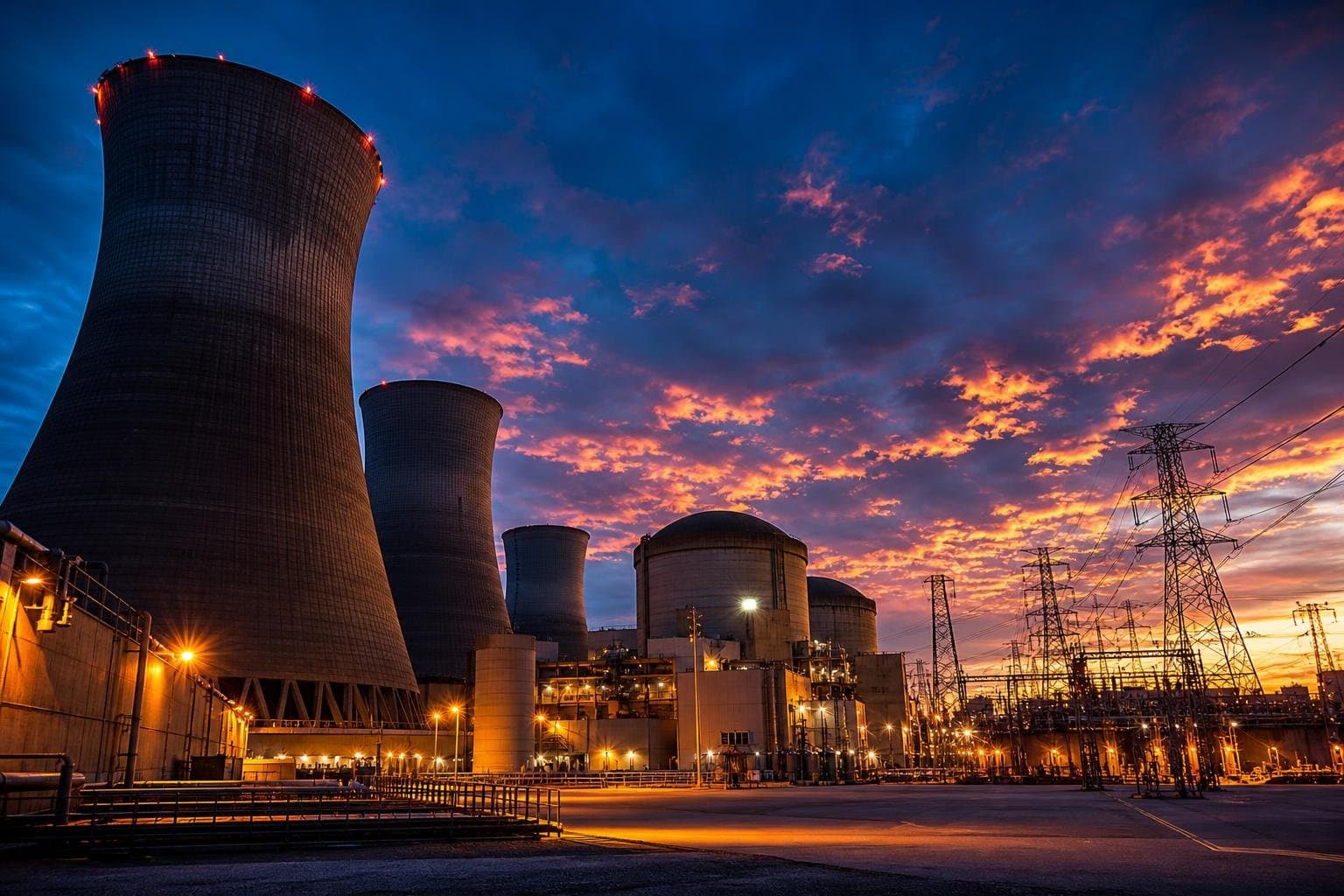

South Korea's energy minister told Reuters this week that AI-driven demand alone — from Samsung and SK Hynix factory expansions and new data centers — will add 25 to 30 gigawatts to the country's power needs. To put that in physical terms: if nuclear carries that load, you're looking at roughly 20 new reactors by current Korean-unit standards. That's not a forecast. That's a minister doing arithmetic on camera.
This is what the AI power story looks like when it hits a country that actually builds things. South Korea already runs 26 reactors supplying just under a third of national electricity. The government's long-term energy roadmap update — due next month and now extending to 2040 — will have to answer whether the country announces a major nuclear expansion program. Minister Kim Sung-whan called nuclear "an essential element to consider within the power generation structure of our energy mix." That's diplomatic language for: we're building more.
The Acceleration Signal Nobody Should Miss
The detail that deserves more attention than it's getting: Samsung and SK Hynix's new factories, part of an 800 trillion won ($590 billion) "mega project," were originally scheduled for completion around 2045. They've been pulled forward dramatically. Projects that were a decade-plus out are now due to land much sooner. The grid has to follow.
Meanwhile, the DOE's own data center resource hub frames this as a civilizational race — the nation that leads AI controls "technological advancements, economic development, and military power." South Korea's minister is reading from the same script, just with a construction timeline attached. And over at FERC, PJM's interconnection queue is processing over 200 GW of planned resources in its first reformed cycle — a reminder that the queue bottleneck is a global problem, not just an American one.
The civilizational argument for energy abundance keeps getting validated by the people who actually have to keep the lights on. South Korea's October roadmap is the next concrete milestone to watch: if it names reactor counts and timelines, it becomes one of the most significant nuclear expansion announcements since France's post-crisis rebuild. If it hedges, the 25-30 GW gap stays open — and the grid math gets uglier every quarter the chipmakers accelerate.
The future is electric. South Korea is doing the math