


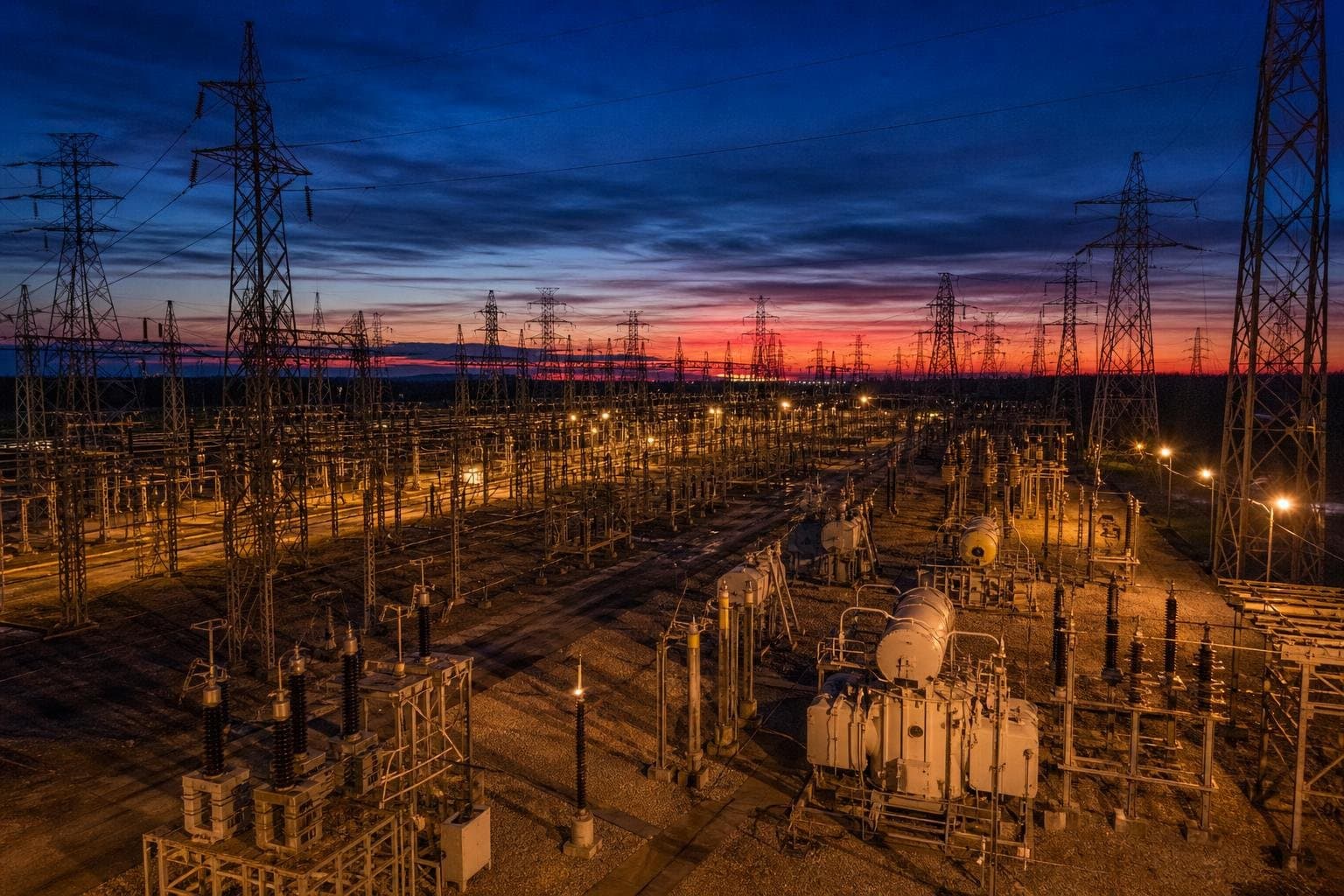

The same week PJM's independent market monitor revealed that data centers drove roughly $6.3 billion of the grid's record $16.4 billion capacity auction — a 60%-plus spike in supply costs — New York Governor Kathy Hochul issued the nation's first state moratorium on new hyperscale data centers. Up to one year. Any facility drawing 50 megawatts or more. Gone, pending environmental review.
This is what demand shock looks like when it hits a grid that wasn't built for it.
The Abundance Argument Just Got a Political Opponent
Here's the uncomfortable truth: New York's moratorium is a rational response to an irrational situation. When a single load category — AI data centers — can move a capacity auction by $6.3 billion in a year, grid operators and state regulators are going to panic. That's not small-minded conservation thinking. That's infrastructure reality asserting itself.
The electricity maximalist case doesn't collapse here — it gets harder and more urgent. PJM serves 13 states and Washington, DC, and it just tied its own record for procurement costs while missing its supply goal. Texas tells a parallel story: ERCOT set a new June peak demand record of 82,772 MW on June 18 — 5,376 MW above the prior June record — while total generation climbed 4.7% year-over-year to 47,277 GWh for the month. The demand curve is rewriting itself faster than supply can respond.
The answer to that gap is more generation, faster permitting, and a transmission buildout that matches the ambition of the load. A moratorium on data centers is what happens when you don't have those things. It's a supply failure dressed up as a policy choice.
Meanwhile, SuperCritical Materials Corp just won a DOE exclusive license to extract uranium from seawater — a technology that could eventually transform the U.S. from a net importer of enriched uranium (currently up to 75% imported) to a net exporter. The company targets first production as early as 2030 or 2031, per Reuters. That's a decade-plus play, but it points at the right instinct: the answer to a supply crunch is always more supply. Critical minerals and fuel security are