
This Week in Voltage
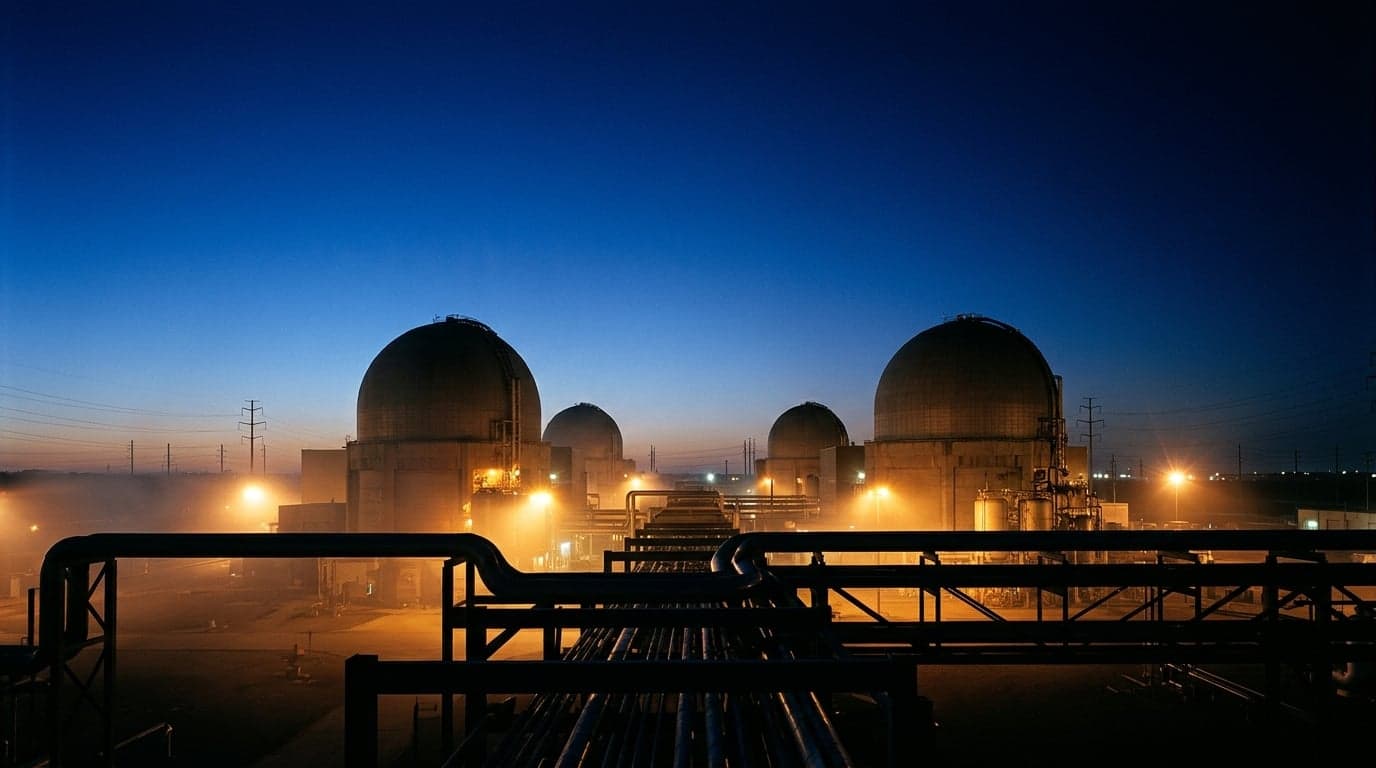
The NRC completed its environmental assessment of the Long Mott Generating Station — four X-energy Xe-100 high-temperature gas reactors at Dow Chemical's Seadrift, Texas site — ahead of schedule, in less than a year. That's the headline. But the subtext is what matters: the NRC used an environmental assessment rather than a full environmental impact statement, citing the project's limited footprint at an existing industrial site. Faster, leaner, more predictable. NRC Chairman Ho Nieh has been calling this a "sea change" at the agency, and for once, the paperwork is backing up the rhetoric.
This is what regulatory reform looks like when it actually works. Not a press release — a completed review, on time, for a reactor design that didn't exist in commercial form five years ago.
Deep Charge: The Industrial Electrification Signal Nobody Is Pricing In
Here's the thing about Henry Hub: it's not just a gas price. It's a civilization-scale thermometer. When industrial demand surges, Henry Hub moves. And right now, the signal it's sending is that American industry is electrifying faster than the grid can absorb.
The IEA's Global Energy Review 2026 tells a revealing story: global gas demand grew only 1% in 2025, down sharply from 2.8% in 2024. Industrial gas use flatlined entirely. The buildings sector — cold weather, space heating — drove nearly 70% of incremental demand. On the surface, that looks like a gas story going quiet.
It isn't. It's a transition story accelerating.
When industrial gas use stalls while industrial output doesn't, something is substituting for it. That something is electrons. Heavy industry — chemicals, steel, manufacturing — is beginning the long migration from combustion to electrification. Dow Chemical building four nuclear reactors at its own petrochemical complex isn't a PR move. It's a load forecast made physical.
The EIA's May 2026 Short-Term Energy Outlook confirms the demand trajectory: U.S. electricity consumption is expected to rise 1.3% in 2026 and 3.1% in 2027, with commercial demand projected to outpace residential for the first time on record. That commercial bucket includes data centers, yes — but it also includes the electrified industrial processes quietly replacing gas boilers and process heat across the manufacturing belt.
That's the paradox of industrial electrification: the transition that's supposed to reduce fossil fuel dependence is, in the short run, keeping old fossil infrastructure alive while simultaneously pressuring gas prices upward through power-sector demand.
Meanwhile, the cost to build new gas generation to meet that demand has surged 66% in two years, per BloombergNEF — from under $1,500 per kilowatt in 2023 to $2,157 last year. Gas turbine waitlists now stretch into the early 2030s. The scramble for gas capacity is self-defeating: the more industry electrifies and data centers scale, the more expensive and delayed the gas backup becomes.
This is the bottleneck that nuclear solves. Not eventually. Now.
By the Numbers
- 1% — Global natural gas demand growth in 2025, down from 2.8% in 2024, per the IEA
- 3.1% — Projected U.S. electricity demand growth in 2027, led by commercial sector, per EIA May 2026 STEO
- 28% — U.S. solar generation increase in 2025, largest year-on-year gain on record, per Apricitas Economics
- 66% — Cost increase to build a combined-cycle gas plant over two years, per BloombergNEF via TechCrunch
- <1 year — Time for NRC to complete Long Mott's environmental assessment, ahead of schedule
What We're Fighting For
The Long Mott milestone is a preview of what industrial electrification looks like when it's done right: a chemical company, a next-generation reactor design, a regulator that finally learned to move. No gas turbine waitlist. No 66% cost overrun. No hostage relationship with Henry Hub.
Watch for the NRC's safety review timeline on Long Mott — the environmental assessment clears one major gate, but the construction permit decision is the one that sets the clock for actual steel in the ground. That's the next milestone worth tracking.
The industrial sector is sending the signal. The question is whether we build the generation to receive it — or spend the next decade patching the gap with expensive, delayed gas plants while the turbine manufacturers laugh all the way to the bank.
The future is electric. Dow Chemical just put four reactors behind that bet. The grid needs to catch up.


