


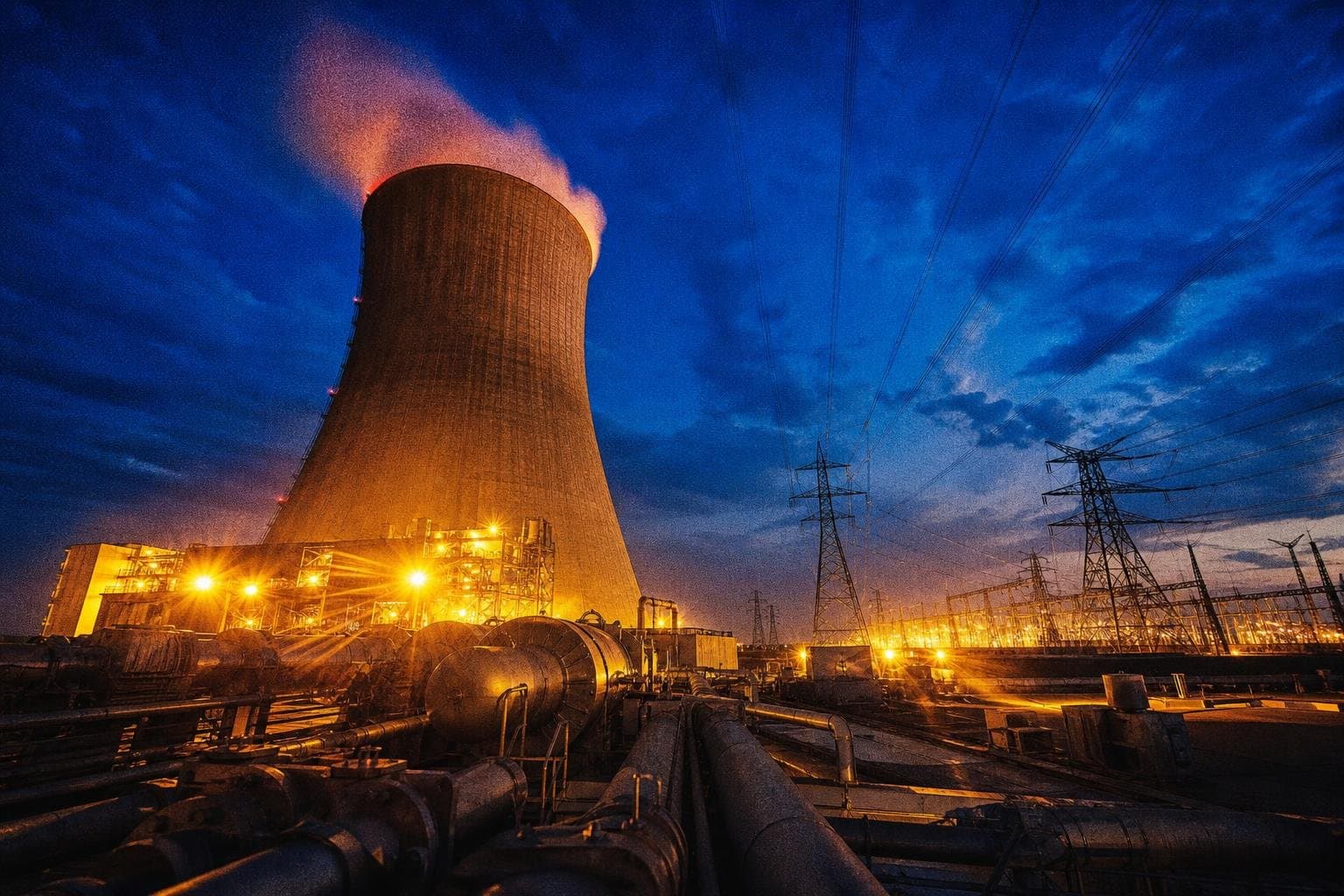

Last week, Georgia Power and Google signed an agreement to fund upgrades at the Vogtle and Hatch nuclear units — turbines, pumps, motors, cooling systems — that would add approximately 96 megawatts of capacity. The projected customer benefit over the life of the units: $900 million. Non-participating ratepayers are shielded from the upgrade costs. Google gets round-the-clock, carbon-free electrons.
This is what we're fighting for.
Not a PPA for future wind that may or may not clear interconnection queues. Not an offset credit. An actual agreement to physically upgrade existing reactors and extract more electricity from infrastructure that's already built, already licensed, already running. The deal still requires Georgia Public Service Commission approval — it's announced, not operational — but the structure is the right one.
Consider the backdrop: U.S. data center electricity consumption is projected to reach 12% of total national demand by 2028, up from 4% in 2023. That tripling of share represents an enormous physical claim on the grid. And yet the DOE's own AI infrastructure hub makes clear that meeting this demand requires new dispatchable generation — not conservation pledges and not curtailment management alone.
Nuclear uprates are one of the fastest paths to new dispatchable capacity because the hard work — site permitting, reactor licensing, community negotiation — is already done. You're squeezing more electricity from existing infrastructure. That's not incrementalism; that's compound interest on decades of sunk cost.
The replicable insight here is the deal structure itself: Google subscribes to the uprate capacity, enabling the capital investment while protecting ratepayers who don't sign on. Other hyperscalers should be studying this contract. If Amazon, Microsoft, and Meta are serious about 24/7 clean power — not just annual matching — this is the architecture. Watch for whether the Georgia PSC approves the