


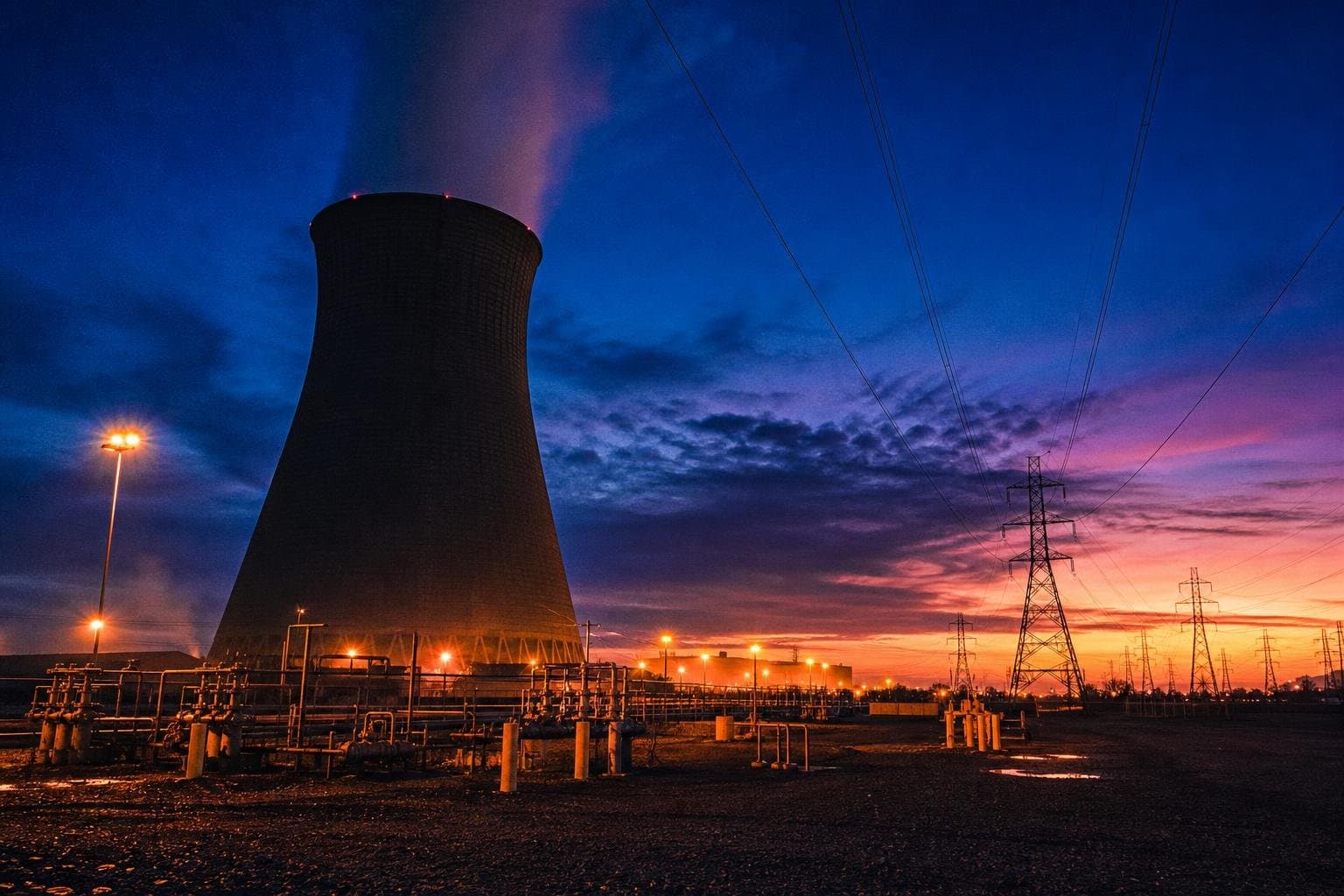

The nuclear industry has spent years arguing that existing plants are undervalued assets. Georgia Power and Google just proved it — with a deal that adds 96 megawatts of carbon-free capacity without breaking ground on a single new reactor.
The mechanics matter here. Google's agreement with Southern Company's Georgia Power unit would fund equipment upgrades — turbines, pumps, motors, cooling systems — at the Vogtle and Hatch nuclear plants. The result: more electricity from infrastructure that already exists, already has a license, and already has a community that's lived next to it for decades. Reuters reports the arrangement projects roughly $900 million in benefits to customers over the life of the units, with non-participating ratepayers shielded from upgrade costs. That's the political architecture that makes this replicable — the hyperscaler pays, the grid wins, nobody's electric bill goes up.
This is what we're fighting for. Not just new gigawatts, but the full utilization of every gigawatt we already have.
The Uprate Model Is Now a Competitive Weapon
The timing is not coincidental. Data center electricity demand in the U.S. is projected to triple from 4% of national consumption in 2023 to roughly 12% by 2028, and hyperscalers are in an arms race for clean, firm power. Nuclear uprates — squeezing more output from licensed plants — offer something new builds cannot: speed. No NRC construction permit process. No decade-long queue. Just an engineering modification and a check.
Meanwhile, the new-build pipeline is advancing on a separate track. Blue Energy filed its first NRC construction permit application for a 2.5-GW hybrid gas-nuclear plant at the Port of Victoria in Texas — a GE Vernova-Hitachi BWRX-300 SMR paired with a gas turbine to power Crusoe's AI data center, targeting early 2030s operation. That project is years from producing a single electron. The Georgia Power deal closes capacity this decade.
The civilizational argument for nuclear has always been about energy density and reliability. What Monday's deal adds is a financial model: let the hyperscalers who need the power most fund the upgrades that unlock it, structure the contracts to protect ordinary ratepayers, and watch every other utility